Vibration Analysis
1. Introduction
Vibration analysis is a powerful technique used to assess the condition of machinery and structures by studying their vibration characteristics. By analyzing the vibration signals, valuable insights can be gained regarding the performance, health, and potential faults of the system being monitored.
2. Fundamentals of Vibration Analysis
2.1 Vibration Measurement Techniques
– Accelerometers: These devices are commonly used to measure vibration by converting mechanical motion into an electrical signal.
– Displacement sensors: They provide precise measurements of the displacement or distance from a reference point.
2.2 Vibration Spectral Analysis
– Fourier Transform: It decomposes a complex signal into simpler sinusoidal components, revealing the frequency content of the vibration signal.
– Power Spectral Density (PSD): This function represents the distribution of power with respect to frequency, indicating the strength of various frequency components in the vibration signal.
3. Types of Vibrations
3.1 Free Vibration
– Natural Frequency: The frequency at which a system vibrates freely without any external excitation.
– Damping: The dissipation of energy in a vibrating system, which affects the decay of vibration amplitudes.
3.2 Forced Vibration
– Harmonic Excitation: When a periodic force is applied to a system, causing it to vibrate at a frequency equal to the excitation frequency.
– Resonance: A phenomenon where the amplitude of vibration becomes significantly larger when the excitation frequency matches the natural frequency of the system.
4. Applications of Vibration Analysis
4.1 Condition Monitoring
– Fault Detection: Vibration analysis can detect early signs of faults such as bearing wear, misalignment, and unbalance, allowing for timely maintenance actions.
– Predictive Maintenance: By continuously monitoring the vibration characteristics, potential failures can be anticipated, leading to optimized maintenance scheduling.
4.2 Structural Health Monitoring
– Modal Analysis: It helps in understanding the dynamic behavior of structures, enabling engineers to assess their integrity and detect any structural damage.
– Vibration-based Damage Detection: Changes in the vibration response can indicate the presence of structural defects or damage, allowing for prompt repairs.
5. Benefits and Challenges
5.1 Benefits of Vibration Analysis
– Early Fault Detection: Vibration analysis enables the detection of faults at an early stage, preventing costly breakdowns and reducing downtime.
– Increased Equipment Reliability: Regular monitoring and analysis help identify potential issues, leading to improved equipment reliability and longer service life.
5.2 Challenges in Vibration Analysis
– Complex Data Interpretation: Analyzing vibration signals requires expertise in signal processing and pattern recognition to extract meaningful information from the data.
– Environmental Factors: External factors such as temperature, humidity, and electromagnetic interference can influence vibration measurements, posing challenges to accurate analysis.
6. Conclusion
Vibration analysis is an essential tool for assessing the condition and performance of machinery and structures. By analyzing vibration characteristics, valuable insights can be obtained, enabling proactive maintenance, minimizing downtime, and ensuring reliable operation. Embracing the power of vibration analysis can significantly enhance the reliability and performance of various systems in diverse industries.
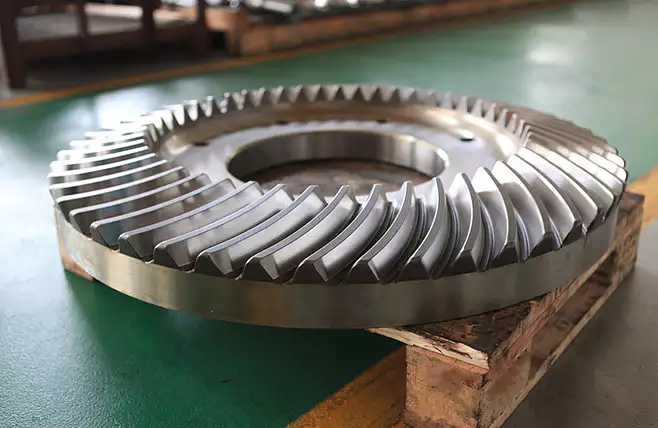
Our company specializes in the production and sale of various types of gears, including spur gears, helical gears, bevel gears, worm gears, and more. We take pride in our expertise and the following are five advantages of choosing our company:
1. High Quality
At our company, we prioritize quality in every aspect of gear production. We use the finest materials and employ rigorous quality control measures to ensure that our gears meet or exceed industry standards. Our commitment to quality is evident in the durability and performance of our products.
2. Customization
We understand that different applications require specific gear specifications. That’s why we offer customizable gear solutions to meet the unique needs of our customers. Whether it’s modifying gear dimensions or incorporating special features, our team of experts can tailor our gears to fit your requirements perfectly.
3. Competitive Pricing
While maintaining high quality standards, we also strive to offer competitive pricing for our gears. By optimizing our manufacturing processes and establishing strong supplier relationships, we are able to provide cost-effective solutions without compromising on quality. Our aim is to deliver exceptional value to our customers.
4. Timely Delivery
We understand the importance of timely delivery in today’s fast-paced business environment. Our efficient production and logistics processes enable us to meet even the tightest deadlines. We pride ourselves on our ability to deliver gears promptly, ensuring that our customers can proceed with their projects without unnecessary delays.
5. Excellent Customer Service
At our company, we believe in building long-term relationships with our customers. We provide excellent customer service throughout the entire process, from initial inquiries to after-sales support. Our dedicated team is always ready to assist you with any questions or concerns, ensuring a smooth and positive experience.
Now let’s take a look at the steps and processes involved in the birth of a gear:
1. Design and Engineering
Before any physical production can take place, gears go through a comprehensive design and engineering phase. This involves analyzing the specific application requirements, calculating gear ratios, selecting appropriate materials, and creating detailed drawings and specifications.
2. Material Selection
Choosing the right material is crucial for gear performance and durability. Factors such as load capacity, speed, and environmental conditions are taken into account to determine the most suitable material, whether it be alloy steel, stainless steel, or other specialized materials.
3. Gear Cutting
Once the design and material selection are finalized, the gear cutting process begins. This can involve various techniques such as hobbing, shaping, milling, or grinding, depending on the type and complexity of the gear. Precision machinery and skilled operators ensure accurate and consistent gear tooth profiles.
4. Heat Treatment
To enhance the strength and wear resistance of gears, heat treatment is often applied. This process involves heating the gears to specific temperatures and then cooling them rapidly or gradually to achieve the desired hardness and mechanical properties. Heat treatment ensures the gears can withstand the demanding conditions they will be exposed to.
5. Quality Control and Inspection
Before the gears are ready for use, they undergo rigorous quality control and inspection procedures. This includes dimensional checks, hardness testing, surface finish evaluation, and other necessary tests to ensure they meet the required specifications. Only gears that pass the strict quality standards are approved for delivery to our customers.
Partner with us and experience the excellence of our gears. Contact us today to discuss your specific requirements and let us provide you with top-notch gear solutions tailored to your needs.
Author: Miya