Hypoid Gear Vs Spiral Bevel Gear: What’s the Difference?
Defining Hypoid and Spiral Bevel Gears
Hypoid gears and spiral bevel gears are both mechanical gears used for torque transmission between non-parallel, non-intersecting shafts. While they share some similarities, they have distinct differences that make them suitable for different applications.
Hypoid Gears
Hypoid gears are a type of bevel gear designed for shafts that do not intersect. The gear is offset from the center of the gear it meshes with, which allows for larger pinion diameters, increased contact, and higher torque transmission.
Spiral Bevel Gears
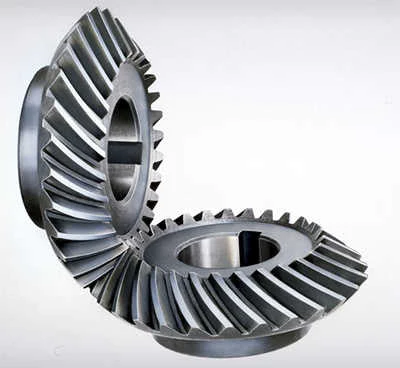
Spiral bevel gears, on the other hand, are used for transmitting power between intersecting shafts. These gears have teeth that are oblique to the face of the gear, resulting in smooth and quiet operation.
Our High-Quality Bevel Gear Production
We excel in the production of superior quality bevel gears. Our products are characterized by:
1. High strength and durability.
2. Exceptional performance under heavy load conditions.
3. Smooth and quiet operation.
4. High resistance to wear and tear.
5. Precise and accurate dimensions.
Different Types of Bevel Gears and Their Features
Apart from hypoid and spiral bevel gears, there are other types of bevel gears, including:
Straight Bevel Gear
Straight bevel gears have straight and tapered teeth. They are simple in design and inexpensive to manufacture but can be noisy when operating at high speeds.
Zerol Bevel Gear
Zerol bevel gears have teeth that are curved along their length but are not angled. They operate smoother than straight bevel gears but not as smooth as spiral bevel gears.
Spiral Zerol Bevel Gear
Spiral zerol bevel gears combine the best features of spiral and zerol bevel gears. They are designed to work smoothly and quietly, like spiral bevel gears, but are easier to manufacture, like zerol bevel gears.
Choosing the Right Bevel Gears
When selecting bevel gears, several parameters need to be considered. These include the Module, Number of Teeth, Gear Ratio, Pitch, Gear Material, Precision Grade, and Load Capacity. Understanding these parameters can help you choose the most suitable gear for your application.
Bevel Gears Manufacturing Process
The manufacturing process of bevel gears involves several steps, including design and engineering, material selection, cutting and machining, grinding, heat treatment, washing and inspection, assembly and processing of parts, surface treatment and coating, and final inspection and quality control.
Our Other Gear and Gearbox Products
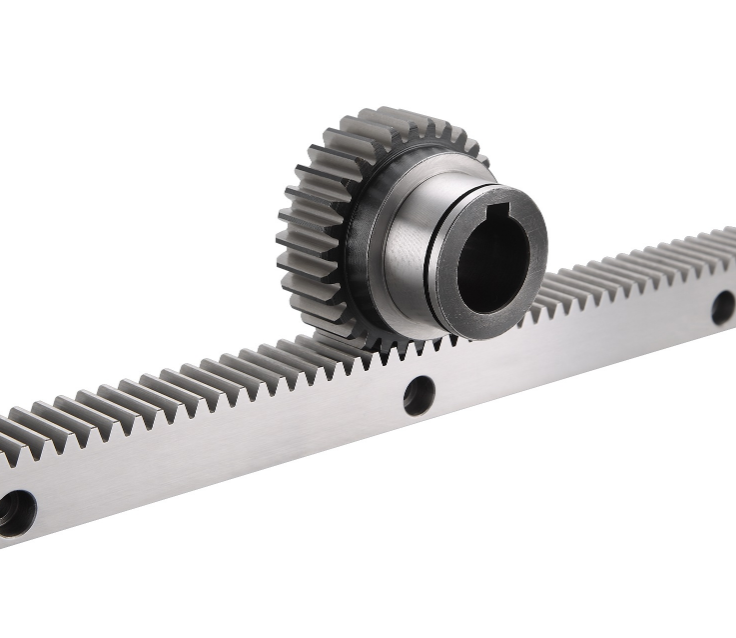
In addition to bevel gears, we also provide other gear and gearbox products, such as worm gear, helical gear, spur gear, gear rack, worm gearbox, planetary gearbox, and helical gearbox.
Why Choose Us?
As a leading manufacturer, we possess advanced production and inspection equipment such as CNC gear grinding machine, gear measuring machine, CNC gear shaper, machine center, CMMS, and Torque test system. Our commitment to quality, international certifications, custom services, state-of-the-art production equipment, and exceptional after-sales service sets us apart in the industry. Trust us to deliver the best gear solutions for your needs.