What’s the difference in performance between ground and hobbed spline shafts?
Introduction
In the world of mechanical engineering, spline shafts play a crucial role in transmitting torque and rotational motion between two or more components. When it comes to spline shaft manufacturing, two popular methods are widely used: ground and hobbed. In this article, we will explore the differences in performance between these two types of spline shafts and shed light on their respective advantages and disadvantages.
The Basics: Ground Spline Shafts
Ground spline shafts are precision-engineered components that undergo meticulous grinding processes to achieve high dimensional accuracy. The manufacturing process involves removing material from the shaft’s surface using abrasive wheels, resulting in a smooth finish with tight tolerances. Ground spline shafts are known for their exceptional precision and excellent concentricity, making them ideal for applications that require minimal backlash and high positional accuracy.
The Fundamentals: Hobbed Spline Shafts
In contrast to ground spline shafts, hobbed spline shafts are manufactured using a different approach. The hobbing process involves using a specialized cutting tool called a hob to create the splines on the shaft’s surface. This process is efficient and capable of producing high volumes of spline shafts with relative ease. Hobbed spline shafts are widely used in various industries due to their cost-effectiveness and quick production turnaround.
Performance Comparison
1. Surface Finish
Ground Spline Shafts: The grinding process ensures a smooth and polished surface finish, minimizing friction and wear between mating components. This leads to improved overall performance and reduced energy loss.
Hobbed Spline Shafts: Although hobbed spline shafts have a reasonably smooth finish, they may not match the level of surface finish achieved by ground spline shafts. However, the impact on performance is often negligible in most applications.
2. Tolerance and Precision
Ground Spline Shafts: The grinding process allows for tight tolerances and exceptional precision, making ground spline shafts suitable for applications that demand high positional accuracy and minimal backlash.
Hobbed Spline Shafts: While hobbed spline shafts may not offer the same level of precision as ground spline shafts, they provide sufficient accuracy for many general-purpose applications.
3. Load Capacity
Ground Spline Shafts: Due to their precise manufacturing process, ground spline shafts can handle higher loads and transmit torque more efficiently. They are often used in heavy-duty applications where reliability and durability are paramount.
Hobbed Spline Shafts: Although hobbed spline shafts may not have the same load capacity as their ground counterparts, they still offer adequate strength for many standard applications.
4. Cost and Production Time
Ground Spline Shafts: The intricate grinding process involved in manufacturing ground spline shafts makes them more expensive and time-consuming to produce. However, the superior performance they offer justifies the additional investment.
Hobbed Spline Shafts: Hobbing is a faster and more cost-effective manufacturing method, making hobbed spline shafts a preferred choice for applications where cost and production time are critical factors.
Conclusion
Both ground and hobbed spline shafts have their unique advantages and characteristics. Ground spline shafts excel in precision, load capacity, and overall performance, making them ideal for demanding applications. On the other hand, hobbed spline shafts offer cost-effectiveness and quicker production, making them suitable for standard applications. Ultimately, the choice between the two depends on the specific requirements of the application at hand. Understanding these differences allows engineers to make informed decisions and optimize performance in their designs.
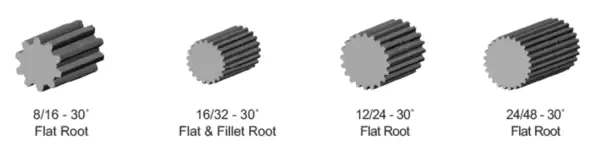
Our company specializes in the production and sale of various types of gears and spline shafts. With years of experience in the industry, we have established ourselves as a leader in providing high-quality products and exceptional service. Here are five key advantages that set our company apart:
- Expertise: Our team of skilled engineers and technicians are experts in the field of gears and spline shafts. We have in-depth knowledge and understanding of the performance differences between ground and hobbed spline shafts.
- Quality: We are committed to maintaining the highest standards of quality in all our products. Our spline shafts are meticulously crafted to provide superior performance and durability.
- Customization: We understand that every application has unique requirements. That’s why we offer a wide range of customization options for spline shafts, ensuring a perfect fit for your specific needs.
- Reliability: Our company takes pride in delivering products that you can rely on. We use only the finest materials and cutting-edge manufacturing techniques to ensure the utmost reliability of our spline shafts.
- Customer Satisfaction: We prioritize customer satisfaction above all else. Our dedicated support team is always ready to assist you with any inquiries or concerns you may have, ensuring a smooth and pleasant experience.
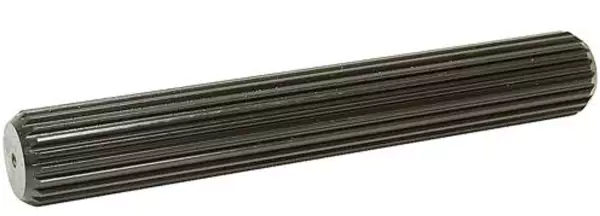
Spline Shaft Working Principle and Functionality
The spline shaft is a critical component in various mechanical systems. Its primary function is to transmit torque while allowing for relative motion between two connected components. By engaging with corresponding splines or gears, the spline shaft enables the transfer of power and rotation.
Spline Shaft Design and Selection Guide
When designing and selecting a spline shaft, several factors need to be considered. These include the application requirements, load capacity, shaft material, and geometric dimensions. It is crucial to choose the right spline shaft design and size to ensure optimal performance and durability.
Spline Shaft Manufacturing and Processing Techniques
The manufacturing process of spline shafts involves several precision techniques. These include shaping, broaching, grinding, and heat treatment. Each step is carefully executed to ensure the desired surface finish, dimensional accuracy, and mechanical properties of the spline shaft.
Spline Shaft Applications and Industry Practices
Spline shafts find wide applications in various industries, including automotive, aerospace, machinery, and robotics. They are commonly used in power transmission systems, steering mechanisms, gearboxes, and other rotational motion systems. Our company has extensive experience in providing spline shaft solutions for diverse industrial practices.
Partner with us today to experience the exceptional quality and performance of our spline shafts. We are dedicated to meeting your specific requirements and delivering the best solutions for your applications.
Author: Miya