What is the role of internal gears in transmission systems?
Internal gears play a crucial role in the functionality and efficiency of transmission systems. These gears are designed with teeth on the inner surface and are often used in various mechanical applications. In this article, we will explore the significance of internal gears in transmission systems and delve into their intricate workings.
1. Introduction to Internal Gears
Internal gears, as the name suggests, have teeth on the inner surface instead of the outer surface. They are commonly used in transmission systems to transmit power and torque between rotating components. These gears are often paired with other gears, such as external gears or pinions, to achieve desired gear ratios and optimize the overall performance of a transmission system.
2. Advantages of Internal Gears
Internal gears offer several advantages over other gear types, making them a preferred choice in many transmission systems. Some of these advantages include:
- 1. Compact design: The internal arrangement of teeth allows for a more compact gear assembly, making it ideal for applications where space is limited.
- 2. Higher torque transmission: The larger gear diameter provides increased contact area, allowing for the efficient transmission of higher torque.
- 3. Improved load distribution: The internal gear design helps distribute the load evenly across the tooth surfaces, reducing wear and enhancing gear lifespan.
3. Internal Gear Applications
Internal gears find extensive use in various transmission systems across different industries. Some notable applications include:
3.1 Automotive Transmissions
Internal gears are commonly found in automotive transmissions, where they play a vital role in transferring power from the engine to the wheels. These gears ensure smooth gear shifting and efficient power delivery, contributing to the overall performance and fuel efficiency of the vehicle.
3.2 Industrial Gearboxes
Industrial gearboxes rely on internal gears to transmit power in heavy-duty applications. These gearboxes are used in industries such as manufacturing, mining, and construction, where high torque and precision are essential. Internal gears help ensure reliable and efficient operation of these gearboxes.
3.3 Robotics and Automation
Internal gears are also extensively used in robotics and automation systems. These gears enable precise motion control, allowing robots to perform intricate tasks with accuracy and repeatability. The compact design of internal gears makes them an ideal choice for space-constrained robotic applications.
4. Internal Gears and Gear Ratios
Internal gears, when combined with external gears or pinions, enable the creation of various gear ratios in transmission systems. Gear ratios determine the relationship between the rotational speeds and torques of the input and output shafts. By utilizing different sizes of internal and external gears, engineers can achieve the desired gear ratios to optimize system performance for specific applications.
5. Conclusion
Internal gears are integral components of transmission systems, offering unique advantages such as compact design, high torque transmission, and improved load distribution. Their applications span across automotive, industrial, and robotics industries, where they contribute to the efficiency and functionality of various mechanical systems. Understanding the role of internal gears in transmission systems is crucial for engineers and designers to develop innovative and optimized solutions for diverse applications.
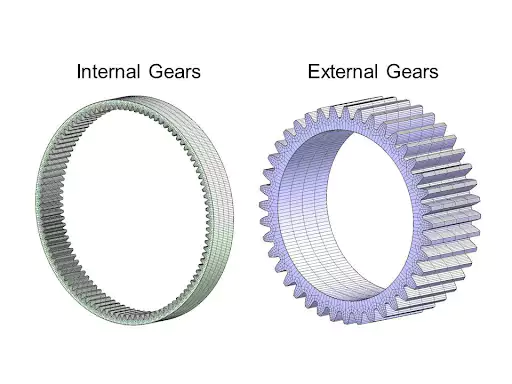
Our company specializes in the production and sale of internal gears, which play a crucial role in transmission systems. As an SEO expert, I would like to highlight five key advantages of our company:
Advantages of Our Company
- High-Quality Manufacturing: We pride ourselves on producing internal gears of the highest quality, ensuring durability and reliability.
- Advanced Technology: Our company utilizes cutting-edge technology in the production process, resulting in precise and efficient internal gears.
- Customization Options: We offer a wide range of customization options to meet the specific requirements of our clients, ensuring optimal performance.
- Competitive Pricing: Despite the superior quality of our internal gears, we strive to maintain competitive pricing, providing excellent value for our customers.
- Excellent Customer Service: Our dedicated and knowledgeable customer service team is always ready to assist our clients with any inquiries or concerns.
There are several types of internal gears, each serving different purposes:
Types of Internal Gears
- Spur Gears: These gears have straight teeth and are suitable for applications requiring high precision and efficiency.
- Helical Gears: With angled teeth, helical gears offer smooth and quiet operation, making them ideal for transmitting power in various systems.
- Herringbone Gears: Similar to helical gears, herringbone gears provide enhanced load-carrying capacity and reduced vibration.
- Rack and Pinion Gears: These gear sets are used to convert rotational motion into linear motion, commonly found in steering systems.

Now, let’s compare internal gears with external gears in the following table:
| Comparison | Internal Gear | External Gear |
|---|---|---|
| Teeth Location | Inside the gear | Outside the gear |
| Design Complexity | More complex | Less complex |
| Usage | Wide range of applications | Limited applications |
| Space Requirement | Compact | Requires more space |
| Efficiency | High | Lower than internal gears |
Internal gears play several important roles in transmission systems:
Roles of Internal Gears in Transmission Systems
- Power Transmission: Internal gears efficiently transfer power between shafts, ensuring smooth operation of the transmission system.
- Torque Conversion: By meshing with other gears, internal gears convert torque to match the desired speed or force requirements.
- Load Distribution: Internal gears distribute loads evenly, reducing stress on individual components and prolonging the system’s lifespan.
- Noise Reduction: The design of internal gears helps in minimizing noise and vibration levels, providing a quieter operation.
- Backlash Control: Internal gears offer improved control over backlash, ensuring precise and accurate motion transmission.
Internal gears find applications in various industries, including:
Applications of Internal Gears
- Automotive Industry: Internal gears are commonly used in transmissions, differential systems, and power steering mechanisms.
- Industrial Machinery: They play a crucial role in heavy machinery, such as gearboxes, conveyors, and printing presses.
- Appliances & Precision Instruments: Internal gears are utilized in household appliances, cameras, watches, and other precision instruments.
- Electric Vehicles & Hybrid Systems: Internal gears are integral parts of electric drivetrains, providing efficient power transmission.
When it comes to the design and selection of internal gears, factors such as load requirements, speed, and space limitations need to be considered.
Join us today and experience the superior quality and performance of our internal gears. Contact our team now to discuss your specific requirements and explore the possibilities of collaboration.
Author: Miya