How does the design of internal gears influence the overall machine efficiency?
1. Introduction
The design of internal gears plays a crucial role in determining the overall efficiency of a machine. In this article, we will explore the various aspects of internal gear design and their impact on machine performance.
2. Tooth Profile
The shape and geometry of the teeth on internal gears have a direct influence on their performance. The choice of tooth profile affects factors such as load distribution, contact ratio, and meshing efficiency.
2.1 Involute Profile
The involute tooth profile is commonly used in internal gears due to its favorable characteristics. It provides smooth and efficient power transmission by ensuring a constant angular velocity ratio between the mating gears.
2.2 Modified Profiles
In certain applications, modified tooth profiles such as cycloidal or trochoidal may be employed to optimize specific performance requirements. These profiles offer unique advantages in terms of reduced noise, increased strength, or improved lubrication.
3. Gear Materials
The choice of materials for internal gears significantly impacts their efficiency and durability. Factors such as strength, hardness, and wear resistance must be carefully considered during the design process.
3.1 Steel Alloys
Steel alloys, particularly those with high carbon content, are commonly used for internal gears. They offer excellent strength and toughness, ensuring reliable performance under heavy loads and harsh operating conditions.
3.2 Composite Materials
In certain applications where weight reduction is a priority, composite materials like carbon fiber reinforced polymers may be utilized. These materials provide high strength-to-weight ratios, offering improved efficiency without compromising on performance.
4. Lubrication
Proper lubrication is essential for minimizing friction and wear in internal gears, ultimately affecting their efficiency. The design of internal gears should consider factors such as oil viscosity, lubricant distribution, and cooling mechanisms.
4.1 Oil Viscosity
The viscosity of the lubricating oil directly influences the frictional losses within the gear system. Choosing the appropriate oil viscosity based on the operating conditions is crucial for optimizing efficiency and preventing premature failure.
4.2 Lubricant Distribution
Effective lubricant distribution ensures proper film formation between the gear teeth, reducing friction and wear. The design of internal gears should incorporate features such as grooves or oil channels to facilitate uniform lubricant flow.
5. Gear Arrangement
The arrangement of internal gears within a machine also affects its overall efficiency. The number of gear stages, gear ratios, and shaft alignments must be carefully considered during the design process.
5.1 Multiple Stages
In complex machinery, multiple gear stages may be employed to achieve the desired output speed and torque. Each stage introduces efficiency losses, and the design should aim to minimize them through proper gear selection and optimization.
5.2 Shaft Alignment
Precise alignment of shafts and gears is crucial for minimizing misalignment losses and ensuring efficient power transmission. Misalignment can lead to increased noise, vibration, and premature failure of the internal gears.

6. Conclusion
The design of internal gears plays a significant role in determining the overall efficiency of a machine. Factors such as tooth profile, gear materials, lubrication, and gear arrangement all contribute to the performance and reliability of the gears. By carefully considering these design aspects, engineers can optimize machine efficiency and enhance the overall performance of the system.
Our company specializes in the production and sales of internal gears, providing high-quality solutions for various industries. Here are five key advantages of choosing our company:
Advantage 1: Precision Engineering
Our internal gears are meticulously designed and manufactured with precision engineering techniques. This ensures their accuracy, reliability, and optimal performance in various applications.
Advantage 2: High Efficiency
The design of our internal gears plays a crucial role in influencing the overall machine efficiency. Through careful analysis and optimization, we have developed internal gears that maximize power transmission while minimizing energy loss, resulting in high efficiency.
Advantage 3: Customization
We understand that different applications require specific gear design considerations. That’s why we offer customization options for our internal gears, allowing our customers to tailor the design to their unique requirements and achieve optimal performance.
Advantage 4: Durability
Our internal gears are built to last. We utilize high-quality materials and advanced heat treatment processes to enhance the durability and strength of our gears, ensuring they can withstand demanding operating conditions and provide long-lasting performance.
Advantage 5: Expertise and Support
With a team of experienced engineers and technical experts, we provide comprehensive support throughout the entire product lifecycle. From design consultation to after-sales service, we are committed to ensuring customer satisfaction and success.

There are several types of internal gears:
Spur Gears
Spur gears are the most common type of internal gears. They have straight teeth that are parallel to the gear axis, allowing for smooth and efficient power transmission.
Helical Gears
Helical gears have angled teeth that are cut at an angle to the gear axis. This design reduces noise and improves load distribution, making them suitable for applications that require high precision and quiet operation.
Herringbone Gears
Herringbone gears, also known as double helical gears, have two sets of angled teeth that are arranged in a V shape. This design cancels out axial thrust forces, resulting in smoother operation and increased load capacity.
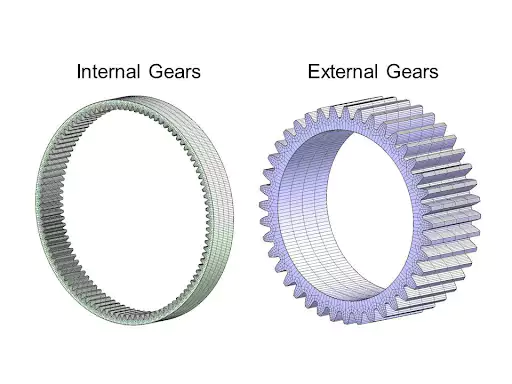
Now, let’s compare internal and external gears:
| Feature | Internal Gear | External Gear |
|---|---|---|
| Teeth Placement | Inside the gear | Outside the gear |
| Space Requirement | Requires less space | Requires more space |
| Design Complexity | More complex | Less complex |
| Load Capacity | Higher load capacity | Lower load capacity |
| Noise Level | Lower noise level | Higher noise level |
Internal gears play several important roles in transmission systems:
- Power transmission: Internal gears efficiently transfer power between shafts, ensuring smooth operation and minimal energy loss.
- Torque multiplication: By leveraging gear ratios, internal gears can increase or decrease torque output to suit specific application requirements.
- Speed reduction or increase: Internal gears can be designed to decrease or increase rotational speed, allowing for adaptation to different operating conditions.
- Noise reduction: The proper design of internal gears helps minimize noise generated during gear operation, ensuring quieter machinery.
- Load distribution: Internal gears evenly distribute loads, reducing stress concentrations and extending the lifespan of the overall system.
Internal gears find applications in various industries:
Automotive
In the automotive industry, internal gears are widely used in transmissions, differential systems, and powertrain components. They provide reliable and efficient torque transfer, contributing to smooth vehicle operation.
Industrial Machinery
Internal gears play a vital role in various industrial machinery, such as gearboxes, pumps, and rotating equipment. Their high load capacity and efficiency make them suitable for heavy-duty applications.
Appliances and Precision Instruments
Internal gears are essential components in appliances, such as washing machines and printers, as well as precision instruments like cameras and watches. They ensure precise and reliable motion control.
Electric and Hybrid Power Systems
In electric vehicles and hybrid power systems, internal gears are used in electric motor drives and gearboxes. Their efficient power transmission capabilities contribute to improved overall system performance.
When it comes to designing and selecting internal gears, several factors should be considered, such as load requirements, speed ratios, tooth profiles, and material selection. Our team of experts can assist you in making the right choices to achieve optimal performance in your specific application.
Partner with us to benefit from our extensive experience, top-notch products, and dedicated support. Contact us today to discuss your internal gear needs and explore how we can collaborate to drive your success.
Author: Miya