How does the hardness differential between the pinion and gear affect hypoid gear performance?
Introduction
In the world of mechanical engineering, hypoid gears play a crucial role in various applications. One of the key factors that significantly impacts the performance of hypoid gears is the hardness differential between the pinion and gear. This article aims to explore the effects of this hardness differential on the overall performance of hypoid gears.
Understanding the Hardness Differential
1. Implications of varying hardness levels
The hardness differential between the pinion and gear has a profound impact on the wear resistance and load-carrying capacity of hypoid gears. When the pinion and gear have different hardness levels, it results in a variation in their respective surface properties, affecting the overall contact pattern and tooth engagement.
2. Effects on contact stress distribution
The hardness differential influences the distribution of contact stress along the tooth flank. When the pinion and gear have similar hardness levels, the contact stress is distributed more evenly. However, a significant difference in hardness can lead to localized high contact stress regions, which may result in premature wear and fatigue failure.
3. Wear characteristics
The difference in hardness impacts the wear characteristics of the pinion and gear surfaces. A significant hardness differential can lead to uneven wear rates, with the softer component experiencing accelerated wear. This imbalance in wear can affect the gear’s overall performance and longevity.
4. Load distribution
The hardness differential affects the load distribution between the pinion and gear. When the hardness levels are similar, the load is distributed more evenly across the gear teeth. However, a significant difference in hardness can cause localized overloading, leading to increased stress concentration and potential tooth failure.
5. Noise and vibration
The hardness differential can also influence the noise and vibration levels generated by hypoid gears. A substantial difference in hardness may result in increased gear meshing noise and vibrations, which can impact the overall smoothness and efficiency of the gear system.
6. Lubrication and heat dissipation
The hardness differential can affect the lubrication and heat dissipation properties of hypoid gears. A balanced hardness level between the pinion and gear promotes better lubricant retention and efficient heat dissipation, reducing the risk of gear failure due to inadequate lubrication or thermal damage.
7. Material selection considerations
When designing hypoid gear systems, the hardness differential must be carefully considered in the material selection process. Choosing materials with similar hardness levels can help optimize the gear’s performance and durability, ensuring a more reliable and efficient gear transmission.
Our Gear Manufacturing Process
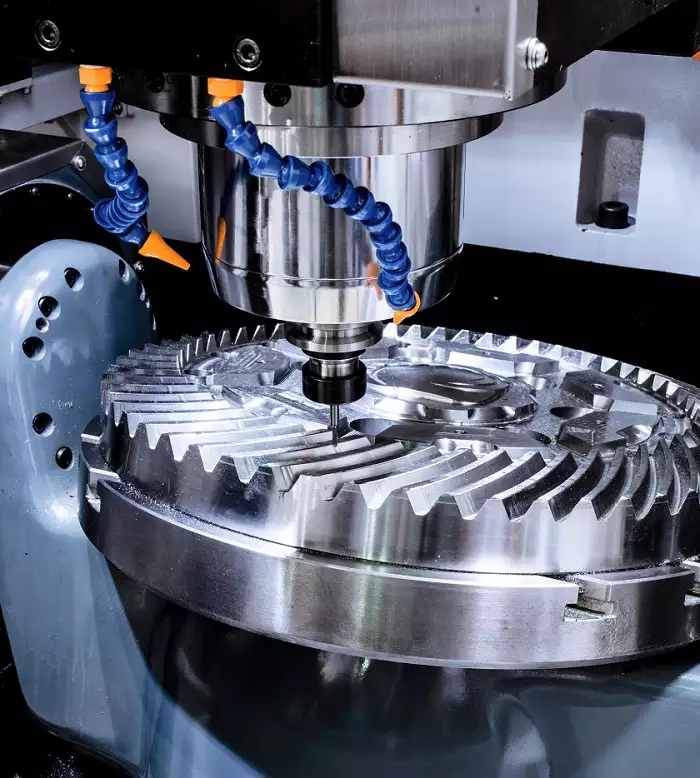
At our gear manufacturing factory, we follow a meticulous process to ensure the production of high-quality gears. Our manufacturing process includes the following steps:
- Preparation of Raw Materials: Forging and Heat Treatment
- Rough Machining: Turning, Drilling, and Boring
- Forming Process: Gear Rolling, Gear Insertion, and Gear Hobbing
- Semi-Precision Machining: Chamfering, Keyway Cutting, and Deburring
- Heat Treatment: Carburizing, Nitriding or Quenching and Tempering
- Precision Machining: Gear Grinding and Gear Honing
- Inspection and Acceptance: Gear Measurement and Surface Treatment
1. Preparation of Raw Materials: Forging and Heat Treatment
The gear manufacturing process begins with the preparation of raw materials. The raw materials undergo forging to achieve the desired shape and density. Subsequently, heat treatment is carried out to enhance the material’s hardness, strength, and wear resistance.
2. Rough Machining: Turning, Drilling, and Boring
After the heat treatment process, rough machining takes place. This step involves turning, drilling, and boring operations to shape the gear blank according to the required specifications. These operations ensure proper dimensional accuracy and prepare the gear for the subsequent forming processes.
3. Forming Process: Gear Rolling, Gear Insertion, and Gear Hobbing
The forming process is critical in creating the gear tooth profile. It includes gear rolling, gear insertion, and gear hobbing. Gear rolling applies pressure to deform the gear teeth, gear insertion involves inserting pre-cut gear teeth into the gear blank, and gear hobbing uses a specialized cutting tool to shape the teeth accurately.
4. Semi-Precision Machining: Chamfering, Keyway Cutting, and Deburring
To further refine the gear’s shape and functionality, semi-precision machining techniques are employed. Operations such as chamfering, keyway cutting, and deburring are performed to remove any sharp edges, create keyway slots, and eliminate burrs that may affect the gear’s performance and assembly.
5. Heat Treatment: Carburizing, Nitriding or Quenching and Tempering
Heat treatment is a crucial step that enhances the gear’s mechanical properties. Carburizing, nitriding, or quenching and tempering processes are employed to improve the gear’s surface hardness, wear resistance, and core toughness. These treatments ensure the gear can withstand the demanding operational conditions it may encounter.
6. Precision Machining: Gear Grinding and Gear Honing
Precision machining operations, such as gear grinding and gear honing, are performed to achieve the desired tooth profile accuracy and surface finish. Gear grinding removes any imperfections from the tooth profile, while gear honing further refines the surface finish, ensuring optimal gear meshing and reduced friction.
7. Inspection and Acceptance: Gear Measurement and Surface Treatment
The final step involves thorough inspection and acceptance of the gears. Gear measurement techniques, such as coordinate measuring machines and gear testers, are utilized to verify the dimensional accuracy, tooth profile, and surface quality. Additionally, surface treatment processes, such as coating or plating, may be applied to enhance the gear’s corrosion resistance and aesthetics.
About Our Gear Manufacturing Factory
We are a reputable gear manufacturing factory committed to delivering exceptional quality gears to meet our customers’ diverse needs. Choosing to collaborate with us brings numerous advantages:
- Advanced Technology: We leverage cutting-edge technology and modern machinery to ensure precise manufacturing processes and superior gear quality.
- Skilled Workforce: Our team consists of highly skilled and experienced professionals who possess in-depth knowledge of gear manufacturing techniques.
- Customization Capabilities: We offer customization options to cater to specific gear requirements, ensuring optimal performance and compatibility with various applications.
- Stringent Quality Control: We adhere to strict quality control measures at every stage of the manufacturing process, guaranteeing the production of gears with exceptional precision and durability.
- Timely Delivery: We prioritize efficient production planning and timely delivery to ensure customer satisfaction and minimize production lead times.
- Competitive Pricing: Despite our commitment to quality, we offer competitive pricing to provide our customers with excellent value for their investment.
Author: Miya