Gear Tolerances in External Gear Manufacturing
External gear manufacturing is a precise process that requires careful consideration of gear tolerances. In this blog post, we will explore the importance of gear tolerances and how they impact the overall performance and functionality of gears.
1. Understanding Gear Tolerances
Gear tolerances refer to the allowable variation in dimensions and characteristics of gears during the manufacturing process. These tolerances play a crucial role in ensuring the proper functioning of gears and the overall performance of mechanical systems.
2. Importance of Gear Tolerances
Accurate gear tolerances are essential for various reasons:
- 1. Optimal Power Transmission: Precise gear tolerances ensure efficient power transfer between gears, minimizing energy losses and maximizing system performance.
- 2. Noise and Vibration Reduction: Proper gear tolerances help reduce noise and vibration generated during gear operation, leading to smoother and quieter mechanical systems.
- 3. Gear Durability: Adequate gear tolerances prevent premature wear and failure, enhancing the lifespan and reliability of gears.
3. Factors Affecting Gear Tolerances
Several factors influence gear tolerances:
- 1. Gear Type: Different gear types, such as spur gears, helical gears, and bevel gears, have specific tolerance requirements based on their design and application.
- 2. Manufacturing Method: The chosen manufacturing method, such as hobbing or shaping, can impact gear tolerances.
- 3. Material Properties: The material properties, including hardness and thermal expansion, affect the required gear tolerances.
- 4. Operating Conditions: Environmental factors like temperature, lubrication, and load conditions influence gear tolerances.
4. Gear Tolerance Classification
Gear tolerances are classified based on specific parameters:
- 1. Tooth Profile Tolerance: Refers to the allowable deviation in the tooth shape and profile contour.
- 2. Pitch Diameter Tolerance: Represents the acceptable variation in the gear’s pitch diameter, which affects the gear’s engagement and meshing characteristics.
- 3. Runout Tolerance: Indicates the permissible radial and axial movement of the gear during rotation.
- 4. Backlash Tolerance: Defines the allowable clearance between mating gears.
5. Achieving Precise Gear Tolerances
To ensure accurate gear tolerances, manufacturers employ various techniques:
- 1. Tight Control of Manufacturing Processes: Implementing strict process controls and quality assurance measures throughout the manufacturing process.
- 2. Advanced Machining Technologies: Utilizing high-precision machining equipment, such as CNC gear hobbing machines or precision gear grinding machines.
- 3. Metrology and Inspection: Employing advanced metrology tools and inspection methods to verify gear tolerances and ensure compliance with specifications.
6. Conclusion
Gear tolerances are a critical aspect of external gear manufacturing. Precise gear tolerances contribute to optimal power transmission, reduced noise and vibration, and enhanced gear durability. By understanding the factors influencing gear tolerances and implementing appropriate manufacturing techniques, manufacturers can achieve high-quality gears that meet the demanding requirements of various mechanical applications.
Our company specializes in the production and sale of external gears, offering top-quality gear products for various industries. With years of experience and expertise, we take pride in our competitive edge in the market. Here are five key advantages that set our company apart:
-
Superior Gear Tolerances: Our gear manufacturing process ensures exceptional precision and tight tolerances, resulting in gears that offer optimal performance and durability.
-
Extensive Material Options: We provide a wide range of material options for external gears, allowing customers to choose the most suitable material for their specific applications, whether it’s stainless steel, alloy steel, or other high-quality materials.
-
Customization Capabilities: Our company understands the unique needs of different industries and provides tailored solutions. We offer customization services to meet specific gear requirements, ensuring the perfect fit for each application.
-
Efficient Production Process: With advanced machinery and a streamlined production process, we can deliver gears with quick turnaround times without compromising on quality.
-
Reliable Technical Support: Our team of experts is dedicated to providing excellent technical support throughout the entire gear manufacturing process. We offer guidance and assistance to ensure smooth integration of our gears into customers’ systems.
Types of External Gears
External gears come in various types, each with its own unique characteristics and applications. Here are some of the most common types:
Spur Gears
Spur gears are the simplest and most common type of external gears. They have straight teeth and are widely used in applications that require speed reduction or torque amplification.
Helical Gears
Helical gears have angled teeth that offer smoother operation and higher load-carrying capacity compared to spur gears. They excel in applications where efficiency, precision, and quiet operation are essential.
Bevel Gears
Bevel gears have cone-shaped teeth and are used to transmit motion between intersecting shafts. They are commonly employed in applications that require changes in direction or orientation.
Worm Gears
Worm gears consist of a worm (a screw-like gear) and a worm wheel. They provide high gear reduction ratios and are often used in applications requiring precise speed control and compact designs.

Differences between External and Internal Gears
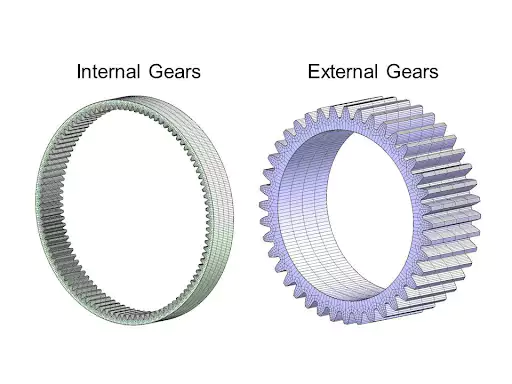
| Aspect | External Gear | Internal Gear |
|---|---|---|
| Gear Placement | Located outside the gear rim | Located inside the gear rim |
| Teeth Orientation | Straight or helical teeth | Straight or helical teeth |
| Efficiency | Slightly lower | Slightly higher |
| Complexity | Less complex | More complex |
| Applications | Widely used in various industries | Commonly found in specific applications, such as certain types of pumps and machinery |
Role of External Gears in Power Transmission Systems
External gears play a crucial role in power transmission systems, contributing to their overall efficiency and performance. Here are some key functions of external gears:
- Transferring rotational motion and torque between parallel or intersecting shafts.
- Controlling speed and direction of rotation.
- Amplifying torque or reducing speed through gear ratios.
- Ensuring smooth and precise transmission of power.
- Supporting heavy loads and providing reliable operation.
Typical Applications
External gears find wide applications across various industries. Here are some notable examples:
- Automotive Industry: External gears are commonly used in automotive transmissions, differential systems, and steering mechanisms to ensure smooth and efficient power transfer.
- Industrial Machinery: They are essential components in machinery such as gearboxes, conveyors, and heavy-duty equipment, facilitating reliable and precise motion control.
- Appliances and Precision Instruments: External gears are integral to the operation of appliances like washing machines, printers, and cameras, as well as precision instruments like watches and measuring devices.
- Electric Vehicles and Hybrid Systems: In the realm of sustainable transportation, external gears are vital elements in electric vehicle drivetrains and hybrid propulsion systems, ensuring efficient energy conversion.
Design and Selection Considerations for External Gears
Designing and selecting external gears require careful consideration of several factors:
- Load requirements and torque transmission capabilities.
- Speed ratios and gear tooth profiles for optimal performance.
- Material selection for strength, wear resistance, and compatibility with operating conditions.
- Lubrication and maintenance requirements to ensure long-term reliability and performance.
- Noise and vibration control to enhance overall system efficiency and user comfort.
At our company, we are dedicated to delivering top-notch external gears that meet and exceed your expectations. Partner with us to experience the advantages of our superior products and outstanding customer service.
Author: Miya