What materials are used to make straight bevel gears?
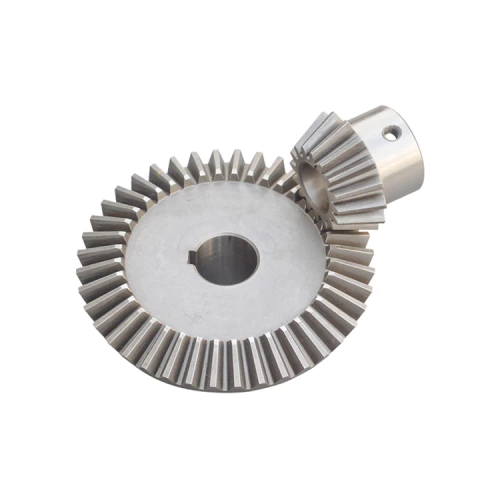
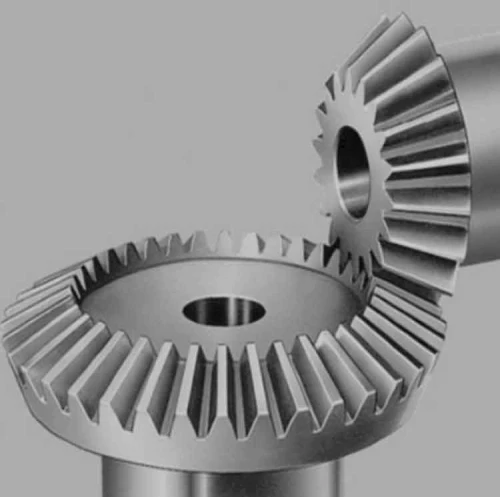
A straight bevel gear is a type of bevel gear that has straight teeth and a conical shape. It is used to transmit power between intersecting shafts at a right angle. The teeth of a straight bevel gear are cut straight and parallel to the generator cone, resulting in a gear with a straight tooth profile.

Advantages of Straight Bevel Gears
1. Efficiency: Straight bevel gears are known for their high efficiency in power transmission. They have minimal frictional losses, resulting in efficient energy transfer between shafts.
2. High load capacity: Straight bevel gears are designed to handle heavy loads and transmit high torque. They are capable of transmitting power in various industrial applications.
3. Compact design: Straight bevel gears have a compact and space-saving design, making them suitable for applications where space is limited.
4. Smooth operation: When properly designed and manufactured, straight bevel gears provide smooth and quiet operation, minimizing noise and vibration.
5. Versatility: Straight bevel gears can be used in a wide range of applications, including automotive systems, industrial machinery, power tools, and marine equipment.
6. Easy maintenance: Straight bevel gears are relatively easy to inspect and maintain. They can be disassembled and reassembled without extensive effort, allowing for convenient maintenance and repair.
7. Cost-effective: Compared to other types of bevel gears, straight bevel gears are often more cost-effective due to their simpler manufacturing process and lower complexity.

Manufacturing Process of Straight Bevel Gears
1. Design and Engineering
2. Material Selection
3. Gear Cutting
4. Heat Treatment
5. Finishing Operations
6. Inspection and Quality Control
7. Assembly
Applications of Straight Bevel Gears
1. Agricultural Machinery: Straight bevel gears are used in agricultural machinery such as tractors and harvesters to transmit power and drive various components.
2. Automotive Industry: Straight bevel gears are used in automotive systems, including differential gears, steering systems, and axle shafts.
3. Robotics: Straight bevel gears are used in robotic systems to transmit power and control motion in various directions.
4. Medical Equipment: Straight bevel gears are used in medical equipment such as surgical robots and imaging devices for precise and reliable motion control.
5. Power Tools: Straight bevel gears are used in power tools such as drills and saws to transmit power and enable efficient operation.
6. Renewable Energy: Straight bevel gears are used in wind turbines and solar tracking systems to transmit power and adjust the orientation of the equipment.
7. Aerospace and Defense: Straight bevel gears are used in aerospace and defense applications such as aircraft landing gear systems and missile guidance systems.
8. Marine and Watercraft: Straight bevel gears are used in marine and watercraft applications such as propulsion systems and steering mechanisms.

Installation and Maintenance
Installation:
1. Cleanliness
2. Lubrication
3. Mounting
4. Torque and Fasteners
Maintenance:
1. Regular Inspection
2. Cleaning
3. Lubrication
4. Wear and Damage Assessment
5. Alignment Check
6. Professional Maintenance

How to Select the Right Straight Bevel Gear
1. Design Requirements: Consider the specific design requirements of your application, including torque, speed, and load capacity.
2. Load Capacity: Determine the maximum load that the straight bevel gear needs to handle to ensure reliable and efficient operation.
3. Gear Material: Choose a suitable material that provides the necessary strength and durability for the application’s operating conditions.
4. Efficiency: Consider the desired efficiency of power transmission to minimize energy losses and maximize system performance.
5. Noise and Vibration: Take into account the noise and vibration requirements of the application to ensure smooth and quiet operation.
6. Accuracy and Tolerance: Determine the required gear accuracy and tolerance level to meet the application’s performance specifications.
7. Environmental Factors: Consider environmental factors such as temperature, humidity, and corrosion resistance to select a gear material that can withstand the conditions.
8. Manufacturer Reputation: Choose a reputable manufacturer with a track record of producing high-quality straight bevel gears.
9. Cost Considerations: Evaluate the cost-effectiveness of the gear based on the overall performance, quality, and long-term maintenance requirements.
About EVER POWER
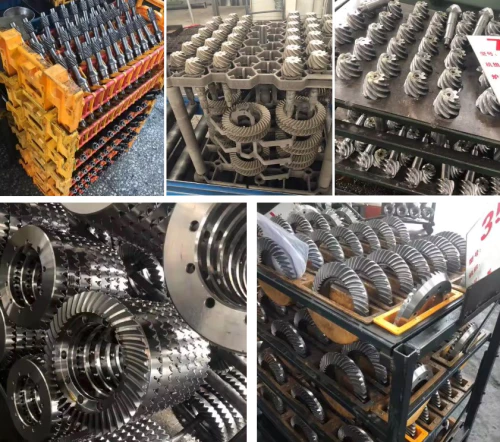
EVER POWER is a professional manufacturer of gears in China. Its products are mainly sold to hundreds of fixed suppliers such as domestic steel rolling mills, shipyards, precision machine tool factories, automation machinery factories, and various distribution companies, and exported to Western Europe, the Middle East, and Southeast Asia and other countries and regions. The developing EVER POWER currently has hundreds of employees, including many engineers, with fixed assets of 20 million yuan and an annual output value of 50 million yuan.
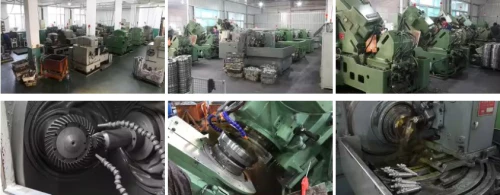
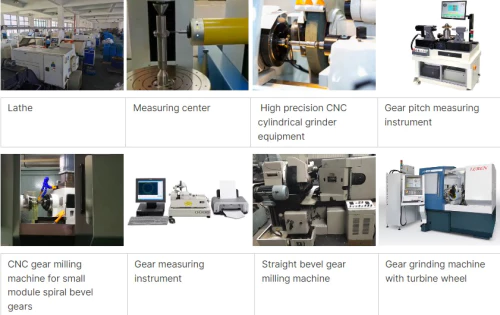
The company has a complete set of strict quality management systems, equipped with a series of precision measuring instruments such as optical projectors and 16 full-process production monitoring systems. EVER POWER has considerable competitiveness in the same industry.
Frequently Asked Questions (FAQs)
Q: What is the purpose of straight bevel gears?
A: Straight bevel gears are used to transmit power between intersecting shafts at a right angle in various applications, including automotive systems, industrial machinery, and marine equipment.
Q: How are straight bevel gears different from other types of bevel gears?
A: Straight bevel gears have straight teeth that are cut straight and parallel to the generator cone, resulting in a gear with a straight tooth profile. Other types of bevel gears, such as spiral bevel gears, have curved teeth.
Q: What are the advantages of using straight bevel gears?
A: Straight bevel gears offer advantages such as high efficiency, high load capacity, compact design, smooth operation, versatility, easy maintenance, and cost-effectiveness.
Q: Can straight bevel gears handle heavy loads?
A: Yes, straight bevel gears are designed to handle heavy loads and transmit high torque. They are commonly used in applications that require reliable power transmission under demanding conditions.
Q: What materials are commonly used to make straight bevel gears?
A: Common materials for straight bevel gears include steel alloys, cast iron, and non-ferrous metals such as bronze. The choice of material depends on the application’s requirements for strength, durability, and resistance to wear and corrosion.