Bevel gears are an essential component in many mechanical systems. They are unique in their design and function, making them indispensable in various applications. This article provides a comprehensive overview of what bevel gears are, their types, selection parameters, manufacturing process, and more. Moreover, we’ll introduce our top-notch production capability of bevel gears and other gear products.
What is a Bevel Gear?
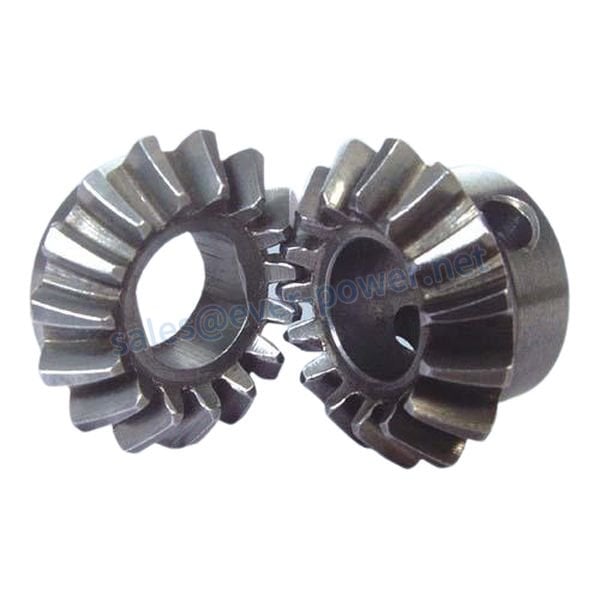
Bevel gears are gears designed with teeth located on a conical surface. The main characteristic of bevel gears is their ability to transmit force between two intersecting shafts. They are commonly used in drive systems, automotive differentials, and power transmission systems.
High-Quality Bevel Gears Production
We pride ourselves in the production of high-quality bevel gears. Our products stand out due to the following features:
- High durability
- Superior performance
- Precision-crafted
- Resistant to wear and tear
- Innovative design
Types of Bevel Gears
There are different types of bevel gears, each with its unique features and applications:
Straight Bevel Gear
Straight Bevel Gears have straight and tapered teeth and are used in applications requiring slow speeds.
Spiral Bevel Gear
Spiral Bevel Gears have curved and oblique teeth. They are known for their quiet operation and are used in applications requiring high-speed, high-torque applications.
Zerol Bevel Gear
Zerol Bevel Gears are very similar to spiral bevel gears, except the teeth are curved as in a spiral bevel gear but they are not angled.
Spiral Zerol Bevel Gear
Spiral Zerol Bevel Gears are a hybrid of spiral and zerol bevel gears. They have curved teeth like a spiral gear but without the angle, allowing for higher torque transmission and smoother operation.
Selecting the Right Bevel Gear
Choosing the right bevel gear involves understanding several parameters:
- Module: This is the unit of size that indicates how big or small a gear is.
- Number of Teeth: This affects the gear’s rotational speed and torque.
- Gear Ratio: This is the ratio between the input and output speeds of the gear system.
- Pitch: This is the distance between corresponding points on adjacent teeth.
- Gear Material: This affects the gear’s strength, durability, and performance.
- Precision Grade: This indicates the gear’s level of precision and efficiency.
- Load Capacity: This is the maximum load the gear can handle.

Bevel Gear Manufacturing Process
The production of bevel gears involves several steps:
- Design and engineering
- Material selection
- Cutting and machining
- Grinding and polishing
- Heat treatment
- Cleaning and inspection
- Assembly and finishing
- Surface treatment and coating
- Final inspection and quality control
Additional Gear and Gearbox Products
In addition to bevel gears, we also produce other types of gears and gearboxes, such as worm gears, helical gears, spur gears, gear racks, worm gearboxes, planetary gearboxes, and helical gearboxes.
Why Choose Us
We are a leading manufacturer of top-quality gears and gearboxes. We utilize advanced production and inspection equipment such as CNC Gear grinding machine, gear measuring machine, CNC gear shaper, machine center, CMMS, and Torque test system. Our commitment to quality, customization, and excellent after-sales service sets us apart from the competition.
Trust us to provide you with the best gear solutions tailored to your needs. Contact us today for more information.