What are the main challenges in developing spiral bevel gears for high-speed applications such as aircraft engines?
Introduction
Spiral bevel gears are critical components in high-speed applications, particularly in aircraft engines. The development of these gears poses several challenges that need to be addressed for optimal performance and reliability. This article will delve into the main challenges faced in developing spiral bevel gears for high-speed applications like aircraft engines, providing insights into each aspect.
1. Design complexity and optimization
The intricate design of spiral bevel gears, with curved teeth and varying angles, presents a significant challenge in achieving optimal performance. Designing gears that can withstand high speeds and transmit power efficiently requires intricate calculations, precise tooth profiling, and advanced optimization techniques.
2. Material selection and heat treatment
The choice of materials for spiral bevel gears is crucial in ensuring long-term durability and reliability. High-speed applications demand materials with excellent strength, fatigue resistance, and heat dissipation properties. Additionally, the heat treatment process plays a vital role in enhancing the gear’s hardness, toughness, and wear resistance.
3. Manufacturing precision and accuracy
Manufacturing spiral bevel gears with high precision and accuracy is essential for achieving smooth and efficient gear operation. The complex tooth geometry and tight tolerances require advanced machining techniques, such as CNC gear cutting and grinding, to ensure proper fit, alignment, and minimal backlash.
4. Noise and vibration reduction
High-speed applications, like aircraft engines, demand low noise and vibration levels to ensure optimal performance and passenger comfort. Achieving smooth and quiet gear operation requires careful design considerations, precise tooth profiling, and the use of noise reduction techniques such as tooth modifications and gear balancing.
5. Lubrication and cooling
Effective lubrication and cooling are crucial for the proper functioning and longevity of spiral bevel gears in high-speed applications. The gear design should allow for efficient oil circulation and cooling channels to dissipate heat generated during operation, preventing premature wear, and ensuring optimal gear performance.
6. Testing and validation
Thorough testing and validation of spiral bevel gears are essential to ensure their performance meets the stringent requirements of high-speed applications. Rigorous testing methods, including noise analysis, vibration testing, and load testing, are employed to verify the gear’s durability, efficiency, and reliability under real-world operating conditions.
7. Maintenance and repair
High-speed applications demand regular maintenance and, if necessary, prompt repair of spiral bevel gears. Accessible design for ease of maintenance, availability of spare parts, and efficient repair processes are crucial considerations in the development of these gears.
Conclusion
Developing spiral bevel gears for high-speed applications like aircraft engines comes with numerous challenges. From design complexity to material selection, manufacturing precision, noise reduction, lubrication, testing, and maintenance, each aspect requires meticulous attention to detail for optimal gear performance. Overcoming these challenges is crucial to ensure the reliable and efficient operation of gears in critical applications.
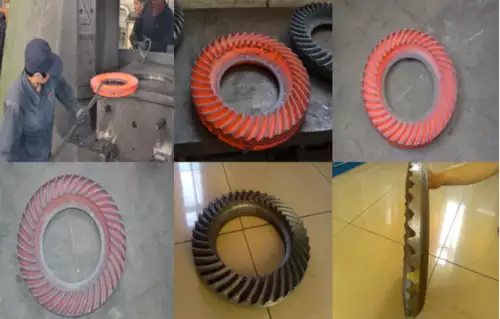
Factory Introduction
We are a professional gear manufacturing factory specializing in the production of high-quality spiral bevel gears. Our state-of-the-art facility and advanced technology enable us to deliver gears that meet the most stringent requirements of high-speed applications.
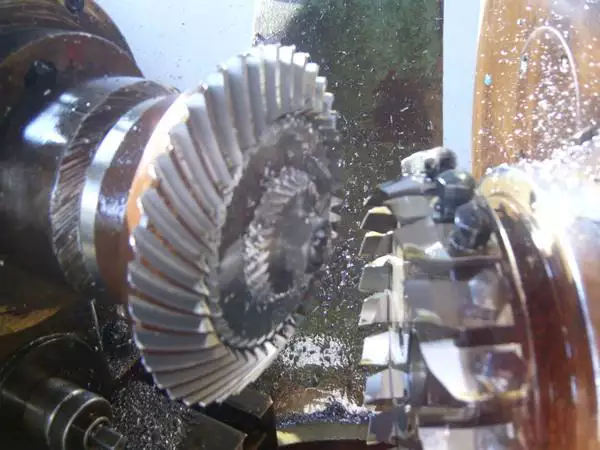
Processing and Technology
- 1. Blank Preparation: We begin by preparing the gear blank through processes such as forging and heat treatment to ensure optimal material properties.
- 2. Rough Machining: The gear blank undergoes rough machining processes like turning, drilling, and boring to achieve the desired shape and dimensions.
- 3. Forming Processes: We employ gear cutting methods such as gear hobbing, gear shaping, and gear shaving to accurately form the gear teeth.
- 4. Semi-Finishing: The semi-finishing stage involves processes like chamfering, keyway cutting, and deburring to enhance the gear’s functionality and aesthetics.
- 5. Heat Treatment: Heat treatment processes like carburizing, nitriding, or quenching and tempering are carried out to improve the gear’s hardness, wear resistance, and strength.
- 6. Finishing: Gear finishing processes, including gear grinding and honing, are employed to achieve the required surface finish and precise tooth profiles.
- 7. Inspection and Acceptance: The final step involves thorough gear inspection using advanced testing methods and surface treatments to ensure the highest quality standards are met.
With our comprehensive processing and technology, we can deliver spiral bevel gears that excel in performance, durability, and reliability.
Advantages of Choosing Our Factory
- Expertise in developing gears for high-speed applications, including aircraft engines.
- State-of-the-art manufacturing facility equipped with advanced technology.
- Utilization of high-quality materials and precise heat treatment processes.
- Meticulous attention to detail in design, manufacturing, and testing.
- Strict quality control measures to ensure superior gear performance.
- Prompt and efficient maintenance and repair services.
- Competitive pricing and timely delivery.
Choose our factory for your spiral bevel gear needs and experience the highest level of quality and reliability in gear manufacturing.
Author: Miya