What are the disadvantages of gravure printing?
A gravure press, also known as a rotogravure press, is a type of printing press used for high-quality, high-volume printing of images and designs. Gravure printing is a process that involves engraving an image onto a cylinder, which is then used to transfer ink onto the printing substrate.
Cylinder Engraving
In gravure printing, the image or design is engraved onto a cylinder, typically made of copper or chrome-plated steel. The engraving is done by etching or engraving cells of varying depths onto the cylinder surface.
Ink Application
The cylinder is partially submerged in an ink fountain, and excess ink is wiped off the surface using a doctor blade. The remaining ink is held in the engraved cells on the cylinder.
Printing Process
As the cylinder rotates, it comes into contact with the printing substrate, typically a flexible material such as paper or plastic. The ink from the cells is transferred to the substrate under pressure, creating the printed image.
High Volume Printing
Gravure presses are known for their ability to handle large print runs efficiently. They are commonly used for printing newspapers, magazines, catalogs, packaging materials, and decorative laminates.
Image Quality
Gravure printing offers excellent image reproduction with sharp details and vibrant colors. The engraved cells hold a consistent and precise amount of ink, resulting in consistent print quality throughout the print run.
Substrate Compatibility
Gravure presses can print on a wide range of substrates, including paper, plastic films, foils, and synthetic materials. The press configuration and ink formulation can be tailored to suit the specific substrate requirements.
Drying and Curing
After printing, the ink on the substrate needs to be dried or cured. This can be achieved through various methods, such as hot air drying, infrared drying, or UV curing, depending on the ink formulation and substrate.
Disadvantages of Gravure Printing
Despite its many advantages, gravure printing has some disadvantages:
- Setup Cost: The initial setup cost for gravure printing can be high, especially for small print runs.
- Flexibility: Gravure printing is not as flexible as other printing methods, as changes to the design or image require modifying the engraving on the cylinder.
- Longer Lead Time: The cylinder engraving process in gravure printing can take time, resulting in longer lead times compared to other printing methods.
- Ink Usage: Gravure printing consumes more ink compared to other printing methods, which can increase printing costs.
- Environmental Impact: The ink used in gravure printing can be difficult to recycle, leading to potential environmental concerns.
- Complex Maintenance: Gravure presses require specialized maintenance and skilled operators to ensure optimal performance.
Conclusion
Gravure printing has several advantages, such as high-quality image reproduction and the ability to handle large print runs. However, it also has certain disadvantages, including higher setup costs, limited flexibility, and potential environmental impact. Considering these factors can help businesses make informed decisions when choosing a printing method.
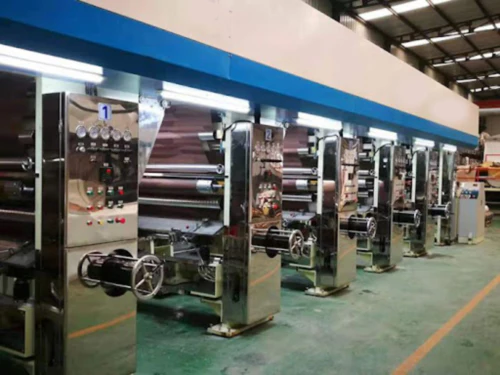
About EVER-POWER
EVER-POWER is a leading manufacturer of gravure printing machines. We specialize in the research, development, and production of printing and packaging equipment, precision coating equipment, and special electromechanical equipment. Our products include printing equipment, precision coating equipment, new energy and new material production lines, complete sets of water treatment film materials production lines, complete sets of decorative materials production lines, intelligent production lines, and precision processing services.


EVER-POWER utilizes aerospace optoelectronic technology and precision machining capabilities to deliver high-quality products. We have a core technology group that focuses on tension system coupling modeling, equipment intelligent control, precision coating composite technology, high-speed high-definition printing, coating curing, solvent residue control, and multi-material adaptive winding. With over 239 national patents and more than 10 national high-tech achievement awards, EVER-POWER is dedicated to providing innovative and reliable solutions.
Choose EVER-POWER for Superior Printing Solutions
Looking for a gravure printing machine that surpasses other brands? Look no further than EVER-POWER. Our state-of-the-art machines are designed to deliver exceptional performance and reliability. Explore our range of products and experience the difference!
Frequently Asked Questions (FAQ)
- Q: What factors should be considered when selecting a gravure printing press?
- Q: How should the gravure plate be selected for printing?
- Q: What are the key maintenance tasks for gravure presses?
- Q: What
A: Some factors to consider include printing volume, substrate compatibility, print quality requirements, press size and configuration, automation and control systems, maintenance and service, energy efficiency, budget considerations, future expansion and upgrades, and references and reviews.
A: The gravure plate should be chosen based on specific printing requirements, considering factors such as substrate type, desired image resolution, ink compatibility, and expected print run length.
A: Regular cleaning of press components, lubrication of moving parts, inspection and adjustment of critical components, maintenance of printing cylinders and engraving surfaces, and proper ink system management are essential maintenance tasks for gravure presses.