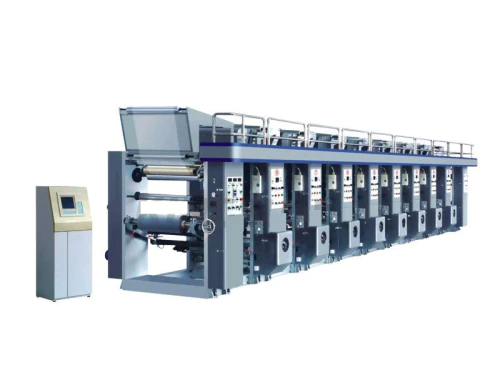
How can the ink drying speed be optimized in gravure printing on laminated substrates?
Gravure printing is a widely used printing technique for high-quality and high-volume printing on laminated substrates. Optimizing the ink drying speed is crucial to ensure efficient production and maintain print quality. Here, we will explore different methods and factors that can help optimize the ink drying speed in gravure printing on laminated substrates.
1. Ink formulation and composition
The ink formulation plays a significant role in the drying speed. By adjusting the composition of the ink, such as the solvent content and the type of drying agents, it is possible to accelerate the drying process. Incorporating fast-drying solvents and additives can help improve the ink’s drying speed on laminated substrates.
2. Drying method and equipment
The choice of drying method and equipment can greatly impact the ink drying speed. Different drying techniques, such as hot air drying, infrared drying, or UV curing, can be employed based on the ink formulation and substrate characteristics. Each method has its advantages and considerations, so selecting the most suitable drying method is essential for optimizing the drying speed.
3. Substrate properties
The properties of the laminated substrates, such as porosity, surface tension, and thermal conductivity, can affect the ink drying speed. It is important to consider these factors when selecting the ink formulation and drying parameters. Proper ink-substrate interaction can enhance drying efficiency and minimize drying issues like ink smearing or slow drying.
4. Drying temperature and airflow control
Controlling the drying temperature and airflow is crucial for optimizing ink drying speed. Higher temperatures can accelerate the drying process, but excessive heat may cause substrate deformation or ink quality issues. An optimal balance between temperature and airflow should be maintained to ensure efficient and uniform drying on laminated substrates.
Images:
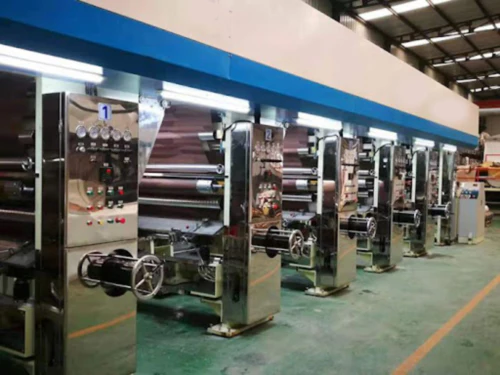

Work Principle:
Gravure printing on laminated substrates involves several key steps:
1. Engraving: The image or design is engraved onto a cylinder, typically made of copper or chrome-plated steel. The depth of the engraved cells determines the ink volume to be transferred during printing.
2. Ink Application: Ink is applied to the engraved cylinder, and excess ink is wiped off the surface using a doctor blade, leaving ink only in the engraved cells.
3. Ink Transfer: The laminated substrate, such as paper or plastic, passes between the engraved cylinder and a pressure roller. The pressure roller presses the substrate against the cylinder, and the ink is transferred from the cells to the substrate. The combination of pressure and rotation ensures uniform ink transfer.
4. Drying and Curing: After ink transfer, the printed substrate goes through a drying process. Various drying methods, including hot air drying, infrared drying, or UV curing, can be employed depending on the ink formulation and substrate. These methods help evaporate solvents and fix the ink onto the surface efficiently.
Applications:
Gravure printing on laminated substrates finds extensive applications in various industries:
1. Flexible Packaging: Gravure printing is widely used for printing on flexible packaging materials such as plastic films, laminates, and foils. It offers excellent print quality, vibrant colors, and good ink adhesion, making it suitable for food packaging, labels, pouches, and wrappers.
2. Publication Printing: Gravure printing is employed for high-volume publication printing, including magazines, catalogs, and newspapers. It can handle large print runs efficiently and produces sharp images and text.
3. Decorative Printing: Gravure printing is used for decorative purposes, such as printing on wallpaper, gift wrap, and decorative laminates. It enables precise replication of intricate patterns and designs.
4. Security Printing: Gravure printing is utilized for printing security features on banknotes, passports, stamps, and other secure documents. Its ability to reproduce fine details and complex designs makes it suitable for anti-counterfeiting measures.
5. Industrial Printing: Gravure printing finds application in industrial settings, such as printing patterns on fabrics, wallpapers, laminates, and vinyl flooring.
Selection Considerations:
When selecting a gravure printing press for laminated substrates, the following factors should be considered:
1. Printing Volume: Choose a press that can handle the desired print volume efficiently without compromising print quality.
2. Substrate Compatibility: Ensure that the press is compatible with the specific laminated substrates used in the printing application. Consider factors such as substrate thickness, surface tension, and dimensional stability.
3. Print Quality Requirements: Assess the required print quality, including image resolution, color accuracy, and detail reproduction, to select a press that meets those specifications.
4. Press Size and Configuration: Consider the available space and production requirements when selecting the press size and configuration. The press should fit the production facility and offer the necessary features for efficient printing.
5. Automation and Control Systems: Evaluate the automation and control capabilities of the press, such as registration control, tension control, and ink flow control. Advanced systems can improve printing accuracy and reduce waste.
6. Maintenance and Service: Consider the availability of technical support, spare parts, and maintenance services for the selected press. A reliable support network ensures minimal downtime and efficient maintenance.
7. Energy Efficiency: Look for energy-efficient features in the press, such as energy recovery systems and optimized drying processes. Energy-efficient presses can reduce operational costs and environmental impact.
8. Budget Considerations: Take into account the initial investment cost, as well as long-term operational costs, when selecting a gravure printing press. It is essential to find the right balance between performance and affordability.
9. Future Expansion and Upgrades: Consider the scalability of the press and the possibility of future upgrades or expansions. A flexible press design allows for future adaptations to changing production needs.
10. References and Reviews: Research and gather references and reviews from other users or industry experts to gain insights into the performance and reliability of different press models and manufacturers.
Installation and Maintenance:
Installation:
1. Site Preparation: Ensure that the installation area is properly prepared, including a leveled floor, adequate space for the press, and necessary utilities such as electricity, water, and compressed air.
2. Foundation and Anchoring: Install the press on a stable foundation to minimize vibrations. Anchor the press securely to the floor to prevent movement during operation.
3. Mechanical Assembly: Follow the manufacturer’s instructions for the mechanical assembly of the press. This includes installing components such as the printing units, impression cylinders, doctor blade systems, drying systems, and web handling mechanisms.
4. Electrical and Control Integration: Connect the electrical cables and wiring according to the provided schematics. Integrate the control panels and ensure proper communication with the press