What are the differences between parallel and helical spline shafts?
Introduction
In the realm of mechanical engineering, spline shafts play a crucial role in transmitting torque and rotational motion between different components. Two common types of spline shafts are parallel and helical spline shafts. While both are designed to fulfill similar functions, they possess distinct characteristics and applications. In this article, we will explore the differences between parallel and helical spline shafts.
1. Structure
Parallel Spline Shafts:
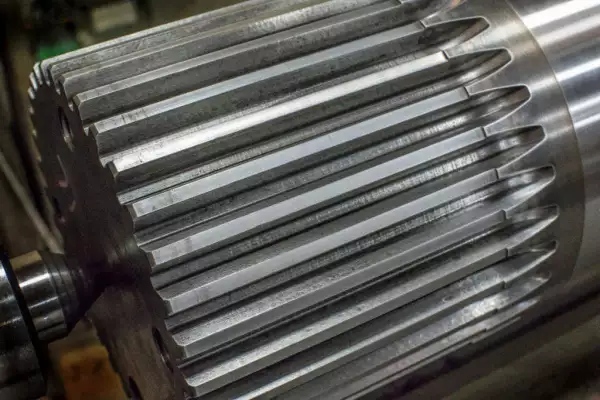
Parallel spline shafts feature straight-sided grooves or ridges, which run parallel to the shaft’s axis. These grooves are equally spaced and extend along the entire length of the shaft. The mating component, such as a gear or coupling, has corresponding teeth or splines that fit precisely into the grooves of the parallel spline shaft.
Helical Spline Shafts:
Unlike parallel spline shafts, helical spline shafts have helically shaped grooves or ridges. The helix angle, typically ranging from a few degrees to several dozen degrees, allows for gradual engagement of the mating component. This design provides smoother and more gradual torque transfer, reducing vibration and noise.
2. Torque Transmission
Parallel Spline Shafts:
Due to their straight-sided grooves, parallel spline shafts excel in transmitting torque and rotational motion in applications requiring high torque loads. The parallel orientation of the splines ensures efficient power transmission and uniform distribution of forces.
Helical Spline Shafts:
Helical spline shafts, with their helical grooves, offer improved load distribution and increased torque capacity compared to parallel spline shafts. The helical design allows for smooth and gradual engagement, reducing stress concentrations and enhancing overall strength and durability.
3. Misalignment Compensation
Parallel Spline Shafts:
Parallel spline shafts are less tolerant of misalignment between the mating components compared to helical spline shafts. Misalignment can result in increased wear and premature failure of the spline system.
Helical Spline Shafts:
Helical spline shafts are more forgiving when it comes to misalignment. The helical design allows for slight axial and angular misalignments, minimizing the risk of premature wear and failure. This characteristic makes them suitable for applications where misalignment is inevitable.
4. Applications
Parallel Spline Shafts:
Parallel spline shafts find extensive use in heavy-duty applications that demand high torque transmission, such as industrial machinery, construction equipment, and marine propulsion systems.
Helical Spline Shafts:
Helical spline shafts are commonly employed in applications that require smooth and quiet operation, such as automotive transmissions, power tools, and precision instruments.
Conclusion
In summary, parallel and helical spline shafts differ in their structure, torque transmission capabilities, ability to compensate for misalignment, and applications. Parallel spline shafts excel in high-torque applications but are less tolerant of misalignment, while helical spline shafts offer smoother torque transfer, better load distribution, and improved misalignment compensation. Understanding these differences is crucial in selecting the appropriate spline shaft for a given application, ensuring optimal performance and longevity.
Our company specializes in producing and selling various types of gears and spline shafts. With years of experience in the industry, we have established ourselves as a leading provider in the market. Here are five key advantages of our company:
- High-quality products: We pride ourselves on manufacturing gears and spline shafts of the highest quality, ensuring durability and reliability.
- Wide range of options: We offer a diverse range of gear and spline shaft options to cater to different applications and requirements.
- Customization capabilities: Our team of experts is skilled in customizing gears and spline shafts to meet specific customer needs.
- Advanced technology: We utilize the latest manufacturing techniques and equipment to ensure precision and efficiency in our production processes.
- Excellent customer service: We strive to provide exceptional customer service, offering prompt assistance and support throughout the entire process.
Spline Shaft Working Principle and Functionality
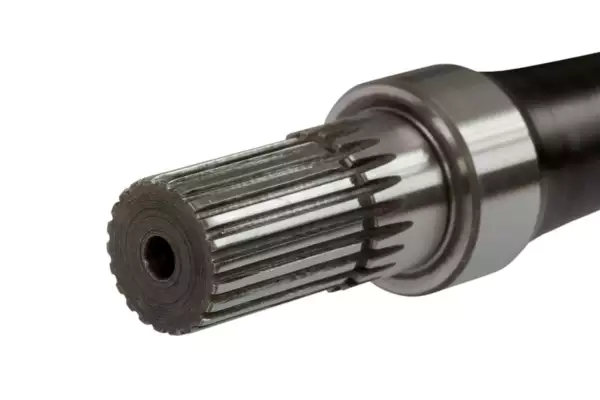
Spline shafts are designed to transmit torque and rotational motion between two parallel axes. They consist of a series of ridges or teeth, known as splines, that mesh with corresponding grooves in a mating component. This interlocking design ensures a secure connection and efficient power transmission.
Spline Shaft Design and Selection Guide
Designing and selecting the right spline shaft requires careful consideration of various factors, including load requirements, torque transmission, shaft material, and dimensional specifications. It is essential to consult engineering standards and guidelines to ensure a reliable and optimized design.
Spline Shaft Manufacturing and Processing Techniques
The manufacturing process of spline shafts involves several steps, including material selection, machining, heat treatment, and surface finishing. Advanced techniques, such as CNC machining and grinding, are employed to achieve precise spline profiles and dimensional accuracy.
Spline Shaft Applications and Industry Practices
Spline shafts find application in various industries, including automotive, machinery, aerospace, and power transmission. They are used in applications such as gearboxes, pumps, steering systems, and industrial machinery. Industry practices and standards play a crucial role in ensuring the reliable performance and compatibility of spline shafts.
If you are looking for high-quality gears and spline shafts, tailored to your specific requirements, partner with us. Our expertise, dedication to customer satisfaction, and wide range of product options make us the ideal choice for your gear and spline shaft needs.
Author: Miya