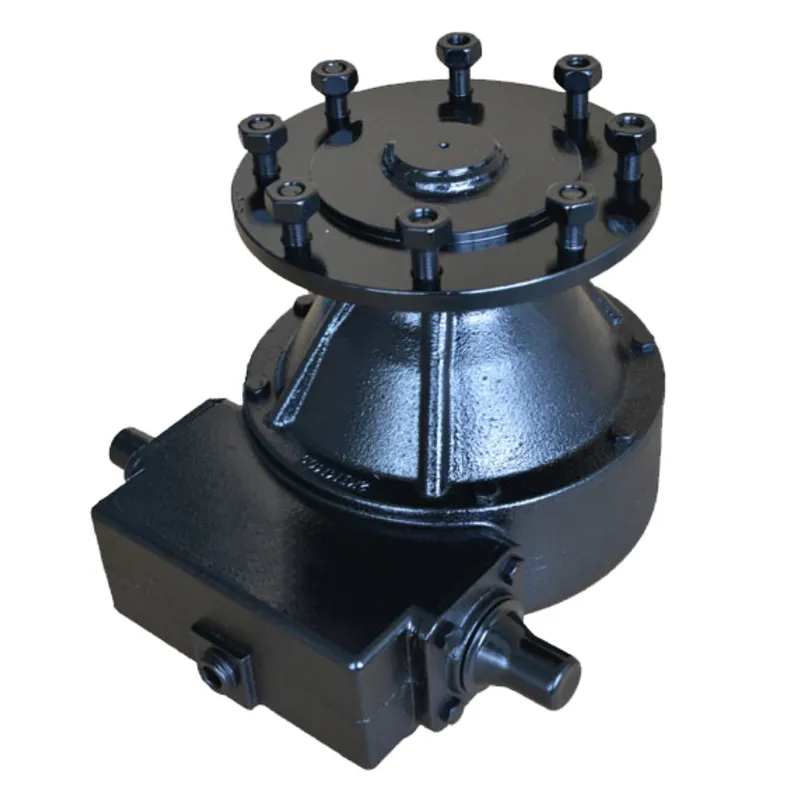
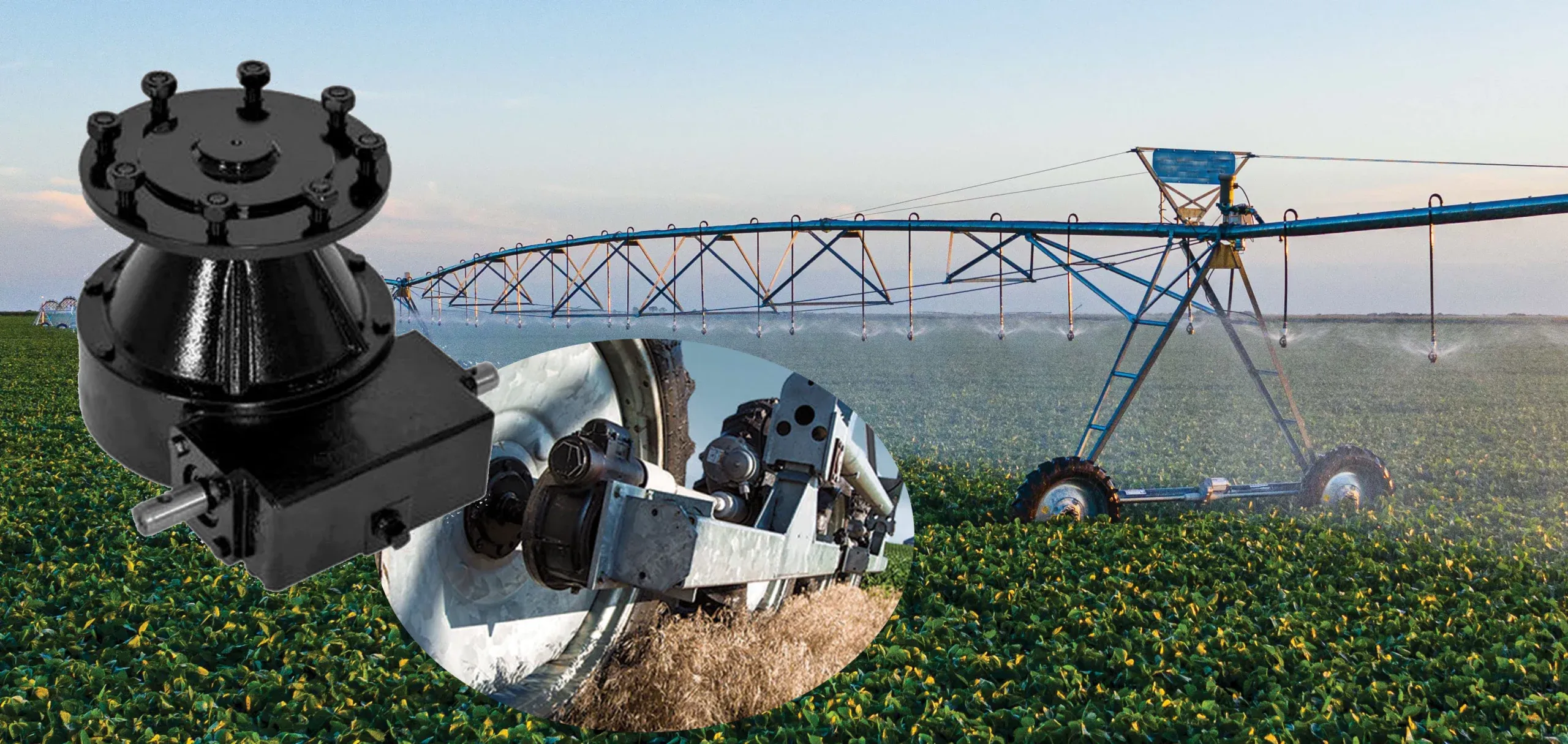
The irrigation wheel drive gearbox is a specialized mechanical device integral to modern irrigation systems, particularly center pivot and lateral move irrigation systems. Its primary function is to facilitate the smooth and efficient movement of the irrigation system across fields, enabling uniform water distribution to crops. The gearbox is robustly constructed to endure harsh outdoor conditions and continuous operation, typically made from durable materials like cast iron or steel.
This gearbox houses a system of gears designed to convert the high-speed rotation of the motor into a lower, more powerful speed at the wheels, providing the torque necessary to move the heavy irrigation equipment. It is engineered to handle the variability of soil, slope, and crop conditions, ensuring consistent operation without requiring excessive maintenance. Additionally, the design often includes protective features such as seals and gaskets to prevent dirt, water, and other contaminants from affecting its performance, thereby extending the life of the gearbox and ensuring reliable operation of the irrigation system. This gearbox is pivotal in maximizing water efficiency and reducing labor costs in large-scale farming operations.
Advantages of the Irrigation Wheel Drive Gearbox
The irrigation wheel drive gearbox offers several key advantages that enhance the efficiency and reliability of irrigation systems, especially in large agricultural settings. Here are some of the primary benefits:
- Increased Efficiency: The gearbox optimizes the transfer of power from the motor to the wheels of the irrigation system, ensuring effective movement with minimal energy waste. This results in more efficient water distribution and reduced energy consumption.
- Durability: Constructed from high-quality materials such as hardened steel or cast iron, these gearboxes are designed to withstand the rigors of outdoor agricultural environments. They are resistant to weather, corrosion, and the abrasive effects of dirt and sand, which contributes to their longevity.
- Low Maintenance: The robust design and protective features like seals and gaskets minimize the entry of contaminants into the gearbox. This reduces the need for frequent maintenance, thereby lowering operating costs and minimizing downtime.
- High Torque Output: Gearboxes are engineered to provide a high torque output suitable for moving heavy irrigation equipment across various terrains. This capability is crucial for maintaining a consistent speed and ensuring uniform water distribution across the fields.
- Versatility: These gearboxes are adaptable to various types of irrigation systems, including center pivot, linear, and lateral move systems. This versatility makes them suitable for a wide range of agricultural applications and crop types.
- Improved Water Management: By enabling precise control over the movement of irrigation systems, these gearboxes help in achieving better water distribution. This precision contributes to optimal crop hydration and can help in conserving water—a critical factor in regions prone to drought.
Common Applications:
The irrigation wheel drive gearbox is essential in various agricultural irrigation systems, enhancing their efficiency and effectiveness in water distribution. Here are some common applications:
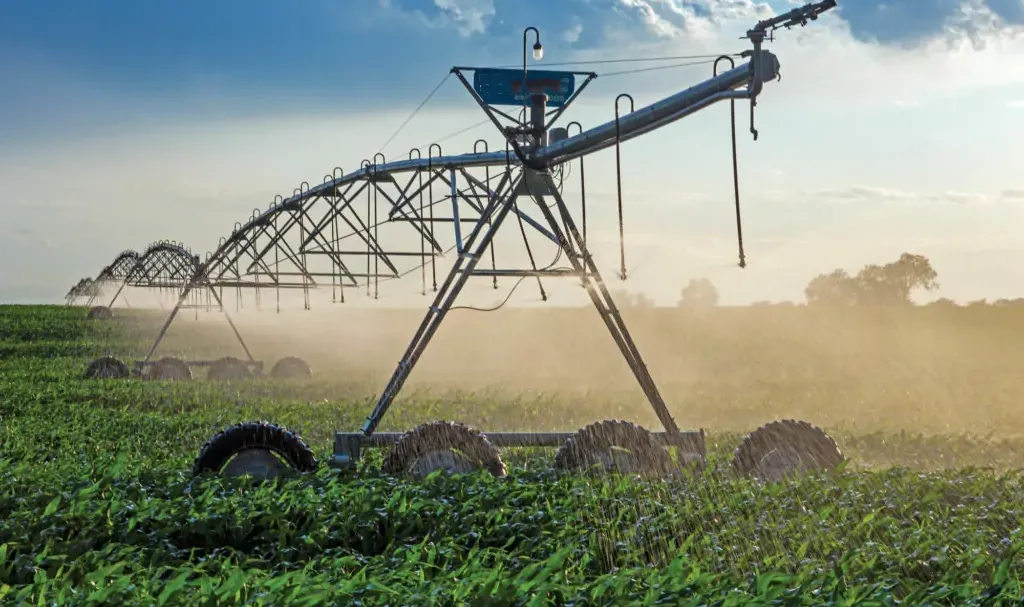
- Center Pivot Irrigation Systems: These gearboxes are pivotal in center pivot irrigation systems, where they help rotate the long spans of the irrigation structure around a central pivot point. This allows for a circular area of the field to be irrigated efficiently, providing even water distribution over large tracts of land.
- Lateral Move (Linear) Irrigation Systems: In lateral move systems, the gearbox facilitates the straight, parallel movement of the irrigation equipment across the field. This system is ideal for rectangular fields and ensures that water is distributed uniformly across the entire area.
- Wheel-Line (Side Roll) Irrigation Systems: Gearboxes are used in wheel-line systems to move portable pipelines equipped with sprinklers across fields. This system is suitable for smaller fields or irregularly shaped areas that are not ideal for pivot systems.
- Traveling Gun Systems: For traveling gun systems, the gearbox helps pull a high-capacity sprinkler mounted on a wheeled cart through the field. This setup is useful for varying soil types and topographies where traditional systems might not be as effective.
- Sports Field and Golf Course Irrigation: Beyond traditional agriculture, these gearboxes are also used in the irrigation systems of sports fields and golf courses, where precise water distribution is crucial for maintaining turf health and appearance.
- Horticulture and Nursery Operations: In horticulture and nursery settings, wheel drive gearboxes help in the precise irrigation necessary for the sensitive cultivation of plants and flowers, ensuring that delicate plants receive the right amount of water without wastage.

How Does the Irrigation Wheel Drive Gearbox for Irrigation System Work?
The irrigation wheel drive gearbox for an irrigation system plays a crucial role in converting and transmitting mechanical power from the motor to the wheels, enabling the system to move and distribute water evenly across agricultural fields. Here’s how it works in a step-by-step manner:
- Power Source: The process begins with a power source, typically an electric motor or a hydraulic system, which provides the initial mechanical energy necessary to drive the irrigation system.
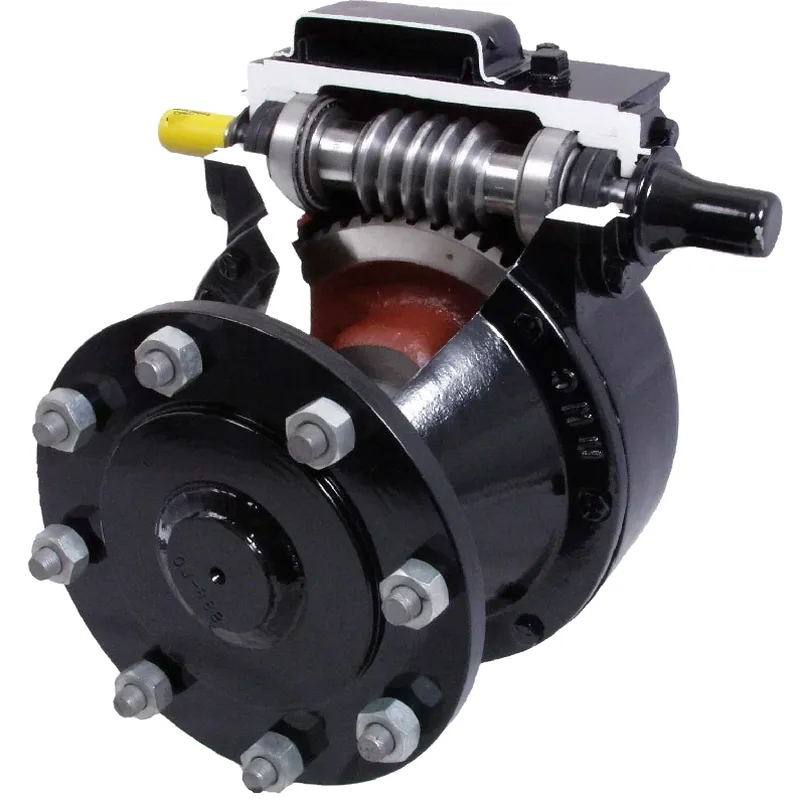
- Transmission of Power: This power is transmitted to the gearbox. The gearbox’s primary function is to adjust the power output from the motor to a more usable form for the irrigation system. It does this by altering the torque and speed transmitted to the wheels.
- Gear Reduction: Inside the gearbox, there are several gears of different sizes. When the motor rotates the input shaft on which the smaller gear (pinion) is mounted, it engages the larger gears (bull gears). This setup reduces the speed of rotation while simultaneously increasing the torque. This process is known as gear reduction.
- Increasing Torque: The increase in torque is crucial because the irrigation equipment, especially in systems like center pivots or lateral moves, is quite heavy and requires substantial force to move smoothly across fields. The gearbox ensures that the motor’s high-speed, low-torque output is converted into a low-speed, high-torque output suitable for driving heavy loads.
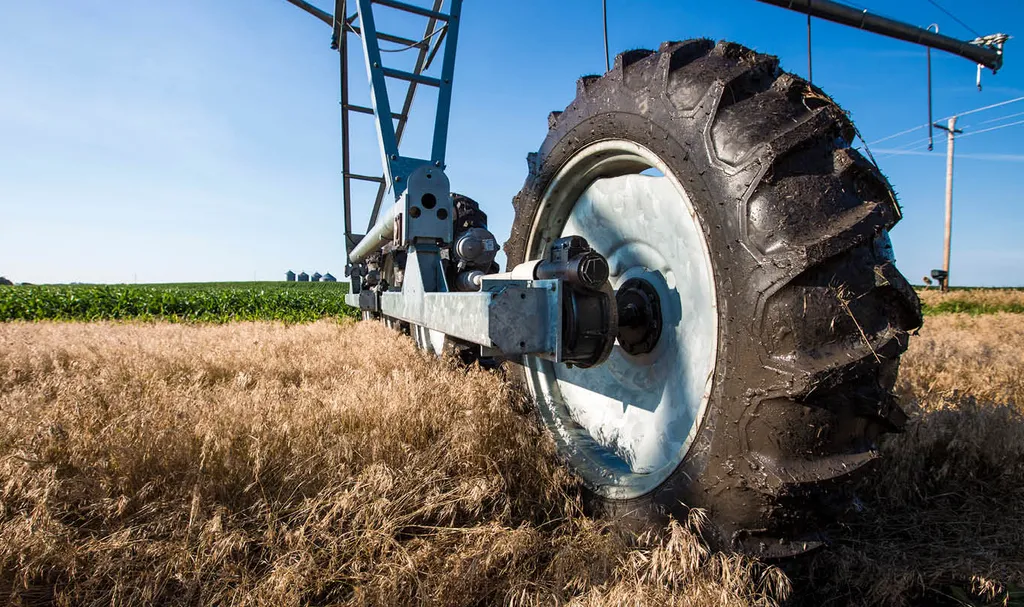
- Output Transmission: The transformed output from the gearbox is then transmitted to the wheels of the irrigation system via drive shafts. This allows the wheels to turn at a controlled, steady rate, which is essential for the smooth operation of the system.
- Movement Control: As the wheels rotate, they propel the irrigation system—whether a center pivot, lateral move, or other types—across the field. The movement can be precisely controlled to ensure even and efficient distribution of water. The speed and direction of the movement can typically be adjusted based on the field’s size and the water requirements of the crops.
- Uniform Water Distribution: By controlling the speed at which the irrigation system moves and the rate at which water is distributed, the gearbox helps achieve a uniform application of water. This is essential for ensuring all parts of the field receive an adequate amount of water without over-irrigation or under-irrigation.
Irrigation Gearbox Assembly:
Installing an irrigation wheel drive gearbox in an irrigation system is a critical process that ensures the effective and efficient operation of the irrigation equipment. Here’s a step-by-step guide on how to install this gearbox:
- Preparation and Safety: Begin by ensuring that the irrigation system is powered off and fully disconnected from any power source to prevent accidents. Gather all necessary tools and equipment for the installation, such as wrenches, screwdrivers, and a lifting device if needed. Review the manual’s installation guidelines thoroughly to familiarize yourself with the gearbox specifications and requirements.
- Mounting Location: Identify the mounting location on the irrigation system where the gearbox will be installed. This is typically at the base of a tower for center pivot systems or along the drive train in lateral move systems. Ensure that the area is clean and free from debris, dirt, or any obstructions that could affect the installation.
- Alignment and Positioning: Carefully position the gearbox in place, making sure it aligns correctly with the drive shaft or motor output shaft. Proper alignment is crucial to prevent mechanical stress and ensure efficient power transfer from the motor to the gearbox. Use a level and measuring tools to check the alignment.
- Securing the Gearbox: Secure the gearbox to its mounting bracket using bolts and nuts provided with the unit. Tighten all fasteners to the specifications recommended by the manual to ensure the gearbox is firmly and securely attached. Double-check all fasteners and make any necessary adjustments to avoid any movement or vibration during operation.
- Connecting Drive Shafts: Connect the input and output drive shafts to the gearbox. Ensure that these connections are tight and secure. Use couplings as required to join the shafts to the gearbox. It’s essential that these connections are precise to avoid misalignment, which can lead to premature wear or failure.
- Final Inspection and Testing: Once the gearbox is installed, conduct a thorough inspection to ensure that every component is properly fitted and that there are no loose parts. Check for any potential issues like oil leaks or misaligned parts. Finally, reconnect the power and run the irrigation system to test the new gearbox. Monitor the system for any unusual noises or vibrations, and adjust as necessary.
Irrigation Gearbox Disassembly:
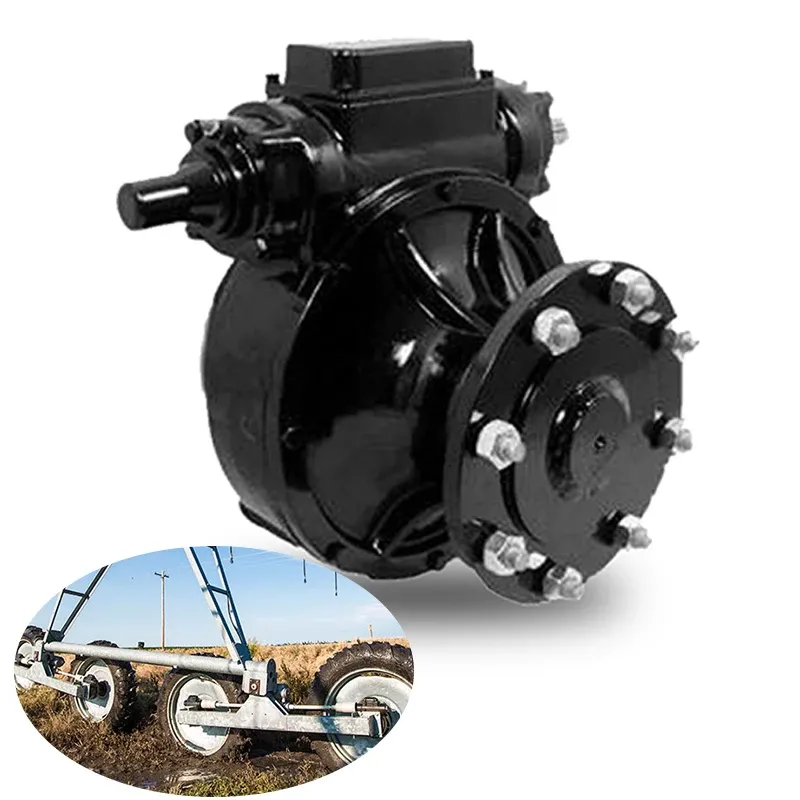
Disassembling an irrigation wheel drive gearbox is a precise and methodical process, important for maintenance, repairs, or replacement. Here are the steps to safely and effectively disassemble this type of gearbox:
- Preparation and Safety Measures: Before starting, ensure the irrigation system is fully powered down and disconnected from any power source. Clear the area around the gearbox of any tools, debris, or obstacles that could interfere with the process.
- Drain Gearbox Oil: Position an oil catch basin under the gearbox. Remove the oil drain plug and allow all the lubricating oil to drain out completely. This step prevents any messy spills during the disassembly and reduces the weight of the gearbox, making it easier to handle.
- Detach the Gearbox from the Irrigation System: Use appropriate tools to loosen and remove the bolts or fasteners securing the gearbox to the irrigation system. Depending on the design, you may need to first detach the drive shafts or other connecting components that link the gearbox to the motor and the wheels.
- Remove External Components: Begin by removing any external components attached to the gearbox, such as sensors, guards, or auxiliary drives. Label each part and take notes on their positioning to facilitate easier reassembly later.
- Open the Gearbox Housing: Once external components are removed and the gearbox is detached, carefully open the housing. This may involve removing bolts or screws that secure the gearbox cover. Be cautious when lifting the cover as some components inside may be under tension or heavy.
- Disassemble Internal Components: With the housing open, you can now access the internal gears and bearings. Carefully remove each component, keeping track of their order and orientation. It’s advisable to lay them out on a clean surface in the order they were removed. Inspect each part for wear or damage as you go.
Choose the Right Irrigation Gearbox for Center Pivot Irrigation Systems
Choosing the right irrigation gearbox for center pivot irrigation systems is crucial for ensuring efficient, reliable operation and longevity of your irrigation setup. Here are key factors and considerations to guide you in selecting the most appropriate gearbox:
- System Requirements: Understand the specific needs of your center pivot irrigation system. This includes the length of the pivot, the total weight of the system, and the type of crops being irrigated. These factors determine the torque and power requirements of the gearbox.
- Gearbox Torque Rating: The torque rating of the gearbox is a critical factor. It must be capable of providing enough torque to move the pivot arms across various field conditions without straining. Typically, the manufacturer will provide specifications for recommended torque based on the size and type of the irrigation system.
- Durability and Material Quality: Choose gearboxes made from high-quality, durable materials capable of withstanding the harsh environmental conditions typical of agricultural settings. Gearboxes with corrosion-resistant coatings and robust sealing technologies offer added durability against water, dirt, and other contaminants.
- Efficiency: Look for gearboxes with high-efficiency ratings. Efficient gearboxes will use less power to operate, which can significantly reduce energy costs over the lifespan of the irrigation system.
- Maintenance Needs: Consider the maintenance requirements of the gearbox. Models that are designed for easy access to internal components and require less frequent lubrication can reduce maintenance time and costs. Check if the manufacturer provides clear maintenance guidelines and easy-to-source replacement parts.
- Compatibility and Installation: Ensure the gearbox is compatible with your existing system in terms of size, mounting configuration, and shaft connections. An incompatible gearbox can lead to inefficient operation or damage to the system.
Why Choose Ever-Power’s Irrigation Wheel Drive Gearbox?
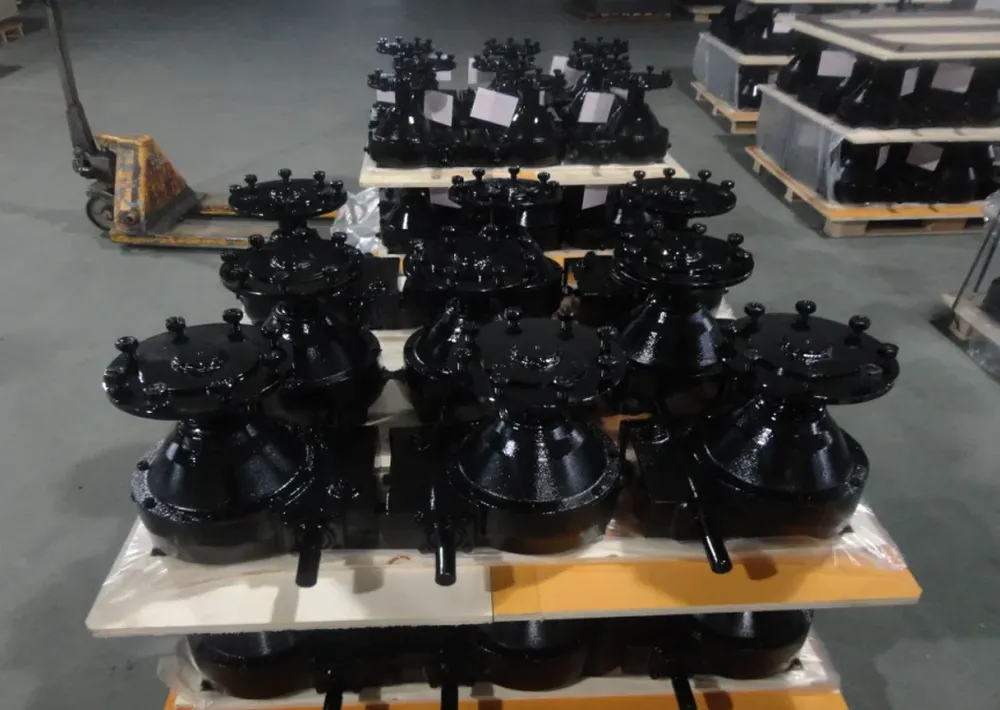
Ever-Power is a leading company specializing in the production and sales of irrigation wheel drive gearboxes. Our company boasts a large-scale operation with advanced production facilities and a highly skilled R&D team. With years of industry experience and continuous technological innovation, we are dedicated to providing efficient and durable transmission solutions for global agriculture.
Our irrigation wheel drive gearbox products are renowned for their exceptional performance and reliability. Manufactured with high-strength materials and precise machining processes, our gearboxes are designed to withstand harsh agricultural environments and ensure stable operation over long periods. The efficient transmission design ensures smooth movement of irrigation systems, enhancing water utilization efficiency and reducing energy costs. These gearboxes are widely used in center pivot irrigation systems, lateral move systems, and other modern agricultural irrigation equipment, helping farmers achieve precise irrigation and increased yields.
As an expert in the field of irrigation wheel drive gearboxes, Ever-Power enjoys a high reputation in the global market. We have achieved multiple international certifications and offer comprehensive customization services to meet diverse customer needs. Our production facilities are equipped with the latest technology to ensure consistent product quality, and our robust after-sales service system provides reliable support to our customers.
In addition to Irrigation Wheel Drive Gearboxes, Ever-Power also offers a wide range of agricultural gearboxes and PTO shafts, including rotary cutter gearboxes, rotary tiller gearboxes, feed mixer gearboxes, lawn mower gearboxes, fertilizer spreader gearboxes, flail mower gearboxes, post hole digger gearboxes, corn header gearboxes, fertilizer mixer gearboxes, round baler gearboxes, square baler gearboxes, irrigation reel gearboxes, manure spreader gearboxes, and rotary rake gearboxes. No matter what agricultural equipment transmission solution you need, we are here to provide you with the best products and services.
Author: Yjx