Tag Archives: internal gear

How does the integration of sensors and IoT improve monitoring of internal gears?

How does the integration of sensors and IoT improve monitoring of internal gears?

1. Introduction

In today’s rapidly advancing technological landscape, the integration of sensors and the Internet of Things (IoT) has revolutionized various industries. One such area that has greatly benefited from this integration is the monitoring of internal gears. By combining sensors and IoT, manufacturers can now monitor and analyze the performance of internal gears with unprecedented precision and efficiency.

2. Understanding the Role of Sensors in Gear Monitoring

Sensors play a crucial role in monitoring the performance of internal gears. These sensors can be strategically placed within the gears, allowing them to capture valuable data in real-time. By detecting changes in vibration, temperature, and other parameters, sensors provide continuous feedback on gear health and performance.

3. The Power of IoT in Gear Monitoring

With the integration of IoT, the data collected by sensors can be transmitted wirelessly to a central system for analysis. This enables manufacturers to monitor an entire fleet of gears remotely and in real-time. By leveraging cloud computing and data analytics, IoT allows for comprehensive monitoring and predictive maintenance.

4. Enhanced Fault Detection and Diagnosis

One of the key advantages of integrating sensors and IoT in gear monitoring is the ability to detect and diagnose faults with greater accuracy. The data collected by sensors can be analyzed using advanced algorithms, enabling the identification of early signs of gear wear, misalignment, or other abnormalities. This early detection helps prevent catastrophic failures and allows for timely maintenance.

5. Optimized Maintenance Planning

By continuously monitoring the condition of internal gears, manufacturers can optimize their maintenance planning. The data collected through sensors and IoT provides insights into the actual usage patterns and operating conditions of gears. This information can be used to develop predictive maintenance schedules, reducing downtime and minimizing maintenance costs.

6. Improved Gear Performance and Efficiency

The integration of sensors and IoT not only enables better monitoring but also improves the overall performance and efficiency of internal gears. By analyzing the data collected from sensors, manufacturers can identify areas of improvement, such as reducing friction, optimizing lubrication, or enhancing gear design. These insights lead to the development of more reliable and efficient gear systems.

7. Real-Time Monitoring and Alerts

With sensors and IoT, manufacturers can receive real-time updates on the performance of internal gears. Any deviations from normal operating conditions can trigger alerts, allowing for immediate action. This proactive approach minimizes the risk of gear failures and ensures continuous operation.

8. Ensuring Safety and Reliability

The integration of sensors and IoT in gear monitoring significantly contributes to safety and reliability. By continuously monitoring the health of internal gears, manufacturers can identify potential issues before they escalate. This proactive approach not only improves safety for operators but also extends the lifespan of gears, reducing the risk of unplanned downtime.

9. Case Study: Implementation of Sensor-based Gear Monitoring System

To illustrate the benefits of integrating sensors and IoT in gear monitoring, let’s consider a case study. A manufacturing company implemented a sensor-based gear monitoring system across their production lines. By collecting and analyzing data in real-time, they were able to identify an underperforming gear in one of their critical machinery. Timely maintenance prevented a major breakdown, saving the company substantial costs and ensuring uninterrupted production.

10. Future Trends and Challenges

The integration of sensors and IoT in gear monitoring is a rapidly evolving field. As technology advances, we can expect even more sophisticated sensors and data analytics techniques to further enhance gear monitoring capabilities. However, challenges such as data security and interoperability need to be addressed to fully realize the potential of this integration.

11. Conclusion

The integration of sensors and IoT has revolutionized the monitoring of internal gears. By leveraging real-time data and advanced analytics, manufacturers can ensure optimal gear performance, minimize downtime, and enhance overall productivity. This integration paves the way for a future where gears are monitored with precision, reliability, and efficiency like never before.

Internal Gear

Our company specializes in the production and sale of internal gears, and we take pride in the many advantages we offer:

Advantages of our company:

  1. High-Quality Manufacturing: We employ state-of-the-art technology and precision engineering to ensure the production of internal gears of the highest quality.
  2. Customization Options: We understand that each application may have unique requirements. Therefore, we offer a wide range of customization options to meet the specific needs of our customers.
  3. Expertise in Sensor Integration: Our team of experts is well-versed in integrating sensors with internal gears to enable real-time monitoring and improve performance.
  4. Reliable Performance: Our internal gears are designed to deliver consistent and reliable performance, ensuring smooth operations and minimizing downtime.
  5. Competitive Pricing: We strive to offer competitive pricing without compromising on the quality of our internal gears. We aim to provide excellent value for our customers’ investment.

Internal and External Gears

Internal gears come in various types, including:

Types of internal gears:

  • Spur Gears: Spur gears have straight teeth and are used for parallel shaft applications.
  • Helical Gears: Helical gears have angled teeth, resulting in smoother and quieter operation compared to spur gears.
  • Bevel Gears: Bevel gears have conical-shaped teeth and are used for intersecting shaft applications.
  • Planetary Gears: Planetary gears consist of a central sun gear, planet gears, and a ring gear. They offer compactness and high torque transmission.
Differences between External and Internal Gears:
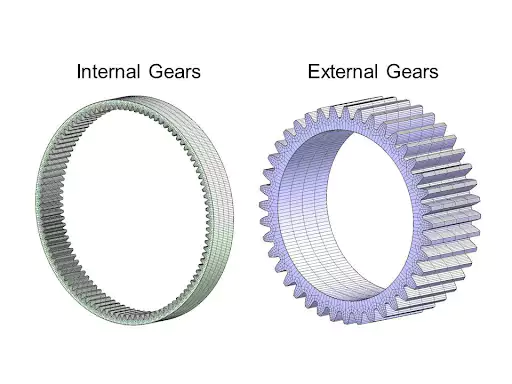
Criteria External Gear Internal Gear
Teeth Location On the outside surface On the inside surface
Meshing Meshes with external gears Meshes with pinions or other internal gears
Applications Widely used in various power transmission systems Used in applications requiring compactness and higher torque transmission

Internal gears play a crucial role in transmission systems due to their unique characteristics:

Roles of internal gears in transmission systems:

  • Torque Transmission: Internal gears efficiently transmit torque between parallel or intersecting shafts.
  • Load Distribution: They help distribute the load evenly among multiple gears or gear stages, reducing stress and improving overall system performance.
  • Noise Reduction: The design of internal gears, such as helical gears, helps minimize noise and vibration during operation.
  • Speed Reduction or Increase: By meshing with other gears, internal gears can change the speed and direction of rotation.
  • Compact Design: Internal gears allow for more compact and space-saving transmission system designs.

Internal gears find extensive applications in various industries:

Typical applications of internal gears:

  • Automotive Industry: Internal gears are used in transmissions, differential systems, and power steering mechanisms.
  • Industrial Machinery: They are employed in gearboxes, conveyors, and heavy machinery requiring precise power transmission.
  • Appliances & Precision Instruments: Internal gears are vital components in household appliances, watches, and precision measuring instruments.
  • Electric and Hybrid Vehicle Systems: Internal gears play a crucial role in electric drivetrains, ensuring efficient power transmission.

When it comes to the design and selection of internal gears, factors such as load requirements, speed, size constraints, and material choices need to be considered. Our team of experts can guide you through the design and selection process to ensure optimal performance and reliability.

Partner with us today and experience the benefits of our high-quality internal gears. Contact us for further information and inquiries.

Author: Miya
What are the key differences between spur, helical, and worm internal gears?

What are the key differences between spur, helical, and worm internal gears?

In the world of mechanical engineering, gears play a crucial role in transmitting power and motion. Among the various types of gears, internal gears are particularly interesting due to their unique design and functionality. In this article, we will explore the key differences between three types of internal gears: spur gears, helical gears, and worm gears.

1. Spur Gears

Spur gears are the simplest and most commonly used type of gears. They consist of cylindrical teeth that are parallel to the gear axis. The main characteristic of spur gears is their ability to transmit motion between parallel shafts. Here are some key points regarding spur gears:

  • They offer high efficiency in power transmission due to their straight teeth.
  • Spur gears create axial thrust, which needs to be considered in the gear design.
  • They produce noise and vibrations, especially at high speeds.
  • Spur gears are suitable for applications that require precise positioning.

2. Helical Gears

Unlike spur gears, helical gears have teeth that are inclined at an angle to the gear axis. This helix angle provides several advantages over spur gears, making them ideal for certain applications. Here are the key differences and features of helical gears:

  • Helical gears offer smoother and quieter operation compared to spur gears.
  • They have a higher load-carrying capacity due to the increased number of teeth in contact.
  • Helical gears can transmit motion between non-parallel shafts.
  • These gears are more expensive to manufacture than spur gears.
  • They require proper lubrication to reduce friction and wear.

3. Worm Gears

Worm gears are unique compared to spur and helical gears, as they consist of a threaded screw-like gear called the worm and a wheel-like gear called the worm wheel. The interaction between these two components results in specific characteristics and applications. Let’s dive into the key differences of worm gears:

  • Worm gears offer high gear reduction ratios, making them suitable for applications requiring high torque.
  • They provide a high degree of shock resistance due to the sliding action of the worm on the worm wheel.
  • Worm gears have self-locking capabilities, preventing back-driving when the system is not in operation.
  • These gears are commonly used in applications where space is limited.
  • Worm gears experience significant heat generation and require efficient cooling mechanisms.

Understanding the key differences between spur, helical, and worm internal gears is essential for selecting the right gear type for specific applications. Each gear type has its advantages and limitations, which must be carefully evaluated based on the requirements of the system.

Internal and External Gear

With this knowledge, engineers can make informed decisions, ensuring optimal performance and longevity of the gear system.

Our company specializes in the production and sale of internal gears, and we take pride in our expertise as an SEO expert copywriter. Here are five key advantages of choosing our company:

Advantages of Choosing Our Company:

  1. High-Quality Manufacturing: We prioritize precision and quality in every step of the manufacturing process, ensuring that our internal gears meet the highest standards.
  2. Customization Options: We understand that each application may have unique requirements. Therefore, we offer a range of customization options to tailor our internal gears to your specific needs.
  3. Competitive Pricing: Despite offering top-notch quality, we strive to keep our prices competitive in the market. We believe in providing excellent value for your investment.
  4. Timely Delivery: We value your time, and our efficient production process allows us to deliver your orders promptly, ensuring minimal downtime for your operations.
  5. Exceptional Customer Service: Our dedicated customer service team is always available to assist you with any inquiries or concerns you may have. We prioritize building long-lasting relationships with our clients.

Now, let’s explore the different types of internal gears:

Types of Internal Gears:

There are three main types of internal gears: spur, helical, and worm internal gears. Each type has its unique characteristics and applications:

Spur Internal Gears:

Spur internal gears have straight teeth that are parallel to the gear axis. They provide high efficiency and are commonly used in applications where noise is not a concern.

Helical Internal Gears:

Helical internal gears have teeth that are cut at an angle to the gear axis, resulting in a helix shape. This design reduces noise and provides smoother operation compared to spur gears. Helical internal gears are commonly used in applications that require high precision and quiet operation.

Worm Internal Gears:

Worm internal gears consist of a cylindrical gear (worm) that meshes with a spiral gear (worm wheel). This configuration allows for high gear ratios and smooth, quiet operation. Worm internal gears are often used in applications that require high torque and compact design.

Now, let’s compare internal gears with external gears using a table:

Internal Gear External Gear
Teeth Orientation Teeth face inward Teeth face outward
Design Complexity More complex Less complex
Space Requirement Compact design Requires more space
Gear Ratios Higher gear ratios possible Limited gear ratios
Noise Generally quieter Can be noisier

Internal gears play crucial roles in transmission systems. Here are some key functions:

  • Power Transmission: Internal gears efficiently transmit power from one shaft to another within a system.
  • Torque Conversion: By meshing with other gears, internal gears convert rotational motion into torque, allowing for increased force.
  • Speed Reduction/Increase: Internal gears can be used to either reduce or increase rotational speed, depending on their arrangement.
  • Directional Change: By utilizing multiple internal gears, the direction of rotational motion can be altered within a transmission system.
  • Load Distribution: Internal gears evenly distribute forces and loads, ensuring smooth and reliable operation.

Internal gears find widespread applications in various industries:

Typical Applications:

  • Automotive Industry: Internal gears are used in car transmissions, differential systems, and steering mechanisms.
  • Industrial Machinery: Internal gears play a vital role in heavy machinery, such as gearboxes, lathes, and milling machines.
  • Home Appliances & Precision Instruments: Internal gears are utilized in appliances like washing machines, printers, and cameras, as well as precision instruments like watches.
  • Electric Vehicles & Hybrid Systems: The efficient power transmission capabilities of internal gears make them ideal for electric vehicles and hybrid systems.

When it comes to designing and selecting internal gears, several factors need to be considered:

Design and Selection Considerations:

  • Load Requirements: Determine the expected load, torque, and speed to select the appropriate internal gear.
  • Material Selection: Choose materials with suitable strength, durability, and resistance to wear and corrosion.
  • Tooth Profile: The choice of tooth profile, such as involute or cycloidal, depends on the specific application requirements.
  • Lubrication: Proper lubrication is essential to reduce friction and wear, ensuring the longevity of the internal gears.
  • Cost Efficiency: Consider the overall cost-effectiveness, balancing performance, quality, and budget constraints.

Partner with our company today and experience the exceptional quality and service we offer. Contact us now to discuss your internal gear requirements!

Author: Miya

How does one analyze gear stress and predict fatigue failure in internal gears?

How does one analyze gear stress and predict fatigue failure in internal gears?

Introduction

In the field of mechanical engineering, the analysis of gear stress and prediction of fatigue failure in internal gears is a crucial aspect of ensuring the reliability and longevity of gear systems. By understanding the factors that contribute to gear stress and fatigue failure, engineers can implement effective strategies to prevent catastrophic failures and optimize gear performance. This article aims to explore the various methods and techniques used to analyze gear stress and predict fatigue failure in internal gears.

Understanding Gear Stress

Gear stress refers to the internal forces and pressures experienced by gears during operation. Analyzing gear stress is essential to identify the areas of highest stress concentration and potential failure points within the gear system. The following points elaborate on the analysis of gear stress:

1. Material Properties and Gear Geometry

The material properties of gears, such as hardness, elasticity, and tensile strength, play a vital role in determining their ability to withstand stress. Additionally, the geometry of internal gears, including tooth profiles and contact ratios, influences how stress is distributed across the gear surfaces.

2. Finite Element Analysis (FEA)

Finite Element Analysis (FEA) is a powerful numerical method used to simulate and analyze the behavior of complex structures, including internal gears. By breaking down the gear system into smaller elements, FEA enables engineers to accurately determine stress distribution and identify critical areas prone to fatigue failure.

3. Hertzian Contact Stress

Hertzian contact stress is a fundamental concept in gear analysis, which describes the stress developed at the contact point between two gear surfaces. By considering factors like applied load, contact area, and elastic properties, engineers can assess the contact stress and its impact on gear performance.

4. Dynamic Load Factors

Gear systems often operate under variable loads and speeds, leading to dynamic load conditions. Analyzing the influence of dynamic load factors, such as shock loads and torsional vibrations, is essential for understanding the overall stress distribution and predicting fatigue failure.

Predicting Fatigue Failure

Fatigue failure in internal gears occurs when the repeated cyclic stresses exceed the material’s endurance limit, leading to crack initiation and propagation. Predicting fatigue failure allows engineers to determine the gear’s safe operational limits and establish maintenance schedules. The following points outline the techniques used:

1. Goodman Diagram

The Goodman diagram is a graphical tool that relates the alternating stress amplitude and the mean stress to predict fatigue life. By plotting the alternating and mean stresses experienced by the gear, engineers can assess the endurance limit and estimate the number of cycles before fatigue failure.

2. Miner’s Rule

Miner’s rule is an empirical approach widely used in fatigue analysis. It states that the damage caused by cyclic loading can be evaluated by summing the damage contributions from individual stress cycles. By comparing the cumulative damage to the gear’s fatigue strength, engineers can predict the fatigue life of internal gears.

3. Stress Concentration Factors

Stress concentration factors account for localized stress intensification caused by geometric features like notches, fillets, and keyways in gears. By calculating these factors, engineers can estimate the stress concentration effect on fatigue life and take necessary design measures to minimize stress concentrations.

4. Fracture Mechanics

Fracture mechanics principles are employed to analyze the propagation of cracks in gears. By considering factors such as crack size, stress intensity factor, and material properties, engineers can predict the growth of existing cracks and estimate the remaining fatigue life of the gear.

Conclusion

Analyzing gear stress and predicting fatigue failure in internal gears is a complex yet essential task in mechanical engineering. By employing methods such as finite element analysis, Hertzian contact stress analysis, and utilizing tools like the Goodman diagram and Miner’s rule, engineers can gain valuable insights into gear behavior and take proactive measures to prevent failures. Understanding the intricacies of gear stress and fatigue failure allows for the design and maintenance of reliable and efficient gear systems, ensuring optimal performance and longevity.

Internal Gear Image

Our company specializes in the production and sales of internal gears, and we take pride in our expertise in analyzing gear stress and predicting fatigue failure. Here are five key advantages of choosing our company:

Advantage 1: Cutting-Edge Technology

We utilize the latest technology in gear stress analysis and fatigue prediction. Our team of experts is skilled in using advanced software and tools to ensure accurate results.

Advantage 2: Quality Materials

We only use high-quality materials for our internal gears. Our commitment to using durable and reliable materials ensures the longevity and performance of our products.

Advantage 3: Customization Options

We understand that different applications have unique requirements. That’s why we offer a wide range of customization options for our internal gears, allowing us to tailor our products to meet specific needs.

Advantage 4: Precise Manufacturing Processes

Our internal gears are manufactured with utmost precision. Our state-of-the-art production facilities and rigorous quality control measures ensure that every gear meets the highest standards of accuracy and reliability.

Advantage 5: Expert Technical Support

Our team of skilled engineers and technicians provides excellent technical support to our customers. We are readily available to assist with any inquiries and offer guidance throughout the gear analysis and selection process.

Types of Internal Gears

Internal gears come in various types, each with its own unique characteristics. Here are some common types:

1. Spur Gears

Spur gears have straight teeth and are widely used in mechanical power transmission systems. They provide consistent and efficient operation.

2. Helical Gears

Helical gears have angled teeth, which enables smoother engagement and reduced noise during operation. They are often used in high-speed applications.

3. Herringbone Gears

Herringbone gears are similar to helical gears but have teeth that are arranged in a V-shape. This design eliminates axial thrust and allows for higher torque transmission.

4. Bevel Gears

Bevel gears have conical-shaped teeth and are used to transmit power between intersecting shafts. They are commonly found in automotive differentials and power tools.

5. Worm Gears

Worm gears consist of a threaded worm and a gear wheel. They provide high gear ratios and are often used in applications where precise speed reduction is required.

Comparison between External and Internal Gears

Aspect External Gear Internal Gear
Gear Placement Outside of gear Inside of gear
Size Varies Varies
Contact Area Greater surface contact Less surface contact
Noise Generally quieter Potential for more noise
Applications Wide range of applications Specific applications requiring compact design

Role of Internal Gears in Power Transmission Systems

Internal gears play crucial roles in power transmission systems. Here are some key aspects:

1. Torque Transmission

Internal gears efficiently transmit torque between parallel or intersecting shafts, ensuring smooth power transfer.

2. Load Distribution

Internal gears distribute the load evenly, minimizing stress and prolonging the lifespan of other components in the system.

3. Speed Reduction

By using different gear ratios, internal gears can reduce rotational speed while increasing torque for specific applications where speed reduction is necessary.

4. Motion Control

Internal gears enable precise motion control in various machines and mechanisms, ensuring accurate positioning and smooth operation.

5. Compact Design

Internal gears offer a compact design compared to external gears, making them ideal for applications with limited space or weight restrictions.

Typical Applications

Internal gears find extensive use in various industries. Here are some typical application areas:

1. Automotive Sector

Internal gears are commonly found in automotive transmissions, differential systems, and steering mechanisms, ensuring smooth and efficient power transfer.

2. Industrial Machinery

Industrial machines, such as gearboxes, conveyors, and pumps, often employ internal gears to transmit power and control motion accurately.

3. Appliances and Precision Instruments

Internal gears are used in appliances like washing machines and printers, as well as precision instruments such as watches and medical devices, ensuring precise and reliable operation.

4. Electric Vehicles and Hybrid Systems

Internal gears play a vital role in electric vehicles and hybrid systems, helping to transfer power between the electric motor and the wheels efficiently.

Design and Selection Considerations for Internal Gears

When designing and selecting internal gears, several factors need careful consideration:

1. Load Requirements

Understanding the expected loads and torque requirements is essential in determining the appropriate gear size, material, and tooth design.

2. Speed and Efficiency

The desired speed and efficiency of the gear system influence the selection of gear ratios, tooth profiles, and lubrication methods.

3. Noise and Vibration

Considerations for noise and vibration reduction may involve gear tooth design, material selection, and the use of dampening techniques.

4. Space Constraints

Internal gears offer advantages in compact design, making them suitable for applications with limited space or weight restrictions.

Partnering with our company guarantees access to top-notch internal gears, expert support, and customized solutions tailored to your specific needs. Contact us today to discuss how we can work together to fulfill your gear requirements.

Author: Miya

What is the process for reconditioning worn internal gears?


What is the process for reconditioning worn internal gears?

What is the process for reconditioning worn internal gears?

Introduction

Worn internal gears can significantly impact the performance and efficiency of various mechanical systems. Reconditioning these gears is a crucial process to restore their functionality and extend their lifespan. In this article, we will explore the comprehensive process of reconditioning worn internal gears, highlighting the essential steps and techniques involved.

1. Gear Inspection

Before initiating the reconditioning process, a thorough inspection of the worn internal gears is necessary. This inspection involves examining the gears for signs of wear, such as pitting, scoring, or damage to the teeth and surfaces. Precise measurements are taken to assess the extent of wear and determine the appropriate reconditioning approach.

2. Disassembly

Once the inspection is complete, the worn internal gears need to be disassembled from the system. This step involves carefully removing the gears and any associated components, such as shafts or bearings. Proper labeling and documentation of the disassembly process are essential for reassembling the gears accurately.

3. Cleaning

After disassembly, the worn internal gears and their components undergo a thorough cleaning procedure. This involves the removal of dirt, debris, and any residual lubricants. Ultrasonic cleaning or specialized cleaning agents may be used to ensure the gears are free from contaminants, which can affect reconditioning results.

4. Non-Destructive Testing (NDT)

Non-destructive testing techniques, such as liquid penetrant or magnetic particle inspection, are employed to detect any hidden defects or cracks that may compromise the reconditioned gears’ integrity. This step helps ensure the gears are suitable for the reconditioning process and will perform reliably once reinstalled.

5. Gear Tooth Refurbishment

The next step in reconditioning worn internal gears is the refurbishment of the gear teeth. This process involves several sub-steps:

5.1 Gear Tooth Grinding

Using specialized grinding machines, the worn gear teeth are carefully ground to remove any surface defects and achieve the desired tooth profile. Grinding ensures proper meshing and the smooth operation of the gears.

5.2 Heat Treatment

Heat treatment is employed to enhance the hardness and durability of the gear teeth. Processes like carburizing or induction hardening are used to achieve the desired mechanical properties, ensuring the reconditioned gears can withstand heavy loads and resist wear.

5.3 Surface Coating

A surface coating, such as nitriding or diamond-like carbon (DLC), is applied to further improve the gear tooth’s wear resistance and reduce friction. Coatings provide an additional layer of protection, enhancing the gear’s performance and extending its lifespan.

6. Gear Reassembly

After completing the required refurbishment steps, the reconditioned gears are meticulously reassembled. This process includes aligning the gears, reinstalling any associated components, and ensuring proper lubrication. Precise assembly is crucial to guarantee optimal gear performance and minimize the risk of premature wear.

Conclusion

Reconditioning worn internal gears is a meticulous process that involves gear inspection, disassembly, cleaning, non-destructive testing, gear tooth refurbishment, and reassembly. By following this comprehensive process, worn internal gears can be restored to their original functionality and contribute to the smooth operation of various mechanical systems.

Internal Gear Image


Our company specializes in the production and sale of internal gears, offering superior quality and performance. Here are five key advantages of choosing our company:

Advantages of Our Company

  1. High-quality materials: We use premium materials for our internal gears, ensuring durability and longevity.
  2. Precision manufacturing: Our internal gears are meticulously crafted with advanced manufacturing techniques, resulting in excellent performance.
  3. Customization options: We offer a wide range of customizable internal gears to meet the specific needs of our customers.
  4. Competitive pricing: Despite the superior quality of our internal gears, we strive to offer competitive prices to our customers.
  5. Exceptional customer service: Our dedicated team provides excellent customer support, addressing any inquiries or concerns promptly and efficiently.

Internal gears come in various types, each serving specific purposes. Some common types include:

Types of Internal Gears

  • Spur gears: These gears have straight teeth and are used for parallel shaft applications.
  • Helical gears: With angled teeth, helical gears offer smoother and quieter operation compared to spur gears.
  • Bevel gears: These gears transmit power between intersecting shafts at an angle. They are commonly used in automotive applications.

Internal and External Gear

Here is a table highlighting the key differences between external and internal gears:

External Gear Internal Gear
Teeth On the outer periphery On the inner periphery
Meshing Meshes with external gears Meshes with external or internal gears
Applications Common in many systems Used in specialized applications

Internal gears play a crucial role in transmission systems. Here are some key functions:

  • Power transmission: Internal gears transmit rotational power from one component to another within a system.
  • Torque control: By varying the size and arrangement of internal gears, torque can be controlled and optimized.
  • Speed reduction or increase: Internal gears allow for the adjustment of rotational speed in a transmission system.
  • Load distribution: By distributing load across multiple teeth, internal gears minimize wear and ensure smooth operation.

Internal gears find extensive applications in various industries, including:

Applications of Internal Gears

  1. Automotive sector: Internal gears are used in car transmissions to enable smooth gear shifting and power distribution.
  2. Industrial machinery: Internal gears play a vital role in industrial machinery, such as conveyor systems and gearboxes.
  3. Home appliances and precision instruments: Internal gears contribute to the efficient operation of appliances and precision instruments, ensuring accurate movements.
  4. Electric and hybrid vehicles: Internal gears are key components in electric and hybrid vehicle systems, facilitating power transfer and speed control.

When it comes to designing and selecting internal gears, careful consideration must be given to factors such as load requirements, speed ratios, and space limitations. Our team of experts will guide you through the design and selection process to ensure optimal performance.

Partnering with our company means gaining access to top-notch internal gears, exceptional customer service, and competitive pricing. We are committed to meeting your needs and exceeding your expectations.

Author: Miya

How does the design of internal gears differ for high-speed vs. low-speed applications?

How does the design of internal gears differ for high-speed vs. low-speed applications?

1. Introduction

In the world of mechanical engineering, the design of internal gears plays a crucial role in determining their performance in different applications. Understanding the differences in gear design for high-speed and low-speed applications is essential for engineers and designers. In this article, we will explore the key factors that influence the design of internal gears for high-speed and low-speed applications.

2. Tooth Profile

One of the primary differences in gear design for high-speed and low-speed applications lies in the tooth profile. In high-speed applications, gears are designed with a modified involute tooth profile. This profile helps in reducing noise and vibrations, ensuring smooth operation at high rotational speeds. On the other hand, gears used in low-speed applications generally have a standard involute tooth profile, as noise and vibrations are not major concerns in such scenarios.

3. Tooth Geometry

The geometry of the gear teeth also differs based on the speed of the application. For high-speed applications, gears are designed with a smaller module and a finer pitch. This allows for more teeth to be engaged simultaneously, distributing the load evenly and reducing the risk of tooth failure. In contrast, gears used in low-speed applications have a larger module and coarser pitch, as fewer teeth need to be engaged to transmit the required torque.

4. Lubrication

The lubrication requirements for gears in high-speed and low-speed applications also vary. In high-speed applications, gears need to withstand higher temperatures and increased friction due to the higher rotational speeds. Therefore, specialized lubricants with higher viscosity and better thermal stability are used. Conversely, gears in low-speed applications operate at lower temperatures and experience lower friction, allowing for the use of standard lubricants.

5. Material Selection

The selection of materials for internal gears depends on the speed of the application. For high-speed applications, gears need to have excellent strength, durability, and fatigue resistance. Therefore, materials like hardened alloy steels or even exotic materials like titanium alloys are commonly used. In contrast, gears in low-speed applications may be made from materials with lower strength and lower manufacturing costs, such as cast iron or certain grades of steel.

6. Gear Accuracy

High-speed applications require gears to have a higher level of accuracy to ensure smooth operation and minimize noise. Therefore, gears used in high-speed applications undergo stringent quality control measures during manufacturing to achieve the required levels of accuracy. Conversely, gears for low-speed applications have relatively lower accuracy requirements, as the impact of slight deviations is minimal.

7. Gear Coatings

In high-speed applications, gear coatings are often applied to enhance performance and increase durability. These coatings, such as diamond-like carbon (DLC), provide a protective layer that reduces friction and wear. In low-speed applications, the use of such coatings is not typically necessary, as the gear’s speed and load do not warrant additional protective measures.

8. Noise and Vibration

Noise and vibration reduction are critical considerations in high-speed applications. Gears for high-speed applications are designed with features like optimized gear geometry, profile modifications, and precision manufacturing techniques to minimize noise and vibration levels. In low-speed applications, noise and vibration are less of a concern, and therefore, gear designs may not incorporate these specialized features.

9. Heat Dissipation

High-speed applications generate more heat due to increased friction and rotational speeds. Therefore, gears designed for high-speed applications incorporate features that enhance heat dissipation, such as improved tooth profiles, optimized gear ratios, and enhanced cooling mechanisms. Gears in low-speed applications do not face the same heat dissipation challenges and, therefore, may not require additional design considerations in this regard.

10. Conclusion

In summary, the design of internal gears varies significantly depending on whether they are intended for high-speed or low-speed applications. Factors such as tooth profile, tooth geometry, lubrication, material selection, gear accuracy, coatings, noise and vibration control, and heat dissipation all play a crucial role in determining the performance and reliability of gears in different speed scenarios. By understanding these differences, engineers and designers can optimize gear designs for specific applications and ensure optimal performance and longevity.

Internal Gear Image

Our company specializes in the production and sale of internal gears. With an extensive experience in the field, we offer several advantages that set us apart from competitors:

  1. High-quality materials: We use only the finest materials for our internal gears, ensuring durability and reliability.
  2. Precision engineering: Our internal gears are designed and manufactured with utmost precision to meet the highest industry standards.
  3. Customization options: We understand that different applications require specific gear designs. Therefore, we offer a wide range of customization options to meet our clients’ unique needs.
  4. Competitive pricing: Despite our superior quality, we offer competitive pricing to provide our customers with the best value for their investment.
  5. Timely delivery: We pride ourselves on our efficient production and delivery process, ensuring that our customers receive their orders promptly.

Types of Internal Gears

Internal gears come in various types, each suited for different applications:

1. Spur gears

Spur gears have straight teeth and are commonly used in low-speed applications.

2. Helical gears

Helical gears have angled teeth, which allows for smoother engagement and quieter operation. They are often used in high-speed applications.

3. Herringbone gears

Herringbone gears, also known as double helical gears, have teeth that are arranged in a “V” shape. They offer excellent load-bearing capacity and are suitable for heavy-duty applications.

Internal and External Gear Image

Difference between External and Internal Gears

Aspect External Gear Internal Gear
Teeth Orientation Outward Inward
Space Requirement More space required Less space required
Design Complexity Simple More complex
Load Distribution Spread over more teeth Concentrated on fewer teeth
Noise Level Higher Lower

Role of Internal Gears in Power Transmission

Internal gears play a crucial role in power transmission systems due to their unique characteristics:

  • Smooth torque transfer: The meshing of internal gears ensures a smooth and efficient transfer of torque between shafts.
  • Load distribution: Internal gears distribute the load over a larger contact area, reducing wear and increasing the lifespan of the gears.
  • Noise reduction: The inward meshing of internal gears helps minimize noise, making them suitable for applications that require quieter operation.
  • Compact design: Internal gears take up less space compared to external gears, making them ideal for applications where space is limited.
  • High efficiency: With their precise design and close engagement, internal gears offer high efficiency in power transmission.

Typical Applications

Internal gears find wide-ranging applications across various industries:

  • Automotive sector: Internal gears are used in car transmissions and differential systems for smooth and efficient power transfer.
  • Industrial machinery: They are employed in heavy machinery such as construction equipment and industrial gears for reliable power transmission.
  • Home appliances and precision instruments: Internal gears are found in appliances like washing machines and clocks, ensuring precise and accurate movement.
  • Electric and hybrid vehicles: Internal gears are vital components in electric and hybrid vehicle drivetrains, providing efficient torque transfer.

Considering the diverse applications and our expertise in internal gear design and manufacturing, we are well-equipped to meet your specific requirements. Partner with us for reliable and high-quality internal gears that will enhance the performance of your machinery.

Author: Miya

What is the effect of temperature on the performance and longevity of internal gears?

What is the effect of temperature on the performance and longevity of internal gears?

Introduction

Internal gears play a crucial role in various mechanical systems, contributing to their overall performance and longevity. Temperature, as a key environmental factor, significantly influences the behavior and durability of internal gears. Understanding the effect of temperature on these gears is essential for optimizing their performance and ensuring their longevity.

1. Thermal Expansion and Contraction

Temperature variations cause internal gears to expand or contract due to thermal expansion coefficients of the materials involved. This expansion or contraction affects the gear meshing and can lead to changes in tooth contact patterns, resulting in altered performance and potential wear.

2. Lubrication and Viscosity

Temperature directly affects the viscosity of lubricants used in internal gears. Higher temperatures lower the viscosity, reducing the lubrication effectiveness and increasing friction between gear surfaces. Inadequate lubrication due to temperature changes can result in accelerated wear and reduced gear life.

3. Material Strength and Fatigue

Internal gears experience varying mechanical loads during operation. Elevated temperatures can reduce the material strength, leading to decreased fatigue resistance. This can result in premature gear failure, affecting both performance and longevity.

4. Thermal Stress and Distortion

Temperature fluctuations induce thermal stress in internal gears. Differential expansion between the gear and its supporting structure can lead to distortion, affecting tooth alignment and gear mesh. Distorted gears may experience increased noise, reduced efficiency, and accelerated wear.

5. Thermal Cycling

Repetitive temperature changes, known as thermal cycling, can impact the fatigue life of internal gears. The expansion and contraction associated with thermal cycling can induce microcracks, which can propagate and eventually lead to catastrophic gear failure.

6. Heat Dissipation and Cooling

Efficient heat dissipation is crucial for maintaining optimal gear performance. Higher temperatures can impair heat dissipation, causing localized hotspots that lead to material degradation and reduced gear efficiency. Effective cooling mechanisms are necessary to mitigate temperature-related issues.

7. Thermal Conductivity

The thermal conductivity of gear materials influences how heat is distributed within internal gears. Materials with higher thermal conductivity tend to disperse heat more effectively, minimizing the temperature gradients across the gear components and reducing the associated performance and longevity concerns.

Conclusion

Temperature has a profound effect on the performance and longevity of internal gears. Factors such as thermal expansion, lubrication, material strength, thermal stress, thermal cycling, heat dissipation, and thermal conductivity all contribute to the overall behavior of internal gears under different temperature conditions. Engineers and designers must consider these effects to optimize gear performance and ensure extended gear life in various applications.

Our company specializes in the production and sale of internal gears, and we take pride in our expertise in this field. Below are five key advantages of choosing our company:

  1. High-quality materials: We use only the finest materials for our internal gears, ensuring durability and optimal performance.
  2. Precision manufacturing: Our internal gears are meticulously crafted with precision manufacturing techniques, resulting in gears that operate smoothly and efficiently.
  3. Customization options: We offer a range of customization options to meet the specific needs of our clients. From different sizes to various tooth profiles, we can tailor our internal gears to fit your requirements.
  4. Extensive experience: With years of experience in the industry, our team of experts has a deep understanding of internal gears and can provide valuable insights and recommendations.
  5. Excellent customer service: We prioritize customer satisfaction and are committed to providing exceptional service. Our team is available to assist you throughout the entire process, from initial inquiries to after-sales support.

Types of Internal Gears

Internal gears come in various types, each designed for specific applications. The following are the most common types:

Spur gears

Spur gears are the simplest type of internal gears, with straight teeth that run parallel to the gear axis. They are widely used in applications that require high-speed and low-noise operation.

Helical gears

Helical gears feature angled teeth that provide smoother and quieter operation compared to spur gears. They are suitable for applications that require high torque and high speed.

Bevel gears

Bevel gears have teeth that are cut on a cone-shaped surface, allowing the transmission of power between intersecting shafts. They are commonly used in automotive differentials and machine tools.

Internal External Gear

Comparison between External and Internal Gears

Criteria External Gear Internal Gear
Mounting Mounted externally Mounted internally
Size Larger in size Smaller in size
Efficiency Slightly lower efficiency Higher efficiency
Noise More noise generated Quieter operation
Applications Commonly used in standard machinery Preferred for compact and precise systems

Role of Internal Gears in Power Transmission Systems

Internal gears play a crucial role in power transmission systems. Here are some key aspects:

  • Torque transfer: Internal gears efficiently transfer torque from one component to another, ensuring smooth and reliable operation.
  • Load distribution: By distributing the load over multiple teeth, internal gears can handle higher loads without compromising performance.
  • Noise reduction: The design of internal gears helps reduce noise and vibrations during operation, resulting in quieter machinery.
  • Space optimization: Internal gears are compact in size, making them ideal for applications with limited space.
  • Backlash control: Internal gears offer better control over backlash, minimizing any unwanted movement in the system.

Typical Applications

Internal gears find applications in various industries, including:

Automotive:

Internal gears are used in automotive transmissions, differentials, and steering systems, ensuring efficient power transfer and smooth operation.

Industrial Machinery:

Internal gears are employed in industrial machinery such as conveyors, pumps, and mixers, providing reliable and precise power transmission.

Home Appliances and Precision Instruments:

Internal gears are utilized in home appliances like washing machines and dishwashers, as well as precision instruments such as cameras and watches.

Electric and Hybrid Vehicles:

Internal gears are integral to electric and hybrid vehicle powertrains, facilitating efficient torque delivery and energy management.

When it comes to internal gears, our company is dedicated to providing top-notch products, exceptional service, and tailored solutions. We strive to meet and exceed our clients’ expectations, and we look forward to the opportunity to collaborate with you.

Author: Miya

How does one choose between a single-stage and multi-stage internal gearbox?

How does one choose between a single-stage and multi-stage internal gearbox?

Introduction: Understanding the difference between a single-stage and multi-stage internal gearbox is crucial for selecting the right gearbox for specific applications. This article aims to provide valuable insights into the factors that should be considered when making this decision.

1. Understanding the Basics

The single-stage internal gearbox consists of a single set of gears, while the multi-stage internal gearbox incorporates multiple sets of gears. The gears in both types play a crucial role in transmitting power and torque within a system.

1.1 Single-Stage Internal Gearbox

In a single-stage internal gearbox, the power transmission occurs through a single gear reduction stage. This type of gearbox is suitable for applications that require a moderate change in speed or torque.

Advantages of a Single-Stage Internal Gearbox

  • Simplicity: Single-stage gearboxes have fewer components, making them easier to design and manufacture.
  • Compact Size: Due to the absence of additional gear stages, single-stage gearboxes tend to be more compact and require less space.
  • Cost-Effective: The simplicity of single-stage gearboxes often translates to lower manufacturing costs.

Disadvantages of a Single-Stage Internal Gearbox

  • Lower Gear Ratio Options: Single stage gearboxes may have limited gear ratio options, which can restrict the range of speed or torque adjustment.
  • Higher Stress Levels: Since all the power is transmitted through a single gear stage, the gears and bearings may experience higher stress levels.

1.2 Multi-Stage Internal Gearbox

A multi-stage internal gearbox consists of two or more gear reduction stages, allowing for greater speed or torque adjustments compared to a single-stage gearbox.

Advantages of a Multi-Stage Internal Gearbox

  • Higher Gear Ratio Options: Multi-stage gearboxes offer a wide range of gear ratio options, enabling precise speed and torque adjustments.
  • Improved Efficiency: By distributing the power transmission across multiple gear stages, each stage can operate at higher efficiency, resulting in an overall higher gearbox efficiency.
  • Lower Stress Levels: The power transmission is divided among multiple gear stages, reducing stress levels on individual gears and bearings.

Disadvantages of a Multi-Stage Internal Gearbox

  • Complex Design: Multi-stage gearboxes require more intricate designs, involving additional gears and bearings, which can increase manufacturing complexity.
  • Increased Size and Weight: Due to the addition of multiple gear stages, multi-stage gearboxes are generally larger and heavier than single-stage gearboxes.
  • Higher Cost: The complexity and additional components of multi-stage gearboxes contribute to higher manufacturing costs.

2. Factors to Consider

When deciding between a single-stage and multi-stage internal gearbox, several factors should be taken into account:

2.1 Application Requirements

The specific speed and torque requirements of the application play a crucial role in selecting the appropriate gearbox. Consider whether a wide range of speed or torque adjustments is necessary or if a moderate adjustment range is sufficient.

2.2 Space Limitations

If space is limited, a single-stage internal gearbox may be a more suitable choice due to its compact size.

2.3 Cost Considerations

The budget available for the gearbox can influence the decision-making process. Single-stage gearboxes are generally more cost-effective than their multi-stage counterparts.

2.4 Efficiency Requirements

If efficiency is a critical factor in the application, a multi-stage internal gearbox may be preferred due to its ability to operate at higher overall efficiency.

Conclusion

Choosing between a single-stage and multi-stage internal gearbox requires careful consideration of the specific application requirements, space limitations, cost considerations, and desired efficiency. By understanding the advantages and disadvantages of each type, one can make an informed decision to ensure optimal performance and reliability in any given system.

Internal Gearbox Image

Our company specializes in manufacturing and selling internal gears, providing high-quality solutions for various industries. With our expertise in the field of internal gearboxes, we offer a range of advantages that set us apart from our competitors:

Advantages of Choosing Our Internal Gearboxes

  1. Superior Durability: Our internal gearboxes are built to withstand heavy loads and prolonged usage, ensuring long-term reliability.
  2. Precision Engineering: We employ advanced manufacturing techniques to ensure the highest level of accuracy and performance in our internal gearboxes.
  3. Customization Options: We understand that different applications require specific solutions, and our internal gearboxes can be tailored to meet your unique requirements.
  4. Efficient Power Transmission: Our internal gearboxes offer optimal power transfer, minimizing energy loss and maximizing efficiency.
  5. Expert Technical Support: Our team of experienced engineers is ready to provide comprehensive technical support and assistance for your internal gearbox needs.

There are two main types of internal gears commonly used in gearboxes: single-stage and multi-stage internal gearboxes. Let’s explore each type in detail:

Types of Internal Gearboxes

Single-Stage Internal Gearbox

A single-stage internal gearbox consists of a single set of gears, providing a straightforward gear reduction or speed increase. It is typically used in applications where a specific gear ratio is required without the need for additional stages.

Multi-Stage Internal Gearbox

A multi-stage internal gearbox combines multiple sets of gears to achieve a more complex gear reduction or speed increase. This type of gearbox offers a wider range of gear ratios and is commonly used in applications that require precise control over speed and torque.

Now, let’s compare the differences between external and internal gears:

Factors External Gears Internal Gears
Gear Placement Teeth are on the outer circumference Teeth are on the inner circumference
Space Requirement Require more space Require less space
Lubrication Require external lubrication Can be self-lubricating
Noise Produce more noise Produce less noise
Efficiency Lower efficiency Higher efficiency

Internal gears play a crucial role in transmission systems for various reasons:

  • Smooth Power Transmission: Internal gears ensure a smooth transfer of power between the driving and driven components, minimizing energy loss.
  • Torque Amplification: With their unique tooth profile, internal gears can amplify torque, allowing for higher loads to be handled efficiently.
  • No Backlash: Internal gears have minimal or no backlash, resulting in precise and responsive motion control.
  • No Slippage: Due to their design, internal gears provide excellent grip and eliminate slippage, ensuring reliable power transmission.
  • Compact Design: Internal gears offer a compact solution, allowing for more efficient use of space in gearboxes and machinery.

Internal gears find wide application in various industries:

Typical Applications of Internal Gears

Automotive Industry

Internal gears are used in automotive transmissions, providing efficient power transfer and enabling smooth gear shifting.

Industrial Machinery

Internal gears find applications in various industrial machinery, such as conveyor systems, pumps, and rotary tables, ensuring reliable and precise motion control.

Appliances & Precision Instruments

Internal gears are utilized in appliances like washing machines, as well as precision instruments such as cameras and watches, ensuring accurate and reliable performance.

Electric Vehicles & Hybrid Systems

Internal gears play a crucial role in electric vehicles and hybrid systems, optimizing power transmission and enhancing overall efficiency.

When it comes to designing and selecting internal gears, several considerations come into play, including:

  • Load Requirements: Determining the maximum load the internal gears will be subjected to.
  • Speed Requirements: Analyzing the required speed and torque ratios for the specific application.
  • Space Constraints: Considering the available space and size limitations for the internal gears.
  • Material Selection: Choosing the appropriate materials based on factors such as durability, wear resistance, and cost.
  • Lubrication Needs: Selecting the optimal lubrication method for the internal gears to ensure smooth operation and longevity.

We invite you to partner with us and benefit from our expertise in manufacturing high-quality internal gears. Contact us today to discuss your specific requirements and explore the possibilities of collaboration.

Author: Miya

How to ensure proper alignment during the installation of internal gear systems?

How to ensure proper alignment during the installation of internal gear systems?

Introduction

In the world of mechanical engineering, the installation of internal gear systems requires meticulous attention to detail to ensure proper alignment. This article will delve into the various aspects and techniques that can be employed to guarantee a successful installation process.

Understanding Internal Gear Systems

Before delving into the installation process, it is essential to have a solid understanding of internal gear systems. These systems consist of a set of gears with teeth cut on the inside of a cylindrical surface. They are commonly used in various applications, including automotive transmissions and industrial machinery.

Importance of Alignment

Proper alignment of internal gear systems is crucial to their overall performance and longevity. Misalignment can lead to increased friction, uneven wear on gear teeth, and even system failure. Therefore, it is vital to follow precise alignment procedures during installation.

Alignment Techniques

1. Pre-Alignment Checks

Prior to installation, it is essential to conduct pre-alignment checks to ensure all components are in the correct condition. This includes examining gear teeth, inspecting shafts for any deformities, and verifying the accuracy of measurements.

2. Shaft Alignment

One of the primary factors affecting gear system alignment is the alignment of the shafts. The following techniques can be employed to achieve proper shaft alignment:

  • Utilize laser alignment tools to monitor and adjust shaft alignments accurately.
  • Implement precision measurement techniques such as dial indicators and alignment jigs.
  • Perform thermal growth calculations to account for temperature variations during operation.

3. Gear Mesh Alignment

Proper mesh alignment between gears is critical to ensure smooth operation and minimal friction. The following methods can aid in achieving accurate gear mesh alignment:

  • Utilize backlash measurement techniques to determine the optimal clearance between gear teeth.
  • Apply shimming or adjusting techniques to modify the position of gears for precise alignment.
  • Implement profile and lead modifications to optimize gear performance.

4. Bearing Alignment

Alignment of bearings is crucial for reducing friction and ensuring optimal gear system performance. Consider the following techniques for proper bearing alignment:

  • Perform precision bearing installation using specialized tools and techniques.
  • Implement axial and radial alignment measurements to guarantee accurate bearing positioning.
  • Consider the use of self-aligning bearings to compensate for minor misalignments.


Internal Gear Systems

Conclusion

Proper alignment is paramount during the installation of internal gear systems. By following pre-alignment checks, ensuring accurate shaft alignment, achieving precise gear mesh alignment, and aligning the bearings correctly, engineers can guarantee optimal performance, efficiency, and longevity of the gear system. Attention to detail and adherence to alignment techniques are essential to unlocking the full potential of internal gear systems.

Introduction

Our company specializes in the production and sale of internal gear systems. With our expertise in the field, we offer several advantages that set us apart from the competition:

  1. High-Quality Materials: We use premium-grade materials to ensure the durability and reliability of our internal gear systems.
  2. Precision Engineering: Our internal gear systems are meticulously designed and manufactured using state-of-the-art technology to ensure optimal performance.
  3. Customization Options: We offer a wide range of customization options to meet the specific needs and requirements of our clients.
  4. Timely Delivery: With efficient production processes and reliable logistics, we ensure on-time delivery of our internal gear systems.
  5. Expert Support: Our team of experienced professionals is always available to provide technical assistance and guidance throughout the installation and application process.

Types of Internal Gear

There are several types of internal gear systems available, each with its own unique features and advantages:

  • Spur Gear: This type of internal gear has straight teeth and is suitable for applications requiring high torque transmission.
  • Helical Gear: With helically shaped teeth, this internal gear offers smoother and quieter operation.
  • Herringbone Gear: The herringbone teeth design of this internal gear allows for even load distribution and reduced vibration.
  • Bevel Gear: Bevel internal gears are used when the input and output shafts are not parallel, allowing the transmission of motion at various angles.
  • Planetary Gear: This type of internal gear system consists of multiple gears arranged around a central gear, offering high gear ratios and compact designs.

Internal and External Gear

Comparison between External and Internal Gear

Factors External Gear Internal Gear
Teeth Engagement Teeth mesh externally Teeth mesh internally
Space Requirement Require more space Compact design
Load Distribution May result in uneven load distribution Even load distribution
Noise Level Higher noise due to external meshing Quieter operation
Efficiency Slightly lower efficiency Higher efficiency

Role of Internal Gear in Power Transmission Systems

  • Torque Transmission: Internal gears efficiently transmit torque between the driving and driven components.
  • Speed Reduction or Increase: By varying the gear ratios, internal gears can be used for speed reduction or increase in power transmission.
  • Load Distribution: The design of internal gears allows for even load distribution, reducing the possibility of premature wear and failure.
  • Noise Reduction: Compared to external gears, internal gears offer quieter operation due to their internal meshing arrangement.
  • Motion Control: Internal gears play a crucial role in controlling the motion and direction of power transmission within a system.

Typical Applications

Internal gears find wide application in various industries, including:

  1. Automotive: Internal gears are used in automobile transmissions to efficiently transfer power between different gears and shafts.
  2. Industrial Machinery: Internal gears are employed in various industrial machinery, such as gear pumps, machine tools, and conveyor systems.
  3. Home Appliances and Precision Instruments: Internal gears are utilized in appliances like washing machines and precision instruments where smooth and reliable motion is essential.
  4. Electric Vehicles and Hybrid Systems: Internal gears are integral components of electric and hybrid vehicle powertrain systems for efficient power transmission.

Design and Selection Considerations

When designing and selecting internal gears, the following factors should be taken into account:

  • Required torque and speed ratio
  • Space limitations
  • Noise and vibration requirements
  • Material selection for durability
  • Lubrication and maintenance considerations

Partner with us to ensure the proper alignment during the installation of internal gear systems. Our expertise, quality products, and excellent customer support make us the ideal choice for your gear system needs.

Author: Miya

What factors influence the selection of lubricant viscosity for internal gearboxes?

What factors influence the selection of lubricant viscosity for internal gearboxes?

Introduction

In the field of mechanical engineering, selecting the appropriate lubricant viscosity for internal gearboxes is crucial for ensuring their smooth and efficient operation. The viscosity of lubricants plays a significant role in determining the overall performance and longevity of the gearbox. This article aims to explore the various factors that influence the selection of lubricant viscosity for internal gearboxes.

Gearbox Load

The magnitude of the load acting on the internal gearbox is a critical factor in determining the suitable lubricant viscosity. Higher loads require lubricants with higher viscosities to ensure sufficient film thickness between the gear teeth, minimizing friction and wear. Conversely, lower loads may allow for the use of lubricants with lower viscosities, which can enhance gearbox efficiency.

Operating Temperature

The operating temperature of the internal gearbox greatly affects the choice of lubricant viscosity. As temperature increases, lubricants tend to become thinner, potentially leading to insufficient lubrication. Consequently, gearboxes operating at higher temperatures often require lubricants with higher viscosities to maintain proper film thickness and prevent premature wear.

Gear Speed

The rotational speed of the gears within the internal gearbox is another crucial factor in viscosity selection. Higher speeds generate more heat and shear forces, which can cause lubricants to thin out. Therefore, gearboxes with high-speed applications usually necessitate lubricants with higher viscosities to compensate for the increased demands placed on the lubrication system.

Backlash and Clearances

The amount of backlash and clearances present in the internal gearbox affects the selection of lubricant viscosity. Gearboxes with tighter clearances generally require lubricants with lower viscosities to penetrate and lubricate the gear mesh effectively. Conversely, gearboxes with greater clearances may benefit from higher viscosity lubricants to prevent excessive leakage and maintain adequate film thickness.

Operating Environment

The environmental conditions in which the internal gearbox operates can significantly impact the lubricant viscosity selection. For instance, harsher environmental conditions such as extreme temperatures, high humidity, or the presence of contaminants may necessitate the use of lubricants with specific viscosities tailored to withstand these challenging conditions.

Gearbox Design

The design characteristics of the internal gearbox, including gear geometry, tooth profile, and material selection, can influence the choice of lubricant viscosity. Gearboxes with different designs may require specific lubricant viscosities to ensure optimal performance and minimize potential issues such as pitting, scuffing, or excessive wear.

Lubricant Additives

The presence of additives in lubricants can also impact the selection of viscosity for internal gearboxes. Additives such as extreme pressure (EP) additives, anti-wear agents, and corrosion inhibitors can alter the lubricant’s viscosity characteristics. Proper consideration should be given to these additives and their potential effects on the overall viscosity requirements of the gearbox.

Viscosity Index

The viscosity index (VI) is a measure of how much the lubricant viscosity changes with temperature variations. Gearboxes operating in a wide range of temperatures may benefit from lubricants with higher viscosity indices, as they tend to exhibit less viscosity change over temperature. This ensures consistent lubrication performance and minimizes the risk of inadequate lubrication in varying thermal conditions.

Manufacturer Recommendations

Manufacturers of internal gearboxes often provide specific guidelines and recommendations regarding lubricant viscosity. These recommendations are based on extensive testing and analysis to ensure optimal gearbox performance and longevity. Following the manufacturer’s recommendations can help mitigate potential issues and ensure the lubricant viscosity selection aligns with the gearbox’s design and intended operating conditions.

Conclusion

The selection of lubricant viscosity for internal gearboxes is a complex process that requires careful consideration of various factors. Gearbox load, operating temperature, gear speed, backlash and clearances, operating environment, gearbox design, lubricant additives, viscosity index, and manufacturer recommendations all play integral roles in determining the appropriate choice. By thoroughly evaluating these factors, engineers can optimize gearbox performance, reduce wear, and extend the operational life of internal gearboxes. It is crucial to consult with lubricant experts and adhere to industry standards when making viscosity selections to ensure optimal gearbox performance.

Internal Gearbox Image

Our company specializes in the production and sales of internal gearboxes. As an SEO expert, I will provide you with valuable information on the factors that influence the selection of lubricant viscosity for internal gearboxes. Here are five advantages of our company:

Advantages of Our Company

  1. Exceptional Quality: We take pride in delivering internal gearboxes of the highest quality, ensuring optimal performance and durability.
  2. Extensive Experience: With years of experience in the industry, our knowledgeable team is well-equipped to handle any customer requirements.
  3. Customization Options: We offer a wide range of customization options, allowing customers to tailor their internal gearboxes to specific needs.
  4. Timely Delivery: We understand the importance of timely delivery and strive to ensure that all orders are delivered promptly.
  5. Excellent Customer Service: Our dedicated customer service team is always ready to assist and provide support throughout the entire process.

Now, let’s explore the different types of internal gears:

Types of Internal Gears

Internal gears can be classified into several types based on their design and application:

1. Spur Gears

Spur gears have straight teeth and are widely used in various industries for transmitting power.

2. Helical Gears

Helical gears have angled teeth, which allows for smoother and quieter operation compared to spur gears.

3. Herringbone Gears

Herringbone gears are similar to helical gears but have teeth that are arranged in a V-shape, reducing axial thrust.

Here is an image illustrating the different types of internal gears:

Next, let’s compare the differences between external and internal gears:

Comparison: External vs. Internal Gears

Aspect External Gears Internal Gears
Gear Placement Located outside the gear system Located inside the gear system
Size Flexibility Less flexible in terms of size More flexible in terms of size
Design Complexity Relatively simpler design More complex design
Noise Generation Can generate more noise Usually quieter in operation
Efficiency Slightly lower efficiency Higher efficiency

Now, let’s delve into the role of internal gears in transmission systems:

Role of Internal Gears in Transmission Systems

  1. Power Transmission: Internal gears efficiently transmit power from one component to another, ensuring smooth operation.
  2. Torque Conversion: By meshing with other gears, internal gears convert torque to achieve the desired speed and motion.
  3. Noise Reduction: With their design and precision manufacturing, internal gears contribute to minimizing noise and vibration during operation.
  4. Load Distribution: Internal gears evenly distribute the load among the teeth, preventing excessive wear and ensuring longevity.
  5. Compact Design: Internal gears allow for a more compact gearbox design, optimizing space utilization in various applications.

Internal gears find application in various industries, including:

Typical Applications

  1. Automotive Sector: Internal gears are crucial components in automotive transmissions, ensuring smooth gear shifting and power transfer.
  2. Industrial Machinery: Internal gears play a vital role in heavy machinery, such as construction equipment and industrial manufacturing systems, facilitating power transmission.
  3. Home Appliances & Precision Instruments: Internal gears are commonly used in appliances like washing machines and precision instruments like watches, ensuring accurate and reliable operation.
  4. Electric and Hybrid Vehicles: Internal gears are essential in electric and hybrid vehicle drivetrains, enabling efficient power transmission and regenerative braking.

When it comes to the design and selection of internal gears, factors such as load requirements, speed, and operating conditions are taken into consideration to ensure optimal performance and durability.

In conclusion, our company offers exceptional internal gearboxes, backed by our expertise and numerous advantages. Partner with us for reliable and high-quality solutions tailored to your specific needs.

Author: Miya

What is the role of precision machining in enhancing internal gear accuracy?

What is the role of precision machining in enhancing internal gear accuracy?

Introduction

Precision machining plays a crucial role in enhancing the accuracy of internal gears. By utilizing advanced techniques and technologies, precision machining ensures that internal gears meet the highest standards of quality and performance. This article explores the various aspects of precision machining and its significance in enhancing the accuracy of internal gears.

1. Understanding Internal Gears

Internal gears are an essential component of various mechanical systems, including gearboxes and transmissions. Unlike external gears, internal gears have teeth located on the inside of the gear. This unique design enables them to transmit motion in a compact and efficient manner.

2. The Importance of Gear Accuracy

Gear accuracy is of utmost importance in ensuring the smooth operation of mechanical systems. Even a slight deviation from the required specifications can result in decreased performance, increased noise levels, and premature wear and tear.

3. The Role of Precision Machining

Precision machining is the key to achieving the necessary accuracy in internal gears. It involves the use of advanced machinery and techniques to fabricate gears with extremely tight tolerances and precise tooth profiles. The following points highlight the specific role of precision machining in enhancing internal gear accuracy:

3.1. Material Selection

Precision machining allows for the selection of optimal materials that offer superior strength, durability, and resistance to fatigue. This ensures that internal gears can withstand high loads and operate reliably over extended periods.

3.2. Dimensional Accuracy

Precision machining ensures that internal gears are manufactured with precise dimensions, ensuring a proper fit within the overall system. This eliminates any potential misalignments or clearance issues that could affect gear performance.

3.3. Tooth Profile Optimization

Through precise machining, the tooth profile of internal gears can be optimized for maximum contact area and load distribution. This improves power transmission efficiency and reduces the risk of tooth failure under heavy loads.

3.4. Surface Finish Enhancement

Precision machining techniques allow for the achievement of superior surface finishes on internal gears. This reduces friction and wear, leading to smoother gear operation, reduced noise levels, and increased overall efficiency.

3.5. Runout and Eccentricity Control

Precision machining ensures strict control over runout and eccentricity, minimizing any undesirable deviations that could affect gear performance. This results in improved gear meshing and reduced vibration levels.

3.6. Heat Treatment Optimization

Precision machining enables the precise application of heat treatment processes, such as carburizing or induction hardening, to enhance the hardness and wear resistance of gear surfaces. This improves the gear’s ability to withstand high contact pressures and abrasive forces.

3.7. Quality Assurance

Precision machining incorporates rigorous quality control measures to ensure that internal gears meet or exceed the specified accuracy requirements. Advanced inspection techniques, such as coordinate measuring machines (CMMs), are used to verify gear dimensions and tooth profiles.

4. Conclusion

Precision machining plays a pivotal role in enhancing the accuracy of internal gears. By leveraging advanced technologies and meticulous attention to detail, precision machining enables the fabrication of gears that meet the highest standards of quality, performance, and reliability. The resulting gears contribute to the smooth and efficient operation of mechanical systems across various industries.

Internal Gear Image

Our company specializes in the production and sales of internal gears, and we pride ourselves on several key advantages:

  1. Advanced Precision Machining: Our state-of-the-art machining processes ensure the highest level of accuracy in the production of internal gears.
  2. Quality Materials: We carefully select and utilize only top-quality materials for our internal gears, ensuring their durability and reliability.
  3. Customized Solutions: We offer tailor-made internal gears that can meet the unique requirements and specifications of our clients.
  4. Expert Team: Our team of skilled engineers and technicians are highly experienced in the field of precision machining, guaranteeing exceptional results.
  5. Timely Delivery: We understand the importance of meeting deadlines, and we strive to deliver our products to our clients in a timely manner.

Types of Internal Gears

There are several types of internal gears:

  • Spur Gears: These are the most common type of internal gears, with straight teeth that are parallel to the gear’s axis.
  • Helical Gears: Helical internal gears have teeth that are cut at an angle, resulting in smoother and quieter operation.
  • Herringbone Gears: Herringbone internal gears consist of two helical gear sections with opposite directions, providing increased load-bearing capacity.

Differences between External and Internal Gears

Aspect External Gear Internal Gear
Teeth Meshing Outer-to-Outer Inner-to-Inner
Space Requirement Requires more space Compact design, requires less space
Noise Level Higher noise level Lower noise level
Efficiency Lower efficiency due to more tooth engagement Higher efficiency due to less tooth engagement

Role of Internal Gears in Transmission Systems

  • Power Transmission: Internal gears play a crucial role in transferring power and torque between shafts in various mechanical systems.
  • Smooth Operation: With their precise machining, internal gears ensure smooth and efficient operation of the transmission system, minimizing vibrations and noise.
  • Load Distribution: Internal gears evenly distribute the load across the gear teeth, increasing their lifespan and reducing the risk of failure.
  • Versatility: Internal gears can be used in a wide range of applications, from automotive and industrial machinery to household appliances and precision instruments.
  • Energy Efficiency: By minimizing friction and maximizing power transmission, internal gears contribute to overall energy efficiency in various systems.

Typical Applications

Internal gears find application in various industries:

  • Automotive: Internal gears are used in automotive transmissions, providing smooth gear shifting and efficient power transfer.
  • Industrial Machinery: Internal gears are essential components in heavy machinery, ensuring reliable operation and precise torque transmission.
  • Household Appliances and Precision Instruments: Internal gears are utilized in appliances such as washing machines and precision instruments like watches, guaranteeing accurate movement and functionality.
  • Electric and Hybrid Vehicles: Internal gears are integral to the transmission systems of electric and hybrid vehicles, optimizing power delivery and efficiency.

When it comes to designing and selecting internal gears, factors such as load requirements, speed, and application-specific considerations need to be taken into account. Our team of experts can assist you in making the best choices for your specific needs.

Partner with us today and experience the excellence of our precision machining services. Contact us now to discuss your internal gear requirements.

Author: Miya