Hypoid Gear Tooth Surface Finish Specifications
Introduction
The surface finish of hypoid gear teeth plays a crucial role in the performance and longevity of gears. In this article, we will explore the specifications and importance of hypoid gear tooth surface finish. Understanding these specifications is essential for achieving optimal gear performance and ensuring the smooth operation of various mechanical systems.
1. Definition and Significance
Hypoid gear tooth surface finish refers to the characteristics and texture of the contact surfaces between the gear teeth. It determines the level of friction, wear, and noise generated during gear operation. Achieving the correct surface finish specifications is vital for reducing power loss, improving efficiency, and increasing the lifespan of gears.
2. Surface Roughness
Surface roughness is a key factor in hypoid gear tooth surface finish. It refers to the irregularities and variations in the tooth surface. The roughness is measured in terms of Ra (average surface roughness) and Rz (maximum roughness depth). Maintaining the appropriate roughness level is crucial for ensuring proper lubrication and minimizing wear between gear teeth.
3. Surface Texture
The surface texture of hypoid gear teeth is determined by factors such as gear material, manufacturing process, and post-processing treatments. The texture can be modified to enhance lubrication, reduce noise, and improve gear meshing performance. Common surface textures include grinding marks, honing patterns, and microgeometry features.
4. Surface Hardness
The hardness of the gear tooth surface is another important specification. It is measured using the Rockwell C scale (HRC) or Brinell hardness (HB). Optimal surface hardness ensures resistance to wear and fatigue, which is critical for withstanding the high loads and stresses experienced in gear operation.
5. Surface Treatment
Surface treatment processes are applied to enhance the performance and durability of hypoid gear tooth surfaces. These processes include case hardening, nitriding, carburizing, and various coating techniques. Surface treatments improve wear resistance, reduce friction, and provide additional protection against corrosion and oxidation.
6. Lubrication Requirements
Proper lubrication is essential for maintaining the desired surface finish and preventing premature gear failure. The lubricant film thickness and composition should be carefully selected to ensure optimal gear performance. Insufficient lubrication can result in increased friction, wear, and overheating, while excessive lubrication can lead to churning losses and decreased efficiency.
7. Quality Control and Inspection
Ensuring the adherence to hypoid gear tooth surface finish specifications requires rigorous quality control and inspection procedures. Advanced metrology techniques such as profilometers, coordinate measuring machines (CMM), and optical surface scanners are utilized to measure and verify the surface roughness, texture, and hardness of the gear teeth.
8. Conclusion
Hypoid gear tooth surface finish specifications are vital for achieving optimal gear performance and longevity. The correct surface roughness, texture, hardness, and treatment processes play a crucial role in reducing friction, wear, and noise while maximizing efficiency and durability. Adhering to these specifications and implementing proper lubrication and quality control measures ensures the smooth operation of gears in various mechanical applications.
About Our Gear Factory
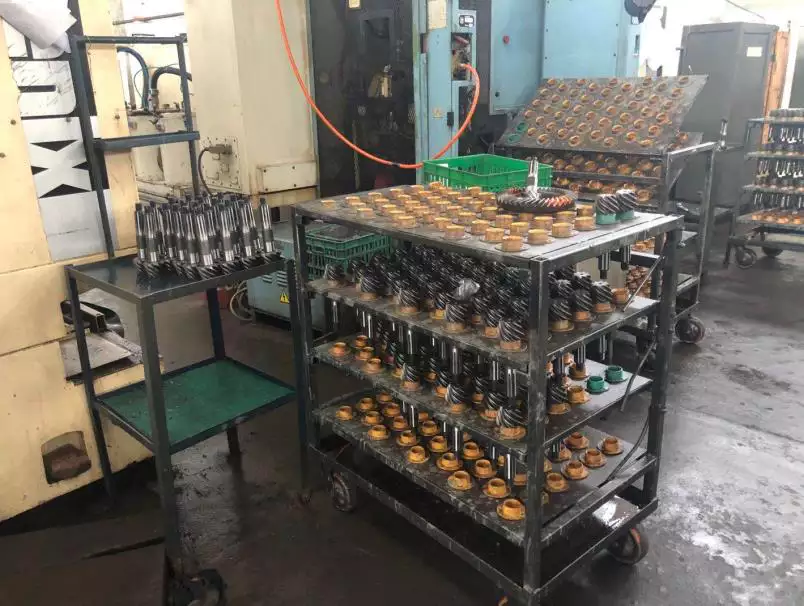
At our professional gear manufacturing factory, we specialize in producing high-quality gears for a wide range of industries. With years of experience and advanced technology, we have become a trusted supplier in the market.
Our Processing Workflow:
- Raw Material Preparation: We start by preparing the raw materials through forging and heat treatment processes to ensure the desired material properties.
- Rough Machining: The raw gears undergo rough machining operations such as turning, drilling, and boring to achieve the desired shape and dimensions.
- Forming Process: Gear teeth are formed through processes such as gear hobbing, gear shaping, and gear shaving to create the precise tooth profiles.
- Semi-Finishing: Semi-finishing operations include deburring, chamfering, and keyway machining to remove sharp edges, provide smooth transitions, and ensure proper fitment.
- Heat Treatment: Gears undergo heat treatment processes such as carburizing, nitriding, or quenching and tempering to enhance their hardness, strength, and wear resistance.
- Finishing: The final gear tooth profiles are achieved through processes like gear grinding and honing to ensure precise tooth geometry and surface finish.
- Inspection and Acceptance: Our gears undergo thorough inspection using advanced testing methods to verify dimensional accuracy, tooth quality, and surface integrity.
By choosing our gear manufacturing services, you can benefit from the following advantages:
- High-quality gears with precise dimensions and excellent surface finish
- Advanced manufacturing technology and equipment
- Strict quality control measures to ensure product reliability
- Customization options to meet specific requirements
- Competitive prices and timely delivery
- Expert technical support and customer service
Partner with us for all your gear needs and experience the superior quality and performance that our gears offer.
Author: Miya