Hypoid Gear in Aerospace Applications
Introduction
In the field of aerospace engineering, the utilization of hypoid gear systems has proven to be of utmost importance in ensuring optimal performance and reliability. These intricate mechanical components play a pivotal role in various aerospace applications, contributing to the smooth operation and efficiency of critical systems. This article aims to delve into the fascinating world of hypoid gears and explore their significant contributions to aerospace engineering.
1. Understanding Hypoid Gears
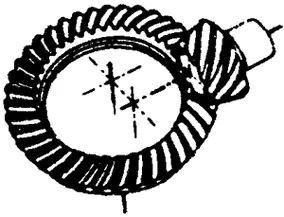
Hypoid gears are a type of spiral bevel gears that possess distinctive characteristics, setting them apart from traditional bevel gears. The term “hypoid” refers to the offset of the axis between the pinion and the gear. This unique design allows for a larger surface area of contact, resulting in enhanced power transmission capabilities and improved load-carrying capacity.
2. Advantages of Hypoid Gears in Aerospace Applications
2.1 Increased Efficiency and Power Transmission
Hypoid gears offer a substantial increase in efficiency compared to other gear types, such as spur gears or worm gears. The smooth meshing of the teeth and the offset axis contribute to reduced friction, resulting in minimal power loss during transmission. This enhanced efficiency translates to improved overall system performance and fuel economy in aerospace applications.
2.2 Enhanced Load-Carrying Capacity
The unique tooth geometry of hypoid gears allows for a larger contact area, enabling them to withstand higher loads and torque. This increased load-carrying capacity makes hypoid gears well-suited for aerospace applications that demand exceptional strength and durability.
2.3 Compact Design
Hypoid gears possess a compact and space-saving design, making them ideal for aerospace applications where weight and size constraints are critical considerations. The ability to transmit high loads within a smaller footprint allows for more efficient utilization of available space.
3. Applications of Hypoid Gears in Aerospace Engineering
3.1 Aircraft Landing Gear Systems
Hypoid gears are extensively employed in the landing gear systems of aircraft. These gears facilitate the smooth and reliable extension and retraction of landing gear, ensuring safe and precise landings. The high load-carrying capacity and compact design of hypoid gears make them indispensable in handling the immense forces involved in landing gear deployment and operation.
3.2 Helicopter Main Rotor Systems
In the realm of helicopter engineering, hypoid gears find their application in main rotor systems. The efficient power transmission, compact design, and ability to withstand high torque make hypoid gears a preferred choice for transmitting power from the engine to the main rotor assembly. This ensures smooth and controlled rotation, enabling safe and stable flight.
3.3 Satellite Tracking Mechanisms
Hypoid gears also play a crucial role in satellite tracking mechanisms. These gears enable precise and accurate movement of tracking devices, ensuring seamless tracking of satellites in orbit. The high precision and reliability of hypoid gears contribute to the successful operation of satellite tracking systems in aerospace applications.
3.4 Spacecraft Power Generation Systems
Spacecraft power generation systems rely on hypoid gears for the efficient conversion of rotational motion into electrical energy. Hypoid gears transmit power from the spacecraft’s propulsion system to generators, ensuring a constant and reliable power supply for various onboard systems. The high efficiency and load-carrying capacity of hypoid gears make them an essential component of spacecraft power generation systems.
3.5 Unmanned Aerial Vehicles (UAVs)
Hypoid gears find extensive use in the propulsion systems of unmanned aerial vehicles. These gears provide the necessary power transmission for the propulsion systems, enabling UAVs to achieve controlled flight and maneuverability. The compact design and efficiency of hypoid gears make them an ideal choice for UAV applications, where weight and size constraints are critical factors.
Conclusion
In conclusion, hypoid gears have become an integral part of aerospace engineering, revolutionizing the performance and reliability of critical systems in various applications. The unique design, increased efficiency, enhanced load-carrying capacity, and compactness make hypoid gears the preferred choice in the aerospace industry. As technology continues to advance, hypoid gears are poised to play an even more significant role in shaping the future of aerospace engineering.
About Our Gear Factory
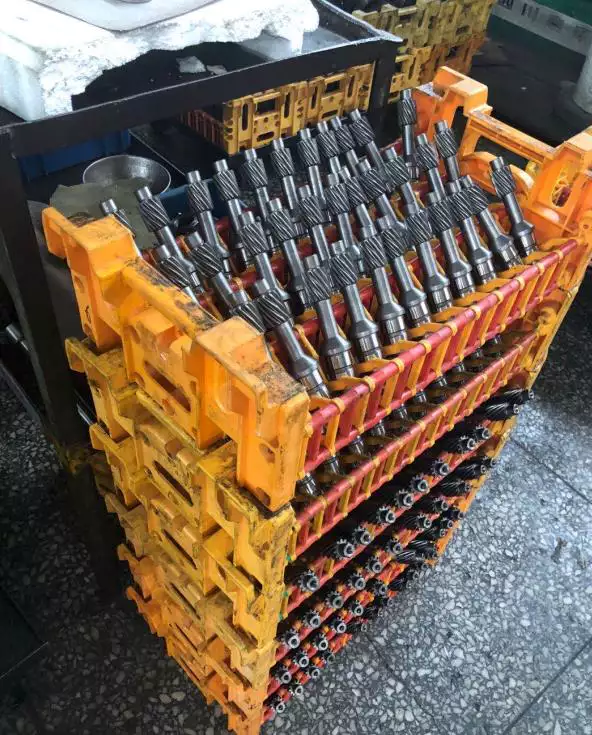
Our factory is a reputable manufacturer specializing in the production of high-quality gears. With years of experience and a commitment to excellence, we have established ourselves as a trusted supplier in the industry.
We follow a meticulous manufacturing process to ensure the precision and reliability of our gears. Let’s take a closer look at our processing steps:
- Blank Preparation: We start by preparing the gear blank through forging and heat treatment processes. These steps ensure the desired material properties and dimensional accuracy.
- Rough Machining: The gear blank undergoes various machining operations such as turning, drilling, and boring to achieve the initial shape and dimensions.
- Forming Process: The gear teeth are formed through processes like gear hobbing, gear shaping, or gear shaving. These processes ensure precise tooth profiles and proper meshing characteristics.
- Semi-Finishing: The semi-finished gear undergoes operations such as chamfering, keyway cutting, and deburring to remove any sharp edges and improve its overall finish.
- Heat Treatment: The gear undergoes heat treatment processes such as carburizing, nitriding, or quenching and tempering to enhance its surface hardness and overall mechanical properties.
- Finish Machining: The gear teeth are ground or honed to achieve the desired tooth profile and surface finish. This step ensures the highest level of precision and smooth operation.
- Inspection and Quality Assurance: The finished gear undergoes rigorous inspection and testing to ensure its dimensional accuracy, tooth profile, and overall quality. Surface treatments may also be applied as per customer requirements.
At our gear factory, we take pride in our state-of-the-art manufacturing facilities, skilled workforce, and adherence to strict quality control measures. Our commitment to innovation and customer satisfaction has allowed us to build strong partnerships with clients worldwide.
Our Advantages:
- Advanced manufacturing facilities equipped with modern machinery.
- Experienced and skilled workforce dedicated to precision engineering.
- Strict quality control measures to ensure superior products.
- Customization options to meet specific customer requirements.
- Timely delivery and efficient customer support.
Partner with us for all your gear needs, and experience the unmatched quality and reliability that sets us apart from the competition.
Author: Miya