Hypoid Gear Design Parameters
Introduction
In this article, we will delve into the intricacies of Hypoid Gear Design Parameters. Hypoid gears are a type of gear system that offer unique advantages in various applications. Understanding the design parameters of these gears is crucial for optimizing their performance and ensuring their reliability.
1. Geometric Parameters
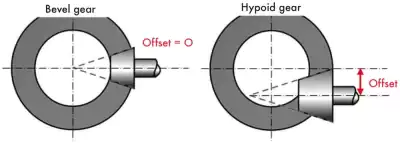
One of the key aspects of hypoid gear design is the determination of geometric parameters. These parameters include the gear ratio, pitch radius, offset distance, and tooth profile. The gear ratio defines the speed and torque relationship between the driving and driven gears. The pitch radius determines the size and strength of the gear. The offset distance refers to the distance between the axes of the driving and driven gears. The tooth profile affects the smoothness and efficiency of the gear operation.
2. Contact Pattern Optimization
Another crucial aspect of hypoid gear design is the optimization of the contact pattern. Achieving a proper contact pattern ensures even load distribution and minimizes wear and noise. Factors such as gear alignment, backlash, and tooth surface modifications play a significant role in achieving an optimal contact pattern.
3. Lubrication Requirements
Hypoid gears operate under high loads and speeds, necessitating effective lubrication. Proper lubrication ensures reduced friction, heat dissipation, and wear prevention. Lubricant selection, viscosity, and lubrication method are essential considerations in hypoid gear design.
4. Strength and Durability
Ensuring the strength and durability of hypoid gears is vital for their reliable operation. Factors such as material selection, heat treatment, and tooth profile optimization contribute to the overall strength and durability of the gears. Additionally, the consideration of factors such as tooth stress, contact fatigue, and bending strength is crucial in determining the gear’s ability to withstand various operating conditions.
5. Noise and Vibration Analysis
Noise and vibration are critical factors in hypoid gear design. Excessive noise and vibration can indicate improper gear meshing, misalignment, or other issues. Employing advanced analysis techniques such as finite element analysis (FEA) and dynamic simulation can help identify and mitigate noise and vibration problems in hypoid gear systems.
6. Manufacturing Considerations
The manufacturing process of hypoid gears involves several critical steps to ensure precision and quality. These steps include blank preparation, rough machining, forming, semi-finishing, heat treatment, finishing, inspection, and acceptance. Each step contributes to the final product’s accuracy and performance.
6.1 Blank Preparation: Forging and Heat Treatment
Before the machining process, the gear blanks are prepared through forging and heat treatment. Forging ensures the required material properties, while heat treatment enhances the gear’s strength and hardness.
6.2 Rough Machining: Turning, Drilling, and Boring
The rough machining process involves turning, drilling, and boring operations. These operations shape the gear blank to its preliminary dimensions and prepare it for further processing.
6.3 Forming: Gear Cutting and Broaching
Gear cutting and broaching are crucial steps in shaping the gear teeth. Gear cutting can be performed using various methods such as hobbing, shaping, or milling. Broaching is used for internal gears or specific tooth profiles.
6.4 Semi-Finishing: Chamfering, Keyway Cutting, and Deburring
Semi-finishing operations focus on removing any sharp edges, creating chamfers or fillets, cutting keyways, and deburring the gear. These steps ensure proper functionality and safety of the gear.
6.5 Heat Treatment: Carburizing, Nitriding, or Quenching and Tempering
Heat treatment processes like carburizing, nitriding, or quenching and tempering are employed to enhance the gear’s surface hardness, wear resistance, and overall mechanical properties. These treatments improve the gear’s ability to withstand heavy loads and harsh operating conditions.
6.6 Finishing: Gear Grinding and Honing
Gear grinding and honing operations provide the final precision and surface finish to the gear teeth. These processes ensure accurate gear meshing and promote smooth operation with minimal noise and vibration.
6.7 Inspection and Acceptance: Gear Testing and Surface Treatment
Inspection and acceptance involve rigorous testing, including gear measurement, tooth profile analysis, and surface treatment assessment. These steps ensure the gears meet the required specifications and quality standards.
Factory Introduction
We are a professional gear manufacturing factory dedicated to delivering high-quality gears for various industries. With years of experience and advanced manufacturing facilities, we offer a wide range of gears tailored to meet our customers’ specific requirements.
Our Manufacturing Process and Techniques
1. Blank Preparation: We start by carefully selecting the appropriate raw materials and performing forging for the required material properties. Heat treatment is then applied to enhance the gears’ strength and durability.
2. Rough Machining: Our skilled technicians utilize precision turning, drilling, and boring techniques to shape the gear blanks to their preliminary dimensions.
3. Forming: We employ advanced gear cutting and broaching methods to create accurate gear teeth profiles, ensuring optimal gear performance.
4. Semi-Finishing: Chamfering, keyway cutting, and deburring operations are meticulously carried out to ensure the gears’ functionality, safety, and ease of assembly.
5. Heat Treatment: We apply specialized heat treatment processes, such as carburizing, nitriding, or quenching and tempering, to enhance the gears’ surface hardness, wear resistance, and overall mechanical properties.
6. Finishing: Our state-of-the-art gear grinding and honing techniques provide the final precision and surface finish to the gear teeth, ensuring smooth and efficient gear operation.
7. Inspection and Acceptance: We conduct comprehensive gear testing, including accurate gear measurement, tooth profile analysis, and surface treatment assessment, to ensure the gears meet the highest quality standards.
Our factory’s commitment to excellence, advanced manufacturing techniques, and stringent quality control measures make us a trusted partner for all your gear needs.
Advantages of Choosing Our Factory:
- 1. Extensive experience in gear manufacturing
- 2. State-of-the-art manufacturing facilities
- 3. Customized gear solutions
- 4. Strict quality control measures
- 5. Timely delivery
- 6. Competitive pricing
- 7. Superior customer service
Partner with us for all your gear requirements, and experience the difference of working with a trusted and reliable gear manufacturing specialist.
Author: Miya