Hypoid Gear Advantages and Disadvantages
Introduction
Hypoid gears are a type of spiral bevel gears that have unique advantages and disadvantages in various applications. In this article, we will explore the advantages and disadvantages of hypoid gears and delve into their intricate details. Understanding these aspects will provide valuable insights into the selection and utilization of hypoid gears in different industries.
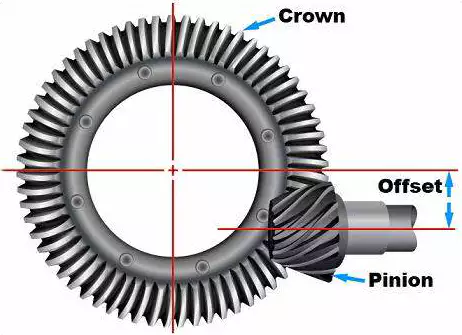
Advantages of Hypoid Gears
1. High torque transmission capability
Hypoid gears excel in transmitting high torque due to their offset configuration and larger tooth contact area. This unique design allows for efficient power transfer in heavy-duty applications, such as automotive differentials and industrial machinery.
2. Smooth and quiet operation
The helical shape of hypoid gears helps to reduce noise and vibration during operation. The spiral tooth engagement generates smoother and quieter motion, making hypoid gears suitable for applications where noise reduction is critical, such as automotive rear axles.
3. Increased load-carrying capacity
Compared to other types of gears, hypoid gears have a higher load-carrying capacity. The offset orientation and larger contact area enhance their ability to withstand heavy loads, making them ideal for heavy machinery and equipment.
4. Compact design
Hypoid gears offer a more compact design compared to other gear types, such as worm gears. This compactness allows for space-saving installations, making them advantageous in applications where space constraints are a concern.
5. Versatility in applications
Hypoid gears find applications in various industries, including automotive, aerospace, and robotics. Their versatility stems from their ability to handle high torque, transmit power smoothly, and accommodate different load requirements.
Disadvantages of Hypoid Gears
1. Lower efficiency compared to other gear types
The sliding contact between the hypoid gear teeth leads to higher friction and lower mechanical efficiency compared to other gear types, such as spur gears. This lower efficiency results in some energy loss during power transmission.
2. More complex manufacturing process
The manufacturing process for hypoid gears is more complex and requires specialized equipment. The offset configuration and spiral tooth profile necessitate precise machining and gear cutting techniques, which can increase production costs.
3. Limited availability of off-the-shelf options
Due to their specialized design, finding off-the-shelf hypoid gears for specific applications can be challenging. Customization or specific gear manufacturing may be required, which can lead to longer lead times and higher costs.
4. Higher skill requirement for maintenance
Maintaining hypoid gears requires specialized knowledge and skills due to their complex geometry. Proper alignment, lubrication, and regular inspection are crucial for ensuring optimal performance and extending the gear’s service life.
5. Limited suitability for high-speed applications
Hypoid gears are not typically recommended for high-speed applications due to their inherent sliding contact and higher friction. Other gear types, such as helical gears or spur gears, are better suited for applications where high rotational speeds are required.
Author: Miya
—————————-
Our Gear Manufacturing Factory
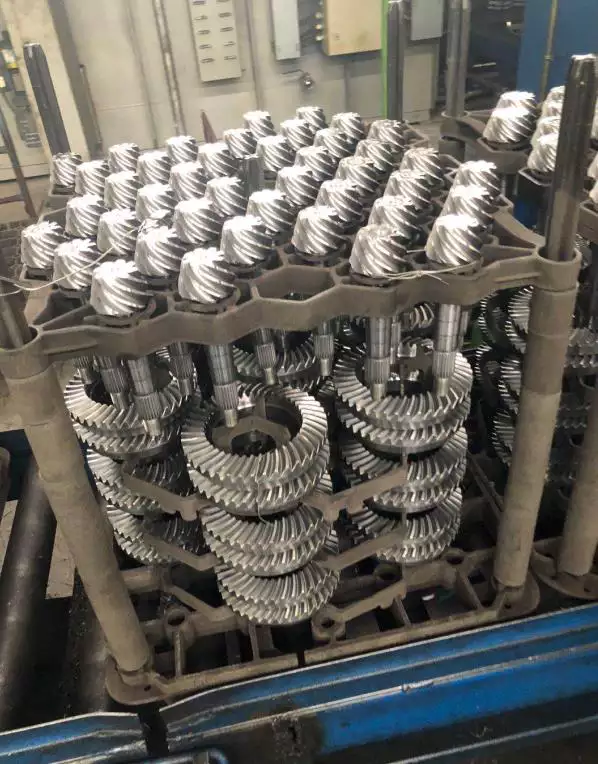
At our gear manufacturing factory, we specialize in producing high-quality gears for various industries. With state-of-the-art technology and a skilled workforce, we are committed to delivering precision-engineered gears that meet our customers’ exact specifications.
Our Gear Manufacturing Process:
- Raw Material Preparation: We begin by preparing the raw material through processes such as forging and heat treatment. This ensures the material’s strength and durability.
- Rough Machining: The rough machining stage involves operations like turning, drilling, and boring to shape the gears and create the initial tooth profile.
- Forming Process: In this stage, we use techniques like gear hobbing, gear shaping, and gear shaving to achieve the desired gear geometry and tooth profile.
- Semi-Finishing: The semi-finishing stage includes processes like chamfering, keyway cutting, and deburring to refine the gear’s edges and remove any imperfections.
- Heat Treatment: We subject the gears to heat treatment processes like carburizing, nitriding, or quenching and tempering to enhance their hardness and improve their wear resistance.
- Finishing: The finishing stage involves precision processes like gear grinding and honing to achieve the required gear tooth profile accuracy and surface finish.
- Inspection and Quality Control: We perform rigorous inspections using advanced gear testing equipment to ensure that the gears meet the highest quality standards. We also apply surface treatments to enhance their durability and corrosion resistance.
Our gear manufacturing factory aims to provide our customers with gears that exceed their expectations in terms of quality, performance, and reliability. With our extensive expertise and commitment to continuous improvement, we guarantee customer satisfaction and long-lasting partnerships.
Author: Miya