How to specify hypoid gear tolerances?
Introduction
In this article, we will discuss the process of specifying hypoid gear tolerances. Hypoid gears are a type of spiral bevel gear commonly used in various industries. Understanding how to specify their tolerances is crucial for ensuring optimal performance and longevity. We will explore the key factors and steps involved in this process.
1. Understanding Hypoid Gear Tolerances
Hypoid gear tolerances refer to the acceptable variations in dimensions and geometries that a hypoid gear can have while still meeting the required specifications. These tolerances directly impact the gear’s performance, including its noise level, durability, and efficiency.
2. Design Considerations
When specifying hypoid gear tolerances, several factors need to be considered:
- Geometry: The shape and size of teeth, helix angle, pitch, and other geometric features.
- Material: The type and properties of the gear material, such as hardness and strength.
- Operating Conditions: The intended application, load, speed, and temperature range.
- Manufacturing Process: The chosen production method and equipment capabilities.
3. Tolerance Specifications
To specify hypoid gear tolerances, the following parameters and measurements are commonly used:
- Backlash: The amount of play between meshing gears.
- Profile Shift: The modification of gear tooth profiles to adjust the contact pattern.
- Runout: The radial and axial deviations of the gear’s rotation axis.
- Surface Finish: The roughness and quality of the gear’s tooth surface.
4. Manufacturing Process
Manufacturing hypoid gears involves several steps:
- Blank Preparation: Forging and heat treatment of the gear blank to achieve the desired material properties.
- Rough Machining: Turning, drilling, and boring to shape the gear blank.
- Forming Process: Gear teeth are formed through processes like rolling, hobbing, or broaching.
- Semi-Finishing: Chamfering, keyway cutting, and deburring to remove sharp edges and imperfections.
- Heat Treatment: Carburizing, nitriding, or quenching and tempering for surface hardening and strengthening.
- Finishing: Gear teeth are ground or honed to achieve the desired precision and surface quality.
- Inspection and Acceptance: Gear testing and surface treatment, such as coating or plating.
5. Our Gear Manufacturing Factory
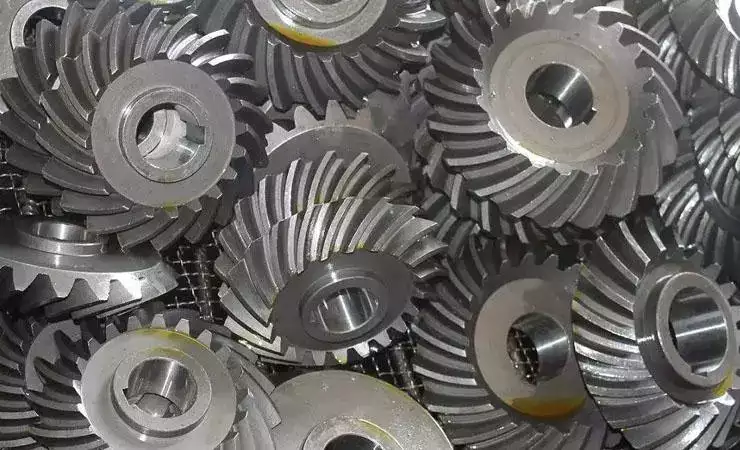
We are a professional gear manufacturing factory with expertise in producing high-quality gears for various industries. Our manufacturing process involves the following steps:
- Blank Preparation: We carefully select and prepare the gear blank through forging and precise heat treatment to achieve optimal material properties.
- Rough Machining: Using advanced turning, drilling, and boring techniques, we shape the gear blank with precision.
- Forming Process: Our skilled craftsmen utilize cutting-edge gear forming methods such as precision rolling and hobbing to create accurate tooth profiles.
- Semi-Finishing: We meticulously perform chamfering, keyway cutting, and deburring to ensure smooth edges and remove any imperfections.
- Heat Treatment: Our gears undergo specialized heat treatment processes such as carburizing, nitriding, or quenching and tempering for enhanced surface hardness and strength.
- Finishing: Our experienced technicians utilize advanced gear grinding and honing techniques to achieve the desired precision and surface finish.
- Inspection and Acceptance: Each gear undergoes rigorous quality testing, including gear measurement and surface analysis, to ensure compliance with specifications.
Advantages of Choosing Our Factory
When partnering with our gear manufacturing factory, you can benefit from:
- Exceptional Quality: Our commitment to precision and stringent quality control ensures that you receive gears of the highest quality.
- Advanced Technology: We leverage state-of-the-art equipment and manufacturing techniques to deliver superior gears.
- Customization: Our team can tailor gears to your specific requirements, including tolerances, materials, and finishes.
- Expertise: With years of experience in gear manufacturing, we possess the knowledge and skills to meet your needs.
- Reliability: We prioritize delivering gears on time and strive to maintain long-term partnerships with our customers.
Author: Miya