How to Calculate Pitch of Screw Jack
Determining the pitch of a screw jack is an essential aspect of its operation, as it can affect the device’s functionality and efficiency. The pitch is the distance a screw thread advances axially in one complete turn (360°), and it’s usually measured in millimeters.
Understanding Screw Jacks
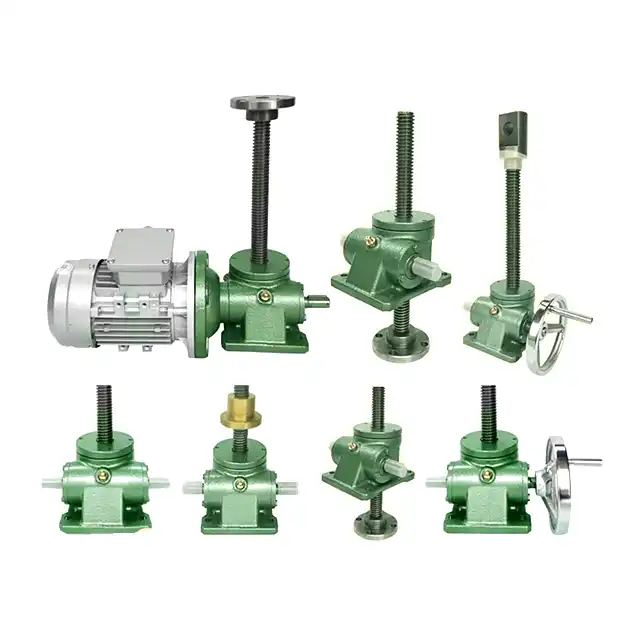
A screw jack is a mechanical device that converts rotational motion into linear motion. It’s a type of jack that is operated by turning a lead screw. It’s commonly used in various applications such as lifting heavy weights or vehicles, adjusting the height of work tables and machinery, or for precision alignment of radio telescope mirrors.
The Importance of Screw Jack Pitch
The pitch of a screw jack plays a crucial role in determining the lifting speed and the mechanical advantage of the system. A larger pitch will result in a faster lifting speed but will require more effort to operate. On the other hand, a smaller pitch will provide a slower lifting speed but will require less effort. Therefore, getting the pitch right is crucial for the optimal operation of a screw jack.
How to Calculate the Pitch of a Screw Jack
To calculate the pitch of a screw jack, you need to measure the distance between two consecutive threads. This can be done using a ruler or a digital caliper for more accurate measurements. The pitch is then calculated by dividing the total distance by the number of threads.
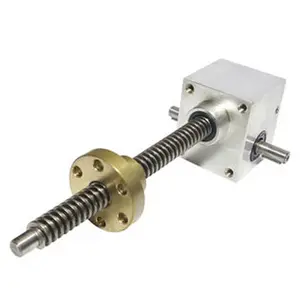
For example, if the distance between 10 threads is 15mm, the pitch would be 15mm divided by 10, which equals 1.5mm. This means that for every 360° turn of the screw, the jack will lift or lower by 1.5mm.
Factors Influencing Screw Jack Pitch
Several factors can influence the pitch of a screw jack, including the type of material used, the manufacturing process, and the intended application. For instance, coarse threads have a larger pitch and are used for heavy-duty applications, while fine threads have a smaller pitch and are used for precision applications.
Choosing the Right Screw Jack Pitch
Choosing the right pitch for your screw jack can make a significant difference in its performance. If the pitch is too large, the screw jack may be difficult to operate and could potentially fail under heavy loads. Conversely, if the pitch is too small, the screw jack may not be able to lift the required load at a sufficient speed.
Conclusion
Understanding how to calculate the pitch of a screw jack is crucial for its efficient operation. By knowing the pitch, you can select the right screw jack for your specific application, ensuring optimal performance and longevity. Remember, the pitch is determined by the distance a screw thread advances in one complete turn and can be calculated by dividing the total distance by the number of threads.
Whether you’re a professional engineer or a DIY enthusiast, being able to calculate the pitch of a screw jack can be a valuable skill. So grab your measuring tools and start calculating!