How to Calculate Efficiency of a Screw Jack
When delving into the world of mechanics, it is crucial to understand the functioning of various devices and tools, as well as how to measure their efficiency. A screw jack is one such indispensable utility. The efficiency of a screw jack is a critical factor that allows users to ascertain its effectiveness in lifting heavy loads. This guide will walk you through the process of calculating the efficiency of a screw jack, thus enabling you to make informed decisions regarding its usage.
Understanding Screw Jacks
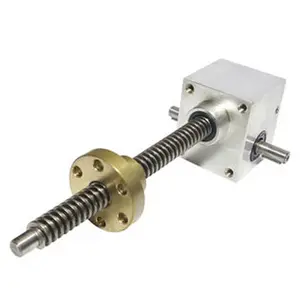
Before delving into the calculation process, let’s take a moment to understand what a screw jack is and how it works. A screw jack is a mechanical device used to lift heavy loads or to apply significant forces. It operates by converting rotational motion into linear motion. This simple device leverages the mechanical advantage of a screw thread to achieve this purpose.
Concepts Involved in Calculating Screw Jack Efficiency
Calculating the efficiency of a screw jack involves a combination of understanding the physics involved and applying mathematical principles. It requires knowledge of the applied load, the effort exerted, and how to calculate the mechanical advantage and velocity ratio. The efficiency of the screw jack can then be determined by using these values in the efficiency equation.
Steps to Calculate Efficiency of a Screw Jack
Now that we’ve covered the basics, let’s move on to the step-by-step process of calculating screw jack efficiency.
Step 1: Determine the Load and Effort
The first step in calculating screw jack efficiency is to determine the load being lifted and the effort applied. The load refers to the weight of the object being lifted by the jack, while the effort is the force applied to turn the jack’s handle. These values can be measured using appropriate weighing and force measurement tools.
Step 2: Calculate the Mechanical Advantage
The mechanical advantage of a screw jack refers to the ratio of the load lifted to the effort applied. It can be calculated using the formula: Mechanical Advantage = Load / Effort. This value gives us insight into how effectively the screw jack converts effort into lifting force.
Step 3: Calculate the Velocity Ratio
The velocity ratio of a screw jack is the ratio of the distance moved by the effort to the distance moved by the load. This can be calculated using the formula: Velocity Ratio = Distance moved by effort / Distance moved by load. The velocity ratio gives us an indication of the rate at which the screw jack can move the load.
Step 4: Calculate the Efficiency
Finally, we can calculate the efficiency of the screw jack. Efficiency is the ratio of the mechanical advantage to the velocity ratio, expressed as a percentage. The formula for efficiency is: Efficiency = (Mechanical Advantage / Velocity Ratio) x 100%. A higher efficiency percentage indicates a more effective screw jack.
Factors Affecting Screw Jack Efficiency
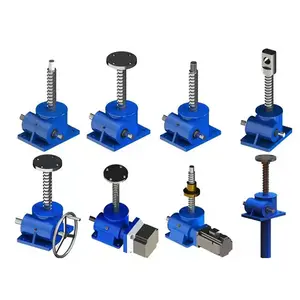
Various factors can affect the efficiency of a screw jack. These include the screw thread angle, the type and amount of lubrication used, the material of the screw and nut, and the load weight. Understanding these factors can help users optimize the performance of their screw jack and ensure it operates at maximum efficiency.
Conclusion
Understanding how to calculate the efficiency of a screw jack is crucial for its effective use. By following the steps outlined above, users can ascertain the performance of their device and make informed decisions regarding its application. With this knowledge at hand, you can ensure that your screw jack is always performing at its best.