How Does a Pulley Reduce Weight?
Understanding how a pulley reduces weight is a fascinating exploration into basic physics principles. In its simplest form, a pulley is a wheel on an axle that is designed to support movement and change of direction of a cable or belt along its circumference. Pulleys are used in various forms and configurations and are a fundamental part of many machines.
Principles of Pulleys
Before delving into how a pulley reduces weight, it’s essential to understand the basic principles of pulleys. A pulley system is typically composed of one or more pulleys and a rope, cable, or belt that runs over the pulley’s wheel or wheels. The key principle at work in a pulley system is the concept of mechanical advantage, which can be thought of as the factor by which a mechanism multiplies the force put into it.
Mechanical Advantage of Pulleys
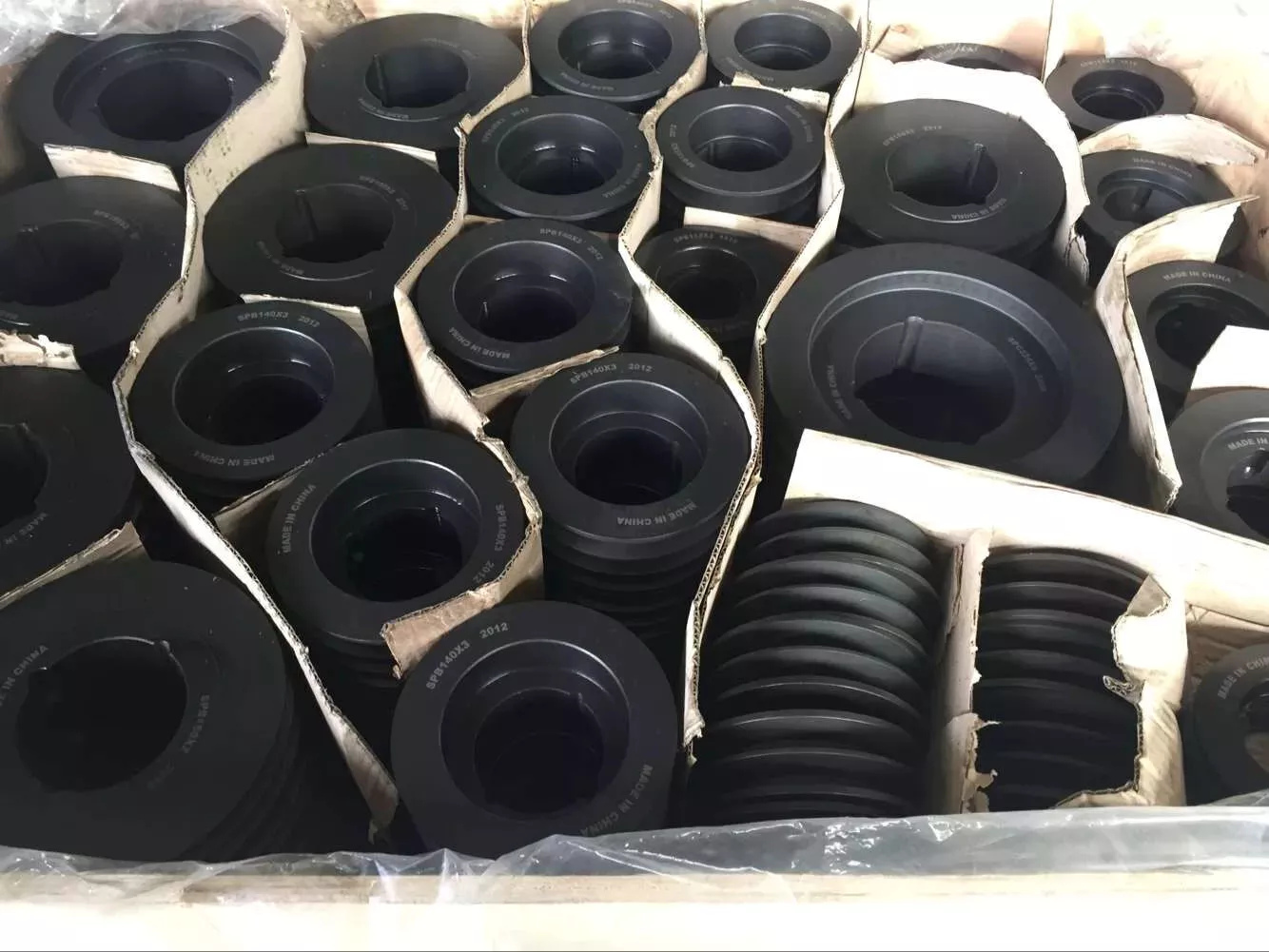

The mechanical advantage of a pulley system is determined by the number of ropes or cables that support the weight. In a single fixed pulley system, there is no mechanical advantage because the force required to lift the weight is equal to the weight itself. However, when multiple pulleys are used, or when a pulley is movable, the force required to lift the weight is reduced. This is where the concept of a pulley reducing weight comes into play.
How Pulleys Reduce Weight
When we say that a pulley reduces weight, we mean that it reduces the amount of force required to lift or move that weight. This is achieved by distributing the weight over multiple lengths of rope or cable. For example, in a system with two pulleys, the weight is distributed over two lengths of rope, effectively halving the force required to lift it. This does not change the weight itself, but it changes our experience of the weight by reducing the effort needed to lift it.
Types of Pulley Systems
There are three main types of pulley systems: fixed, movable, and compound. Each of these systems uses the principle of mechanical advantage in different ways to reduce the force required to lift a weight.
Fixed Pulley Systems
A fixed pulley has an axle that is anchored, or fixed, in place. Although a fixed pulley does not provide a mechanical advantage, it does change the direction of the force, making it easier to lift weight by pulling down instead of lifting up.
Movable Pulley Systems
A movable pulley is attached to the weight and moves with the weight when force is applied. This type of pulley provides a mechanical advantage because the force is distributed over two lengths of rope.
Compound Pulley Systems
A compound pulley system uses a combination of fixed and movable pulleys to further increase the mechanical advantage. By combining pulleys, the force required to lift a weight can be significantly reduced, making it feel as though the weight itself has been reduced.
Applications of Pulleys
Pulleys are used in a wide range of applications, from simple household tools to complex industrial machinery. Examples include clotheslines, window blinds, cranes, elevators, and more. By understanding how pulleys reduce weight, we can better appreciate how these simple machines make our everyday tasks easier and more efficient.
Conclusion
In conclusion, while pulleys do not actually reduce weight, they do reduce the force required to lift a weight by distributing it over multiple lengths of rope or cable. This creates a mechanical advantage that makes it easier to lift or move heavy objects. The simple yet powerful principle of mechanical advantage makes pulleys an essential component in many machines and devices.