Comparison of Helical vs Spur Gears in Track Drive Planetary Gearboxes
Planetary gearboxes are important components in many applications, including track drives for heavy equipment. Two common types of gears used in these gearboxes are helical and spur gears. Both have their own advantages and disadvantages, and choosing the right type can have a significant impact on the performance, efficiency, and durability of the gearbox.
Overview of Helical Gears
Helical gears are cylindrical gears with angled teeth. The teeth are cut at an angle to the gear axis, which makes them produce less noise and vibration than spur gears. They also have a larger tooth contact area, which results in higher torque capacity and better load distribution. However, helical gears are more complex to design and manufacture, which can make them more expensive.
Advantages of Helical Gears
- Less noise and vibration
- Higher torque capacity
- Better load distribution
Disadvantages of Helical Gears
- More complex to design and manufacture
- More expensive
Overview of Spur Gears
Spur gears are also cylindrical gears, but they have straight teeth that are parallel to the gear axis. They are simpler to design and manufacture than helical gears, which makes them more cost-effective. However, they produce more noise and vibration, and have a smaller tooth contact area, which makes them less efficient and durable than helical gears.
Advantages of Spur Gears
- Simpler to design and manufacture
- More cost-effective
Disadvantages of Spur Gears
- More noise and vibration
- Smaller tooth contact area
- Less efficient and durable
Which Type of Gear is Better for Track Drive Planetary Gearboxes?
The choice between helical and spur gears depends on various factors, such as the application requirements, operating conditions, and budget constraints. In general, helical gears are more suitable for high-load, high-torque, and high-speed applications, while spur gears are more suitable for low-load, low-torque, and low-speed applications.
However, it is also possible to combine helical and spur gears in a hybrid configuration, where the planetary gears are helical and the sun and ring gears are spur. This can provide a balance between noise, efficiency, and cost, and is commonly used in many track drive planetary gearboxes.
Our Company’s Advantages in Gearbox Design and Manufacturing
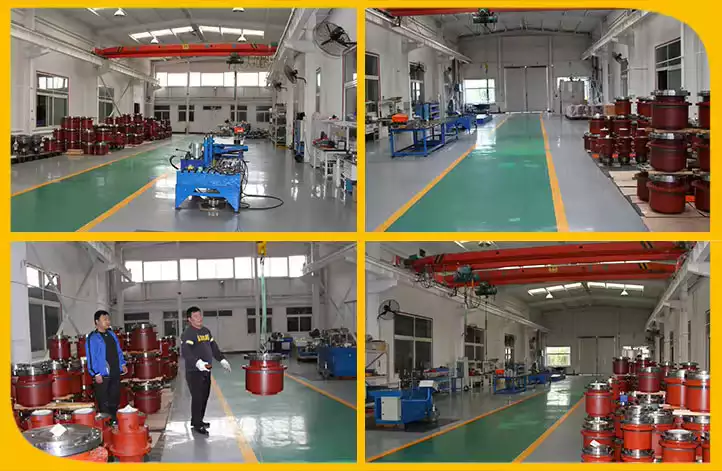
As a professional gearbox factory, we have many advantages in designing and manufacturing high-quality gearboxes for various applications. Here are some of our strengths:
| 1. Deep Industry Accumulation | With over 20 years of market experience, we have accumulated rich experience in gearbox design and manufacturing, and can accurately grasp the industry development trends to meet various complex working conditions. |
| 2. Comprehensive Product Line | Our products cover a wide range of gearbox types, from standard to customized, including planetary gearboxes, worm gear reducers, bevel gear reducers, and helical gear reducers, which can be used in agriculture machinery, engineering machinery, special vehicles, industrial automation, and other fields. |
| 3. Precision Manufacturing Process | We adopt advanced production equipment and rigorous quality management system to ensure that each gearbox undergoes strict quality inspection during the production process, ensuring its accuracy and durability. |
| 4. Innovative Technology Research and Development | We continuously invest in R&D efforts to optimize our product structures and performance. Our gearboxes have the characteristics of low noise, high torque density, and high efficiency, and are adaptable to various adverse environments. |
| 5. Flexible Customization Services | We provide comprehensive customization solutions for customers with special application scenarios and requirements, including speed ratio selection, modular design, and integrated intelligent drive technology. |
Track Drive Buying Guide: How to Choose the Right Track Drive for Your Application
Choosing the right track drive for your application is crucial for achieving optimal performance, efficiency, and durability. Here are some factors to consider when selecting a track drive:
| 1. Vehicle Weight | Choose a track drive that can handle the weight of your vehicle and its equipment. Consider the maximum load capacity and the gear ratio to ensure proper power output. |
| 2. Operating Conditions | Consider the environment in which your vehicle will operate, such as temperature, humidity, dust, and water. Choose a track drive that is designed for the specific conditions to ensure reliable performance. |
| 3. Speed and Torque | Choose a track drive that can provide the necessary speed and torque for your application. Consider the gear ratio, output speed, and available power source. |
| 4. Mounting Configuration | Choose a track drive that is compatible with your vehicle’s mounting configuration, such as the flange, shaft, and bolt pattern. Consider the installation space and ease of maintenance. |
| 5. Cost | Choose a track drive that fits your budget without compromising on quality and performance. Consider the initial cost, maintenance cost, and overall lifecycle cost. |
About the Author
Author: Miya