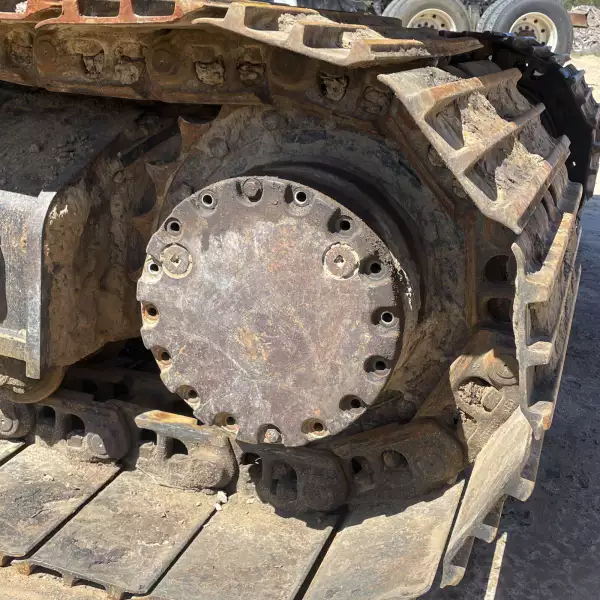
The Influence of Track Drive Planetary Gearbox Design on the Overall Fuel Consumption and Carbon Footprint of Tracked Vehicles
Introduction
Tracked vehicles have long been utilized in various industries such as construction, mining, and agriculture. One of the critical components that significantly affect the performance of these vehicles is the track drive planetary gearbox design. It is responsible for transmitting the power from the engine to the track system, which propels the vehicle. The gearbox design can impact the fuel consumption and carbon footprint of tracked vehicles significantly. This article aims to explore the influence of track drive planetary gearbox design on the overall fuel consumption and carbon footprint of tracked vehicles.
The Basics of Track Drive Planetary Gearbox Design
Planetary gearboxes are widely used in track drive systems due to their high power density, compact size, and torque transmission capabilities. The basic design of a planetary gearbox consists of a central sun gear, planet gears, and an outer ring gear. Power flows from the input shaft to the sun gear, which drives the planet gears, and the output is taken from the ring gear. The number of planet gears, their size, and arrangement can be varied to achieve different gear ratios and torque capacities.
Factors Affecting the Fuel Consumption and Carbon Footprint of Tracked Vehicles
The fuel consumption and carbon footprint of tracked vehicles are influenced by several factors, including the gearbox design. The factors are as follows:
1. Vehicle Weight
The weight of the vehicle affects the power required to move it. The heavier the vehicle, the more power is needed, which translates into higher fuel consumption and carbon emissions.
2. Track Width and Length
The track width and length affect the contact area between the vehicle and the ground. A larger contact area results in lower ground pressure, reducing the power required to move the vehicle.
3. Track Tension
The tension of the track affects the frictional losses within the track drive system. An overtightened track increases frictional losses, leading to higher fuel consumption and carbon emissions.
4. Terrain
The terrain over which the vehicle operates affects the power required to move it. Rough terrain requires more power, leading to higher fuel consumption and carbon emissions.
5. Gearbox Efficiency
The efficiency of the gearbox affects the power losses within the track drive system. The higher the efficiency, the lower the power losses, resulting in lower fuel consumption and carbon emissions.
The Influence of Track Drive Planetary Gearbox Design on Fuel Consumption and Carbon Footprint
The track drive planetary gearbox design can significantly affect the fuel consumption and carbon footprint of tracked vehicles. The following aspects of the gearbox design are crucial:
1. Gear Ratio
The gear ratio determines the torque multiplication and speed reduction of the gearbox. A properly chosen gear ratio can result in optimum engine speed and torque, leading to lower fuel consumption and carbon emissions.
2. Gearbox Size
The size of the gearbox affects its weight and power losses. A smaller and lighter gearbox results in lower power losses and reduced fuel consumption and carbon emissions.
3. Lubrication System
The lubrication system of the gearbox affects the frictional losses and wear of the gearbox components. A properly designed lubrication system can minimize frictional losses and wear, leading to lower fuel consumption and carbon emissions.
4. Material Selection
The material selection of the gearbox components affects their weight, strength, and durability. Lightweight materials with high strength and durability can result in lower fuel consumption and carbon emissions.
5. Noise and Vibration
The noise and vibration produced by the gearbox affect the driver’s comfort and can impact fuel consumption. A properly designed gearbox with low noise and vibration can result in better driver comfort and reduced fuel consumption and carbon emissions.
Our Company
Our company is a specialized gearbox factory that has been in the market for more than 20 years. We have extensive experience in the design and manufacture of gearboxes, enabling us to meet the complex operational requirements of various industries. Our product line includes planetary gearboxes, worm gearboxes, bevel gearboxes, and helical gearboxes, among others, applicable to agriculture, engineering, special vehicles, and industrial automation.
Our gearboxes are manufactured using advanced production equipment and rigorous quality management systems, ensuring that every product undergoes strict quality testing to guarantee precision and durability. We continuously invest in research and development to optimize our product structure and performance, resulting in gearboxes with low noise, high torque density, and efficient transmission capabilities.
We offer flexible customization services tailored to our clients’ specific needs, including speed ratio selection, modular design, and integrated intelligent drive technology. Our efficient project management team and supply chain system enable us to respond quickly to customer demands and ensure timely delivery. We have a professional technical service team that provides comprehensive technical support, installation guidance, and after-sales maintenance services, ensuring that our gearboxes maintain good working conditions throughout their lifecycle.
Our products are sold worldwide and have earned international quality certifications such as ISO and CE, demonstrating our competitiveness in the global market.
Our Advantages
| 1 |
Extensive industry experience |
| 2 |
Comprehensive product line |
| 3 |
Precision manufacturing technology |
| 4 |
Innovative research and development |
| 5 |
Flexible customization services |
Track Drive Purchasing Guide
Track drive selection is crucial to ensure the optimal performance of tracked vehicles. A suitable track drive should be compatible with the vehicle’s weight, track width, length, and tension, and the operating terrain. The following are some factors to consider when selecting a track drive:
1. Gear Ratio
The gear ratio of the track drive should be chosen to match the engine speed and torque requirements of the vehicle for the specific application. A properly chosen gear ratio can result in optimum performance and fuel economy.
2. Torque Capacity
The torque capacity of the track drive should be sufficient to handle the maximum torque requirements of the vehicle’s engine. An undersized track drive can lead to premature failure and increased maintenance costs.
3. Durability
The track drive should be made of durable materials that can withstand the harsh operating conditions of the vehicle. The durability of the track drive can significantly affect its maintenance costs and life cycle.
4. Noise and Vibration
The track drive should be designed to minimize noise and vibration, improving driver comfort and reducing fuel consumption.
5. Maintenance Requirements
The track drive should be designed to reduce maintenance requirements, improving operational efficiency and minimizing downtime.

About the Author
Miya is a professional writer with extensive experience in the field of engineering. She is passionate about exploring the latest advancements in technology and their impact on various industries.