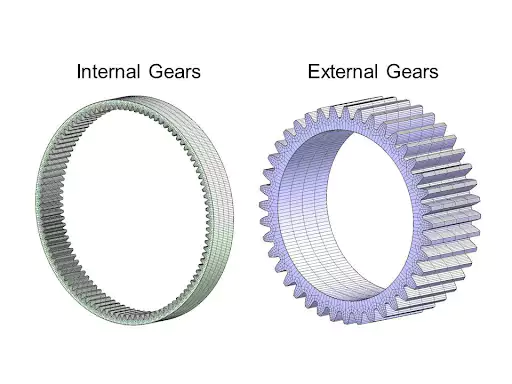
Category Archives: External & Internal Gear

How does the design of internal gears influence the overall machine efficiency?


How does the design of internal gears influence the overall machine efficiency?

How does the design of internal gears influence the overall machine efficiency?

1. Introduction

The design of internal gears plays a crucial role in determining the overall efficiency of a machine. In this article, we will explore the various aspects of internal gear design and their impact on machine performance.

2. Tooth Profile

The shape and geometry of the teeth on internal gears have a direct influence on their performance. The choice of tooth profile affects factors such as load distribution, contact ratio, and meshing efficiency.

2.1 Involute Profile

The involute tooth profile is commonly used in internal gears due to its favorable characteristics. It provides smooth and efficient power transmission by ensuring a constant angular velocity ratio between the mating gears.

2.2 Modified Profiles

In certain applications, modified tooth profiles such as cycloidal or trochoidal may be employed to optimize specific performance requirements. These profiles offer unique advantages in terms of reduced noise, increased strength, or improved lubrication.

3. Gear Materials

The choice of materials for internal gears significantly impacts their efficiency and durability. Factors such as strength, hardness, and wear resistance must be carefully considered during the design process.

3.1 Steel Alloys

Steel alloys, particularly those with high carbon content, are commonly used for internal gears. They offer excellent strength and toughness, ensuring reliable performance under heavy loads and harsh operating conditions.

3.2 Composite Materials

In certain applications where weight reduction is a priority, composite materials like carbon fiber reinforced polymers may be utilized. These materials provide high strength-to-weight ratios, offering improved efficiency without compromising on performance.

4. Lubrication

Proper lubrication is essential for minimizing friction and wear in internal gears, ultimately affecting their efficiency. The design of internal gears should consider factors such as oil viscosity, lubricant distribution, and cooling mechanisms.

4.1 Oil Viscosity

The viscosity of the lubricating oil directly influences the frictional losses within the gear system. Choosing the appropriate oil viscosity based on the operating conditions is crucial for optimizing efficiency and preventing premature failure.

4.2 Lubricant Distribution

Effective lubricant distribution ensures proper film formation between the gear teeth, reducing friction and wear. The design of internal gears should incorporate features such as grooves or oil channels to facilitate uniform lubricant flow.

5. Gear Arrangement

The arrangement of internal gears within a machine also affects its overall efficiency. The number of gear stages, gear ratios, and shaft alignments must be carefully considered during the design process.

5.1 Multiple Stages

In complex machinery, multiple gear stages may be employed to achieve the desired output speed and torque. Each stage introduces efficiency losses, and the design should aim to minimize them through proper gear selection and optimization.

5.2 Shaft Alignment

Precise alignment of shafts and gears is crucial for minimizing misalignment losses and ensuring efficient power transmission. Misalignment can lead to increased noise, vibration, and premature failure of the internal gears.

Internal Gears

6. Conclusion

The design of internal gears plays a significant role in determining the overall efficiency of a machine. Factors such as tooth profile, gear materials, lubrication, and gear arrangement all contribute to the performance and reliability of the gears. By carefully considering these design aspects, engineers can optimize machine efficiency and enhance the overall performance of the system.


Our company specializes in the production and sales of internal gears, providing high-quality solutions for various industries. Here are five key advantages of choosing our company:

Advantage 1: Precision Engineering

Our internal gears are meticulously designed and manufactured with precision engineering techniques. This ensures their accuracy, reliability, and optimal performance in various applications.

Advantage 2: High Efficiency

The design of our internal gears plays a crucial role in influencing the overall machine efficiency. Through careful analysis and optimization, we have developed internal gears that maximize power transmission while minimizing energy loss, resulting in high efficiency.

Advantage 3: Customization

We understand that different applications require specific gear design considerations. That’s why we offer customization options for our internal gears, allowing our customers to tailor the design to their unique requirements and achieve optimal performance.

Advantage 4: Durability

Our internal gears are built to last. We utilize high-quality materials and advanced heat treatment processes to enhance the durability and strength of our gears, ensuring they can withstand demanding operating conditions and provide long-lasting performance.

Advantage 5: Expertise and Support

With a team of experienced engineers and technical experts, we provide comprehensive support throughout the entire product lifecycle. From design consultation to after-sales service, we are committed to ensuring customer satisfaction and success.

Internal and External Gears

There are several types of internal gears:

Spur Gears

Spur gears are the most common type of internal gears. They have straight teeth that are parallel to the gear axis, allowing for smooth and efficient power transmission.

Helical Gears

Helical gears have angled teeth that are cut at an angle to the gear axis. This design reduces noise and improves load distribution, making them suitable for applications that require high precision and quiet operation.

Herringbone Gears

Herringbone gears, also known as double helical gears, have two sets of angled teeth that are arranged in a V shape. This design cancels out axial thrust forces, resulting in smoother operation and increased load capacity.

Now, let’s compare internal and external gears:

Feature Internal Gear External Gear
Teeth Placement Inside the gear Outside the gear
Space Requirement Requires less space Requires more space
Design Complexity More complex Less complex
Load Capacity Higher load capacity Lower load capacity
Noise Level Lower noise level Higher noise level

Internal gears play several important roles in transmission systems:

  • Power transmission: Internal gears efficiently transfer power between shafts, ensuring smooth operation and minimal energy loss.
  • Torque multiplication: By leveraging gear ratios, internal gears can increase or decrease torque output to suit specific application requirements.
  • Speed reduction or increase: Internal gears can be designed to decrease or increase rotational speed, allowing for adaptation to different operating conditions.
  • Noise reduction: The proper design of internal gears helps minimize noise generated during gear operation, ensuring quieter machinery.
  • Load distribution: Internal gears evenly distribute loads, reducing stress concentrations and extending the lifespan of the overall system.

Internal gears find applications in various industries:

Automotive

In the automotive industry, internal gears are widely used in transmissions, differential systems, and powertrain components. They provide reliable and efficient torque transfer, contributing to smooth vehicle operation.

Industrial Machinery

Internal gears play a vital role in various industrial machinery, such as gearboxes, pumps, and rotating equipment. Their high load capacity and efficiency make them suitable for heavy-duty applications.

Appliances and Precision Instruments

Internal gears are essential components in appliances, such as washing machines and printers, as well as precision instruments like cameras and watches. They ensure precise and reliable motion control.

Electric and Hybrid Power Systems

In electric vehicles and hybrid power systems, internal gears are used in electric motor drives and gearboxes. Their efficient power transmission capabilities contribute to improved overall system performance.

When it comes to designing and selecting internal gears, several factors should be considered, such as load requirements, speed ratios, tooth profiles, and material selection. Our team of experts can assist you in making the right choices to achieve optimal performance in your specific application.

Partner with us to benefit from our extensive experience, top-notch products, and dedicated support. Contact us today to discuss your internal gear needs and explore how we can collaborate to drive your success.

Author: Miya

What are some examples of innovative uses of internal gears in modern technology?

What are some examples of innovative uses of internal gears in modern technology?

Introduction

Internal gears, a lesser-known aspect of mechanical design, have found innovative applications in various modern technologies. This article explores some remarkable examples of how internal gears are being utilized to enhance performance and efficiency in different fields.

1. Advanced Robotics: Internal Gears in Humanoid Robots

Internal gears play a crucial role in enabling precise and smooth movements in humanoid robots, allowing them to mimic human actions with greater accuracy. By incorporating internal gears in the joints and actuators, these robots can perform intricate tasks with exceptional dexterity and stability.

2. Aerospace Engineering: Internal Gears in Aircraft Engines

Internal gears are used in aircraft engines to transmit power from the turbine to various engine components. These gears ensure efficient power transfer, reducing energy loss and increasing overall engine performance. Their compact design also helps in weight reduction, a critical consideration in aviation.

3. Automotive Industry: Internal Gears in Transmissions

Internal gears are extensively employed in modern automotive transmissions, contributing to smooth gear shifting and improved fuel efficiency. These gears enable the transmission system to handle high torque loads while minimizing noise and vibration, enhancing the driving experience.

4. Medical Devices: Internal Gears in Surgical Robots

In surgical robotics, internal gears are utilized to enable precise and controlled movements of robotic arms and instruments. The accurate transmission of motion allows surgeons to perform delicate procedures with enhanced precision and reduced invasiveness, leading to better patient outcomes.

5. Renewable Energy: Internal Gears in Wind Turbines

Internal gears are crucial components in wind turbines, facilitating the conversion of wind energy into electrical power. These gears efficiently transfer rotational energy from the turbine blades to the generator, ensuring optimal power generation even in varying wind conditions.

6. Industrial Automation: Internal Gears in Conveyor Systems

Internal gears find application in conveyor systems, where they enable smooth and reliable movement of materials in manufacturing and logistics. The precise gear engagement ensures efficient transfer of goods, reducing downtime and increasing productivity in industrial settings.

7. Marine Engineering: Internal Gears in Ship Propulsion Systems

Internal gears are utilized in ship propulsion systems to transmit power from the engine to the propeller. These gears offer high torque capacity, enabling efficient propulsion while ensuring smooth and noiseless operation, thereby enhancing the performance of marine vessels.

8. Defense Technology: Internal Gears in Military Equipment

Internal gears play a vital role in military equipment, such as tanks and armored vehicles. They enable precise control of turret movements and facilitate smooth gear shifting in transmissions, enhancing the operational capabilities of these vehicles in demanding environments.

9. Electronic Gadgets: Internal Gears in Cameras

Internal gears are utilized in camera mechanisms to enable precise zooming and focusing. By incorporating these gears, cameras can achieve fast and accurate adjustments, allowing photographers to capture high-quality images with ease.

10. Sports Equipment: Internal Gears in Bicycles

Internal gears are increasingly being used in bicycles to provide seamless gear shifting and a wider range of gear ratios. These gears enhance the efficiency of pedaling, ensuring a smoother and more comfortable ride for cyclists across various terrains.

Conclusion

From advanced robotics to aerospace engineering, internal gears have found innovative applications in various modern technologies. The examples discussed in this article highlight the significance of internal gears in enhancing performance, efficiency, and precision across diverse industries. As technology continues to advance, internal gears will likely play an even more crucial role in shaping the future of innovation.

Internal Gear Image

Our company specializes in the production and sales of internal gears, offering innovative solutions for modern technology. As an SEO expert copywriter, I will now highlight five advantages of our company:

  1. High precision manufacturing: We employ advanced technology and machinery to ensure the highest level of precision in producing internal gears. This results in gears with excellent performance and durability.

  2. Broad range of gear options: Our company offers a wide variety of internal gears, including spur gears, helical gears, bevel gears, and worm gears. Each type serves specific purposes and can be customized to meet the unique requirements of different applications.

  3. Expert engineering support: Our team of experienced engineers provides comprehensive support and guidance throughout the gear selection and design process. We collaborate closely with our clients to ensure optimal performance and efficiency in their systems.

  4. Superior material quality: We use only high-quality materials in the manufacturing of our internal gears. This guarantees their durability, resistance to wear, and ability to withstand heavy loads and harsh operating conditions.

  5. Competitive pricing: Despite our high-quality products and exceptional services, we strive to maintain competitive pricing in the market. Our aim is to provide cost-effective solutions without compromising on quality.

Types of Internal Gears

Internal gears come in various types, each with its own unique characteristics and applications:

  • Spur Gears:

    Spur gears are the most common type of internal gears. They have straight teeth that are parallel to the gear axis. Spur gears are used in applications requiring high speed and low torque.

  • Helical Gears:

    Helical gears have angled teeth that are not parallel to the gear axis. This design allows for smoother and quieter operation compared to spur gears. Helical gears are often used in applications where efficiency and precision are crucial.

  • Bevel Gears:

    Bevel gears have conical-shaped teeth and are used to transfer motion between intersecting shafts. They are commonly found in automotive differentials and power transmission systems.

  • Worm Gears:

    Worm gears consist of a helical gear (the worm) and a toothed wheel (the worm wheel). They are widely used for high reduction ratios and applications requiring self-locking capabilities.

Internal and External Gear

Differences between External and Internal Gears

Aspect External Gear Internal Gear
Gear Position Outside of the gear Inside of the gear
Teeth Orientation Outward-facing Inward-facing
Applications Commonly used in standard gear systems Ideal for compact designs and planetary gear systems
Complexity Simpler construction More complex construction
Efficiency High High

Role of Internal Gears in Power Transmission Systems

  • Power transmission: Internal gears play a crucial role in transmitting power between rotating shafts within a system. They ensure smooth and efficient transfer of rotational motion.

  • Gear reduction: Internal gears provide gear reduction, allowing for the conversion of high-speed, low-torque input into low-speed, high-torque output. This is essential in many applications, such as heavy machinery and automotive systems.

  • Load distribution: Internal gears evenly distribute the load across their teeth, reducing wear and ensuring a longer lifespan for the gear system.

  • Noise reduction: The design of internal gears, such as helical gears, helps minimize noise and vibration during operation. This is particularly important in applications where noise reduction is critical, such as precision instruments and consumer electronics.

  • Compactness: Internal gears offer a more compact and space-efficient solution compared to external gears. Their internal positioning allows for a smaller overall system size, making them ideal for applications with limited space.

Typical Applications

Internal gears find extensive use in various industries:

  • Automotive Sector:

    Internal gears are utilized in car transmissions, differentials, and steering systems. They help achieve smooth gear shifting, efficient power transfer, and reliable operation.

  • Industrial Machinery:

    Internal gears are widely employed in industrial machinery, including heavy equipment, conveyor systems, and robotics. They ensure precise motion control and reliable power transmission.

  • Home Appliances and Precision Instruments:

    Internal gears are essential components in appliances like washing machines, dishwashers, and clocks. They enable the precise movement of various mechanisms, ensuring proper functionality.

  • Electric Vehicles and Hybrid Systems:

    Internal gears find applications in electric and hybrid vehicles, where they assist in efficient power distribution, regenerative braking, and the overall performance of the drivetrain.

When it comes to designing and selecting internal gears, factors such as load requirements, speed, torque, and space limitations are considered. Our team of experts can provide tailored solutions to meet specific design and performance needs.

Are you ready to take advantage of our top-quality internal gears and expert support? Contact us today to discuss your project and explore how our partnership can lead to success.

Author: Miya

How do you test the functionality of an internal gear system before deployment?

How do you test the functionality of an internal gear system before deployment?

Introduction

In order to ensure the successful deployment of an internal gear system, thorough testing of its functionality is essential. This article explores various methods and techniques used to test the functionality of an internal gear system before its deployment.

1. Initial Inspection

Before conducting any tests, it is crucial to perform an initial inspection of the internal gear system. This involves visually examining the gears, inspecting for any damage or misalignments, and ensuring proper lubrication.

2. Gear Tooth Profile Measurement

One of the key aspects of testing an internal gear system is measuring the gear tooth profile. This is typically done using advanced metrology techniques such as coordinate measuring machines (CMM) or optical measurement systems. These tools provide precise measurements of the gear tooth geometry, ensuring that it conforms to design specifications.

3. Load Testing

To test the functionality of an internal gear system under various loads, a load testing procedure is performed. This involves subjecting the gear system to different loads and monitoring its performance. Load testing can be conducted using hydraulic or mechanical test rigs that simulate real-world operating conditions.

4. Noise and Vibration Analysis

Noise and vibration analysis is another crucial aspect of testing an internal gear system. This involves using specialized equipment, such as vibration analyzers and acoustic sensors, to measure and analyze the noise and vibration levels produced by the gear system. Excessive noise or vibration can indicate potential issues, such as misalignment or gear tooth defects.

5. Durability Testing

To evaluate the long-term durability of the internal gear system, durability testing is performed. This involves subjecting the gear system to continuous operation under high loads for an extended period. The gear system is monitored for any signs of wear, fatigue, or failure, which can help identify potential design or manufacturing issues.

6. Lubrication Analysis

Proper lubrication is vital for the smooth operation of an internal gear system. Lubrication analysis involves examining the lubricant used in the gear system for any contaminants, wear particles, or degradation. This analysis helps ensure that the lubrication system is functioning effectively and that the gear system is adequately protected.

7. Thermal Analysis

Thermal analysis is performed to assess the heat generation and dissipation within the internal gear system. This involves monitoring the temperature of the gears, bearings, and other components during operation. Thermal imaging cameras and thermocouples are commonly used to measure and analyze the temperature distribution, ensuring that the gear system operates within safe temperature limits.

8. Efficiency Testing

Efficiency testing is conducted to evaluate the overall efficiency of the internal gear system. This involves measuring the power input and output of the system and calculating the gear system’s efficiency. Efficiency testing helps identify any energy losses or inefficiencies within the system and suggests potential areas for improvement.

9. Backlash Measurement

Backlash measurement is performed to assess the amount of play or clearance between the gear teeth. This is crucial for the smooth engagement and disengagement of the gears. Backlash measurement can be carried out using specialized tools such as dial indicators or laser interferometers, ensuring that the gear system operates with minimal backlash.

10. Gear Noise Signature Analysis

Gear noise signature analysis involves analyzing the unique sound patterns generated by the internal gear system. This is often done using sound analysis software and specialized microphones. By analyzing the gear noise signatures, potential gear defects or abnormalities can be detected, allowing for necessary adjustments or repairs.

Conclusion

Testing the functionality of an internal gear system before deployment is crucial to ensure its reliability and performance. Through various methods such as initial inspection, gear tooth profile measurement, load testing, noise and vibration analysis, durability testing, lubrication analysis, thermal analysis, efficiency testing, backlash measurement, and gear noise signature analysis, engineers can thoroughly evaluate the internal gear system and make any necessary adjustments before its deployment.

Internal Gear System

Our company specializes in the production and sale of internal gears, providing high-quality solutions for various industries. As an expert in SEO copywriting, I will now explain the advantages of choosing our company for internal gear systems:

Advantages of Choosing Our Company

  1. Superior Quality: Our internal gears are manufactured with precision and adhere to the highest industry standards, ensuring optimal functionality and durability.
  2. Customization Options: We offer a wide range of customization options to meet the unique needs of our customers. From size and material to special features, we can tailor the internal gears according to specific requirements.
  3. Technical Expertise: Our team of skilled engineers and technicians possesses extensive knowledge and expertise in the field of internal gears. They are committed to delivering innovative and efficient solutions.
  4. Timely Delivery: We understand the importance of meeting deadlines. Our streamlined production process enables us to deliver internal gear systems promptly without compromising quality.
  5. Exceptional Customer Service: We prioritize customer satisfaction and provide excellent support throughout the entire process. Our dedicated team is always available to answer any queries or provide assistance.

Types of Internal Gears

There are several types of internal gears, each with its unique characteristics and applications:

1. Spur Gears

Spur gears have straight teeth and are the most common type of internal gears. They provide smooth and efficient power transmission in applications where the gear ratio remains constant.

2. Helical Gears

Helical gears have angled teeth, resulting in smoother and quieter operation compared to spur gears. They can handle higher loads and are commonly used in heavy-duty applications.

3. Double Helical Gears (Herringbone Gears)

Double helical gears have two sets of angled teeth that are arranged in a V-shape. This design eliminates axial thrust, making them ideal for high-load and high-speed applications.

4. Rack and Pinion Gears

Rack and pinion gears convert rotational motion to linear motion. They are commonly used in applications such as steering systems and linear actuators.

Comparison between External and Internal Gears

Features External Gear Internal Gear
Teeth Position Outside of the gear Inside of the gear
Space Requirement More space required Less space required
Noise Level Generally louder Quieter operation
Load Distribution Spread across multiple teeth Concentrated on a few teeth

Role of Internal Gears in Power Transmission Systems

  1. Speed and Torque Conversion: Internal gears enable the conversion of speed and torque between the driving and driven shafts, allowing efficient power transmission.
  2. Noise Reduction: The design of internal gears reduces noise and vibrations during operation, resulting in smoother and quieter power transmission.
  3. Load Distribution: Internal gears distribute the load across a limited number of teeth, reducing wear and increasing the overall lifespan of the gear system.
  4. Compact Size: Internal gears require less space due to their unique tooth positioning, making them suitable for applications with space constraints.
  5. High Efficiency: Internal gears have minimal power loss during transmission, ensuring high efficiency and optimal performance of the power transmission system.

Typical Applications of Internal Gears

  1. Automotive Industry: Internal gears are widely used in automobile transmissions, differential systems, and steering mechanisms, providing reliable and efficient power transmission.
  2. Industrial Machinery: Internal gears play a crucial role in various industrial machinery, including gearboxes, conveyor systems, and printing presses, ensuring smooth and precise operation.
  3. Appliances and Precision Instruments: Internal gears are utilized in appliances such as washing machines and clocks, as well as precision instruments like cameras and medical equipment, ensuring accurate and reliable functionality.
  4. Electric and Hybrid Vehicles: Internal gears are essential components in electric and hybrid vehicle drivetrain systems, enabling efficient conversion of power and ensuring optimal performance.

With our extensive knowledge, superior quality products, and dedication to customer satisfaction, we are the ideal partner for all your internal gear system needs. Contact us today to discuss your specific requirements and explore the possibilities of collaboration.

Author: Miya

What are the challenges in maintaining gear mesh tolerances in complex gear trains?

What are the challenges in maintaining gear mesh tolerances in complex gear trains?

Introduction

Gear mesh tolerances play a crucial role in the smooth operation of complex gear trains. In this article, we will explore the various challenges faced in maintaining these tolerances and the impact they have on the overall performance of the gear system.

Understanding Gear Mesh Tolerances

1. Gear mesh tolerances defined: Gear mesh tolerances refer to the permissible deviation in the alignment and engagement of gears within a gear train.

2. Importance of accurate tolerances: Maintaining precise gear mesh tolerances is vital for optimal power transmission, minimal noise, and extended gear system lifespan.

Challenges in Maintaining Gear Mesh Tolerances

1. Complex gear geometries: In complex gear trains, the presence of various gear types like helical, bevel, or worm gears introduces challenges in achieving and maintaining accurate tolerances due to their intricate geometries.

2. Manufacturing limitations: The production process of gears may encounter limitations in achieving the desired tolerances due to factors such as material properties, machining accuracy, and tool wear.

3. Thermal expansion effects: Temperature variations in operating conditions can cause gear materials to expand or contract, resulting in changes in gear mesh tolerances and potential performance issues.

4. Lubrication challenges: Proper lubrication is crucial for maintaining gear mesh tolerances, as insufficient or excessive lubrication can cause frictional wear and affect the alignment of gears.

5. Wear and tear: Over time, gear surfaces can experience wear due to factors like load distribution, misalignment, or inadequate lubrication, leading to a gradual degradation of gear mesh tolerances.

Impact of Inaccurate Gear Mesh Tolerances

1. Noise and vibration: Incorrect tolerances can lead to increased noise and vibration levels, affecting the overall performance and efficiency of the gear system.

2. Power transmission efficiency: Inaccurate gear mesh tolerances result in higher power losses due to increased friction and decreased transmission efficiency.

3. Premature wear and failure: Deviations from the optimal tolerances can accelerate wear on gear teeth, potentially leading to premature failure of the gear system.

Conclusion

In conclusion, maintaining gear mesh tolerances in complex gear trains presents several challenges. From complex gear geometries to manufacturing limitations and thermal expansion effects, each factor plays a significant role. By understanding these challenges, manufacturers and engineers can implement effective strategies to ensure accurate gear mesh tolerances, ultimately enhancing the performance and longevity of the gear system.

Gear Mesh Image

Our company specializes in the production and sales of internal gears. As an SEO expert, I will now highlight five advantages of our company:

  1. High precision: Our internal gears are manufactured with extreme precision, ensuring excellent gear mesh tolerances.

  2. Advanced technology: We utilize state-of-the-art technology and modern machinery to produce internal gears that meet the highest industry standards.

  3. Diverse product range: Our company offers a wide variety of internal gears, catering to different applications and requirements.

  4. Reliable performance: Our internal gears are designed to provide reliable and consistent performance, even in complex gear trains.

  5. Expertise and experience: With years of experience in the industry, our team of professionals has extensive knowledge and expertise in maintaining gear mesh tolerances.

Types of Internal Gears

There are several types of internal gears:

  • Standard Internal Gears: These are the most common type of internal gears, widely used in various applications.
  • Helical Internal Gears: Helical internal gears have helical teeth, which provide smoother and quieter operation compared to standard internal gears.
  • Herringbone Internal Gears: Herringbone internal gears have a double helical tooth design, offering increased load-carrying capacity and better alignment.

Types of Internal Gears

Differences between External and Internal Gears

Criteria External Gears Internal Gears
Teeth Orientation Situated outside the gear Situated inside the gear
Size Generally larger Can be smaller
Efficiency Higher Slightly lower due to more complex tooth geometry
Noise Can be noisier Quieter due to better tooth engagement

Roles of Internal Gears in Power Transmission Systems

  • Power transmission: Internal gears efficiently transmit power from the driving gear to the driven gear.
  • Torque conversion: Internal gears can convert torque between the driving and driven shafts.
  • Speed reduction/increase: By varying the number of teeth on the driving and driven gears, internal gears can achieve speed reduction or increase.
  • Load distribution: Internal gears distribute the transmitted load evenly across the gear teeth, minimizing wear and prolonging gear life.
  • Noise reduction: Internal gears with helical or herringbone teeth help reduce noise and vibration during operation.

Typical Applications

  • Automotive: Internal gears are extensively used in the automotive industry for applications such as transmissions and differential drives.
  • Industrial machinery: Internal gears find applications in various industrial machinery, including gearboxes, pumps, and conveyors.
  • Appliances and precision instruments: Internal gears are crucial components in appliances like washing machines and precision instruments like watches.
  • Electric and hybrid vehicles: Internal gears play a vital role in the power transmission systems of electric vehicles and hybrid systems.

With our expertise in internal gears and our commitment to quality, we are the perfect partner for your gear transmission needs. Contact us today to explore how we can collaborate and achieve success together.

Author: Miya

How do you troubleshoot gear slipping in an internal gear system?


How to Troubleshoot Gear Slipping in an Internal Gear System

How do you troubleshoot gear slipping in an internal gear system?

1. Check for lubrication issues

Inspect the gears for proper lubrication. Inadequate or excessive lubrication can cause gear slipping. Ensure that the lubricant used is suitable for the internal gear system and that it is applied correctly.

2. Examine gear teeth engagement

Thoroughly examine the gear teeth to check for any signs of wear or damage. Misalignment or improper meshing of gear teeth can contribute to gear slipping. Adjust or replace gears as necessary to restore proper engagement.

3. Assess gear tooth profile

Verify the gear tooth profile to ensure it matches the required specifications. Deviations in tooth shape or size can result in gear slipping. Consult the manufacturer’s guidelines and make any necessary modifications or replacements.

4. Inspect gear backlash

Measure the gear backlash, which refers to the amount of clearance between meshing gears. Excessive backlash can lead to gear slipping. Adjust the backlash within the recommended limits to optimize gear performance.

5. Check for gear tooth pitting

Look for signs of gear tooth pitting, such as surface cracks or dents. Pitting can occur due to high loads or inadequate gear material. Replace any gears exhibiting pitting to prevent gear slipping and ensure reliable operation.

6. Evaluate gear surface roughness

Assess the gear surface roughness using appropriate measurement techniques. Excessive roughness can cause gear slipping by affecting the contact between gear teeth. Polish or replace gears with rough surfaces to improve gear performance.

7. Examine gear shaft alignment

Check the alignment of the gear shafts to ensure they are parallel and properly positioned. Misalignment can lead to gear misengagement and subsequent slipping. Adjust the shafts as necessary to achieve proper alignment.

8. Verify gear material hardness

Confirm that the gear material hardness meets the required specifications. Insufficient hardness can result in premature wear and gear slipping. Replace gears with inadequate hardness to maintain optimal gear functionality.

9. Check for foreign particle contamination

Inspect the internal gear system for the presence of foreign particles, such as dirt or debris. Contamination can interfere with gear operation and cause slipping. Clean the gears and the system thoroughly to remove any contaminants.

10. Evaluate gear tooth surface fatigue

Assess the gear tooth surface for signs of fatigue, such as cracks or spalling. Fatigue can occur due to cyclic loading and can contribute to gear slipping. Replace worn-out gears exhibiting surface fatigue to ensure reliable gear performance.

11. Assess gear tooth flank wear

Check for gear tooth flank wear, which is characterized by material loss on the tooth sides. Excessive flank wear can lead to gear slipping. Replace gears with significant flank wear to maintain proper gear functionality.

12. Inspect gear housing for misalignment

Inspect the gear housing for any misalignment or deformation. A distorted housing can affect gear positioning and cause slipping. Straighten or replace the housing to ensure precise gear alignment.

13. Verify gear tolerances

Verify that the gear tolerances meet the specified requirements. Deviations in tolerances can result in gear malfunction, including slipping. Adjust or replace gears to ensure they adhere to the recommended tolerances.

14. Examine gear tooth surface finish

Examine the gear tooth surface finish to ensure it meets the desired specifications. Poor surface finish can lead to gear slipping. Polish or replace gears with inadequate surface finish to optimize gear performance.

15. Check for transmission system overload

Assess the transmission system for signs of overload or excessive torque. Overloading can cause gear slipping. Adjust the load or upgrade the system components as necessary to prevent gear failure.

Internal Gear System


Our company specializes in the production and sales of internal gear systems. We take pride in the following advantages that set us apart from others in the industry:

Advantages of Our Company:

  1. High-Quality Materials: We use premium materials to ensure the durability and reliability of our internal gear systems.
  2. Precision Engineering: Our internal gear systems are meticulously designed and manufactured with utmost precision, resulting in smooth and efficient operation.
  3. Extensive Experience: With years of experience in the field, our team of experts has the knowledge and expertise to troubleshoot any gear slipping issues in internal gear systems.
  4. Customizable Solutions: We understand that each application has unique requirements. Therefore, we offer customizable internal gear systems to cater to the specific needs of our clients.
  5. Excellent Customer Support: We are dedicated to providing exceptional customer support before, during, and after the purchase of our internal gear systems. Our team is always ready to assist you with any inquiries or concerns.

Types of Internal Gears:

There are several types of internal gears available, each with its own specific characteristics and applications. These include:

1. Spur Gear:

Spur gears are the most common type of internal gears. They have straight teeth that are parallel to the gear axis and are used in various applications for transmitting motion and power between parallel shafts.

2. Helical Gear:

Helical gears have angled teeth that gradually engage, resulting in smoother and quieter operation compared to spur gears. They are often used in high-speed and heavy-load applications.

3. Herringbone Gear:

Herringbone gears, also known as double helical gears, have two sets of angled teeth that face each other. They provide better load distribution and higher torque capacity, making them suitable for high-power transmission systems.

Comparison between External and Internal Gears:

Aspect External Gear Internal Gear
Teeth Location Outside Inside
Applications Transmitting motion between parallel or intersecting shafts Transmitting motion between parallel shafts
Efficiency Lower due to sliding contact Higher due to rolling contact
Noise Noisier due to sliding contact Quieter due to rolling contact
Complexity Less complex More complex

Role of Internal Gear in Transmission Systems:

  • Power Transmission: Internal gears efficiently transfer power from one shaft to another within a transmission system.
  • Torque Conversion: They convert torque while maintaining a constant speed ratio between the driving and driven shafts.
  • Load Distribution: Internal gears evenly distribute the load across multiple teeth, reducing wear and increasing the overall lifespan of the gear system.
  • Noise Reduction: The rolling contact between internal gears results in quieter operation compared to other types of gears.
  • Compact Design: Internal gears can be designed to have a smaller physical footprint, making them suitable for applications with limited space.

Typical Applications:

  • Automotive Industry: Internal gears are widely used in automotive transmissions, providing reliable and efficient power transfer.
  • Industrial Machinery: They are utilized in various industrial machinery, such as pumps, conveyors, and gearboxes, for smooth and precise operation.
  • Home Appliances and Precision Instruments: Internal gears play a crucial role in the mechanisms of appliances like washing machines and precision instruments like watches, ensuring accurate and reliable movement.
  • Electric and Hybrid Power Systems: Internal gears are key components in electric and hybrid power systems, enabling efficient power distribution and conversion.

With our extensive knowledge and experience in internal gear systems, we are confident in delivering top-notch solutions tailored to your specific requirements. Partner with us today to experience the unmatched performance and reliability of our internal gear systems.

Author: Miya

What safety precautions should be taken when handling and installing internal gears?

What safety precautions should be taken when handling and installing internal gears?

Introduction

Internal gears are essential components in many mechanical systems, and proper handling and installation are crucial to ensure their functionality and safety. In this article, we will discuss the important safety precautions that should be taken when working with internal gears.

1. Understanding Internal Gears

Before we delve into the safety precautions, let’s first understand what internal gears are. Internal gears are gears with teeth on the inside circumference, which mesh with external gears to transfer motion or power. They are commonly used in various applications, including automotive transmissions, industrial machinery, and precision instruments.

2. Protective Gear

When handling internal gears, it is essential to wear the appropriate protective gear, such as safety glasses, gloves, and steel-toed boots. This gear will protect you from any potential hazards, including sharp edges, flying debris, and accidental impact.

3. Proper Lifting Techniques

Internal gears can be heavy and cumbersome, so it is crucial to use proper lifting techniques to avoid strains or injuries. Always lift with your legs, keeping your back straight, and use mechanical lifting aids if necessary. Never attempt to lift a gear that exceeds your physical capabilities.

4. Cleaning and Inspection

Prior to installation, it is important to thoroughly clean the internal gears to remove any dirt, debris, or contaminants. Inspect them for any signs of damage or wear, such as chipped teeth or cracks. Any damaged or worn gears should be replaced to ensure optimal performance and safety.

5. Lubrication

Proper lubrication is vital for the smooth operation and longevity of internal gears. Before installation, apply the recommended lubricant to the gears, ensuring all teeth and surfaces are adequately coated. This will reduce friction, heat, and wear during operation, thereby increasing the gear’s lifespan.

6. Correct Alignment

During installation, it is crucial to align the internal gears correctly. Improper alignment can result in excessive noise, premature wear, and even gear failure. Follow the manufacturer’s guidelines and use specialized tools, such as alignment gauges, to ensure precise alignment.

7. Torque Specifications

Always follow the recommended torque specifications when tightening the bolts or fasteners that secure the internal gears. Over-tightening can lead to stress concentration and potential gear damage, while under-tightening may cause loose gears and poor performance.

8. Avoid Contamination

Preventing contamination is essential for the proper functioning of internal gears. Keep the work area clean and free from dust, dirt, and other foreign particles. Contaminants can cause wear, pitting, and even gear failure, jeopardizing both safety and performance.

9. Regular Inspections and Maintenance

Once the internal gears are installed, it is imperative to perform regular inspections and maintenance. This includes checking for any abnormal noise or vibration, monitoring lubrication levels, and addressing any issues promptly. Regular maintenance will help identify potential problems before they become major safety concerns.

Conclusion

Working with internal gears requires careful attention to safety precautions to ensure both personal safety and the optimal performance of the gears. By understanding the nature of internal gears, wearing protective gear, using proper lifting techniques, following correct installation procedures, and performing regular maintenance, we can minimize risks and maximize the lifespan and efficiency of internal gears in various applications.

Internal Gear

Our company specializes in the production and sale of internal gears, offering a wide range of options for various applications. As an industry-leading provider, we have several advantages that set us apart from the competition:

  1. High-Quality Materials: We use premium materials to ensure the durability and reliability of our internal gears.
  2. Precision Engineering: Our gears are meticulously designed and manufactured to meet the highest standards of quality.
  3. Extensive Experience: With years of experience in the industry, we have gained valuable expertise in producing top-notch internal gears.
  4. Customization Options: We offer tailored solutions to meet the specific requirements and preferences of our clients.
  5. Competitive Pricing: Despite providing superior products, we strive to offer competitive prices to our customers.

Types of Internal Gears

There are several types of internal gears, each with its unique characteristics and applications:

Spur Gears

Spur gears are the most common type of internal gears. They have straight teeth that are parallel to the gear axis.

Helical Gears

Helical gears have angled teeth that are cut diagonally on the gear surface. This design allows for smoother and quieter operation compared to spur gears.

Bevel Gears

Bevel gears transmit power between intersecting shafts at a right angle. They are often used in applications that require changes in direction.

Internal and External Gears

Differences Between External and Internal Gears

Aspect External Gear Internal Gear
Teeth Orientation Outward Inward
Usage Transmitting motion between parallel shafts Transmitting motion between non-parallel shafts
Interference Less prone to interference More prone to interference
Complexity Relatively simpler design More complex design

Role of Internal Gears in Power Transmission Systems

Internal gears play a crucial role in power transmission systems for various reasons:

  • Compact Design: Internal gears allow for a more compact system layout, saving space without compromising functionality.
  • Increased Torque Capacity: The tooth engagement of internal gears enables them to withstand higher torque loads.
  • Smooth Operation: With their meshing teeth, internal gears provide smooth and efficient transmission of power.
  • Backlash Reduction: By eliminating backlash, internal gears improve the precision and accuracy of the system.
  • Load Distribution: Internal gears distribute the load evenly across their teeth, reducing wear and ensuring durability.

Typical Applications

Internal gears find extensive use in various industries and applications, including:

  • Automotive Sector: Internal gears are utilized in automotive transmissions, differential systems, and steering mechanisms.
  • Industrial Machinery: They play a vital role in heavy machinery such as construction equipment, conveyors, and machine tools.
  • Appliances and Precision Instruments: Internal gears are employed in appliances like washing machines, printers, and cameras, as well as precision instruments like watches and measuring devices.
  • Electric Vehicles and Hybrid Systems: Internal gears contribute to the efficient functioning of electric vehicles and hybrid powertrain systems.

With our expertise in internal gears and commitment to customer satisfaction, we invite you to collaborate with us. Let us assist you in finding the perfect solution for your specific needs.

Author: Miya

How does one perform load analysis on an internal gear system?

How does one perform load analysis on an internal gear system?

Introduction

In the field of mechanical engineering, load analysis plays a crucial role in understanding the behavior and performance of various systems. In this article, we will explore the intricacies of load analysis specifically applied to internal gear systems. Internal gear systems are widely used in various industries, such as automotive, aerospace, and machinery. Understanding how to perform load analysis on these systems is essential for ensuring their optimal functionality and longevity.

1. Determining the Power Input

One of the first steps in load analysis is determining the power input to the internal gear system. This involves calculating the torque and rotational speed of the input shaft. The torque can be calculated using the formula:

Torque (T) = Power (P) / Angular Speed (ω)

2. Identifying the Internal Gear Geometry

The next step is to identify the geometry of the internal gear system. This includes determining the number of teeth, diametral pitch, pressure angle, and tooth profile. The geometry of the gears greatly affects the load distribution and the overall performance of the system.

3. Load Distribution Analysis

Load distribution analysis involves determining how the load is distributed among the teeth of the internal gears. This analysis helps in understanding the stress distribution and potential areas of high stress concentration. Finite element analysis (FEA) is often used to simulate the load distribution and analyze the stress levels.

4. Calculating Gear Contact Stresses

Gear contact stresses are crucial factors in load analysis. These stresses are calculated by considering various parameters such as the contact ratio, pressure angle, and surface roughness. The Hertzian contact theory is commonly used for calculating gear contact stresses.

5. Analyzing Gear Tooth Bending Stresses

Gear tooth bending stresses occur due to the bending moments acting on the gear teeth. These stresses can lead to tooth failure if not properly analyzed and addressed. Various factors, including the gear material, tooth profile, and operating conditions, must be considered when analyzing tooth bending stresses.

6. Evaluating Gear Tooth Fatigue

Gear tooth fatigue analysis is essential for assessing the fatigue life of the internal gear system. Fatigue failure can occur due to repetitive loading, leading to cracks and ultimately gear failure. The Goodman diagram is commonly used to evaluate the gear tooth fatigue life under different loading conditions.

7. Considering Lubrication and Friction

Lubrication and friction play a vital role in the performance and longevity of internal gear systems. Proper lubrication ensures smooth operation and minimizes wear and surface damage. Frictional losses should also be considered in load analysis, as they can affect the overall efficiency of the system.

8. Verifying Load Capacity

After performing the load analysis, it is crucial to verify the gear system’s load-bearing capacity. This involves comparing the calculated stresses and loads with the gear material’s allowable limits. If the calculated loads exceed the material’s capacity, design modifications or material selection may be required.

Conclusion

Performing load analysis on internal gear systems is a complex yet essential process. By following the steps outlined in this article, engineers can gain valuable insights into the system’s behavior and optimize its performance. Proper load analysis ensures the reliability, efficiency, and longevity of internal gear systems in various industrial applications.

Internal Gear System

Our company specializes in the production and sale of internal gears, offering a range of advantages that set us apart from the competition:

Advantages of Our Company

  • High-Quality Manufacturing: We pride ourselves on the precision and durability of our internal gears, ensuring superior performance and longevity.
  • Extensive Expertise: With a team of experienced professionals, we possess in-depth knowledge of internal gear systems and can provide expert guidance.
  • Customization Options: We offer a wide range of customization options to meet the unique requirements of our customers, ensuring optimal performance.
  • Timely Delivery: Our efficient production process allows us to deliver internal gears promptly, ensuring minimal downtime for our customers.
  • Responsive Customer Support: We prioritize excellent customer service and provide prompt assistance for any inquiries or concerns.

There are several types of internal gears, each serving specific purposes within various applications:

Types of Internal Gears

Internal and External Gear Image

  • Spur Gear: The most common type of internal gear, featuring straight teeth that mesh with an external gear.
  • Helical Gear: This type of internal gear has angled teeth, resulting in smoother and quieter operation compared to spur gears.
  • Herringbone Gear: Similar to helical gears, herringbone gears have a double helix structure, reducing axial thrust and vibration.
Differences between External and Internal Gears
Factors External Gear Internal Gear
Meshing Meshes with an internal gear Meshes with an external gear
Space Requirement Requires more space due to its external nature Requires less space as it is mounted internally
Design Complexity Relatively simpler in design Requires more complex design considerations

Internal gears play a crucial role in transmission systems due to their unique characteristics:

Roles of Internal Gears in Transmission Systems

  • Power Transmission: Internal gears efficiently transmit rotational power between parallel shafts.
  • Torque Control: By varying the size and number of teeth, internal gears enable precise torque control.
  • Noise Reduction: The meshing of internal gears reduces noise levels, contributing to quieter operation.
  • Backlash Minimization: Internal gears offer minimal backlash, ensuring accurate and responsive motion.

Internal gears find applications in various industries:

Typical Applications

  • Automotive Industry: Internal gears are widely used in automotive transmissions, ensuring smooth and efficient power transfer.
  • Industrial Machinery: Internal gears are essential components in heavy-duty machinery, providing reliable torque transmission.
  • Home Appliances and Precision Instruments: Internal gears are utilized in appliances and instruments that require precise motion control.
  • Electric and Hybrid Vehicles: Internal gears play a critical role in the powertrain systems of electric and hybrid vehicles.

When designing and selecting internal gears, several factors should be considered, including load analysis, material selection, and gear geometry optimization.

Partner with us today to benefit from our top-notch internal gears and expertise. Contact us to discuss your requirements and explore how we can support your specific needs.

Author: Miya

What are the environmental factors that can impact the performance of internal gears?

What are the environmental factors that can impact the performance of internal gears?

Internal gears are a crucial component in various mechanical systems, and their performance can be influenced by several environmental factors. Understanding these factors is essential for optimizing gear design and ensuring reliable operation. In this article, we will explore the key environmental factors that can impact the performance of internal gears.

1. Temperature

Temperature plays a significant role in the performance of internal gears. Extreme temperatures can cause thermal expansion or contraction, leading to dimensional changes and affecting gear meshing. High temperatures can also accelerate the lubricant’s degradation, reducing its effectiveness in mitigating friction and wear.

2. Humidity

Humidity levels can impact the performance of internal gears, particularly when moisture enters the gear system. Moisture can lead to corrosion, rusting, and reduced lubrication effectiveness. Proper sealing and regular maintenance are necessary to prevent moisture ingress and ensure optimal gear performance.

3. Contaminants

Contaminants, such as dust, dirt, and debris, can significantly affect the performance of internal gears. These particles can infiltrate the gear system, leading to abrasive wear, increased friction, and reduced gear efficiency. Regular cleaning and effective filtration systems are crucial for minimizing the negative impact of contaminants.

4. Lubrication

Proper lubrication is vital for the optimal performance and longevity of internal gears. Inadequate lubrication can result in increased friction, wear, and heat generation, compromising gear efficiency. It is essential to select the right lubricant and establish a regular maintenance schedule to ensure effective lubrication throughout the gear system.

5. Vibration

Vibration can have a detrimental effect on the performance of internal gears. Excessive vibration can lead to misalignment, increased noise, and accelerated wear. Proper gear design, alignment, and the use of vibration-damping techniques are crucial for minimizing the impact of vibration and ensuring optimal gear performance.

6. Load Distribution

Uneven load distribution across the gear teeth can impact gear performance and longevity. Concentrated loads can cause excessive stress and local wear, leading to premature failure. Effective gear design, including tooth profile optimization and load-sharing mechanisms, is necessary to ensure uniform load distribution and maximize gear life.

7. Operational Speed

The operational speed at which internal gears operate can affect their performance. High speeds can generate more heat and increase the likelihood of dynamic instabilities, such as resonance and backlash. Proper gear material selection, lubrication, and design considerations are essential to mitigate the effects of speed on gear performance.

8. Operating Environment

The specific operating environment, such as indoor or outdoor, cleanroom or industrial, can impact internal gear performance. Different environments may have varying levels of contaminants, temperature fluctuations, or humidity, necessitating tailored gear solutions and maintenance practices.

9. Material Selection

The choice of materials for internal gears can significantly impact their performance. Factors such as strength, wear resistance, and corrosion resistance must be considered. Advanced materials, such as carbon fiber composites or superalloys, may be used to enhance gear performance in demanding applications.

10. Gear Geometry

The geometry of internal gears, including tooth profile, helix angle, and tooth surface finish, can influence their performance. Optimal gear geometry must be selected to ensure efficient power transmission, minimize noise, and distribute loads evenly.

11. Maintenance Practices

Regular maintenance and inspection are crucial for preserving the performance of internal gears. Proper lubricant replenishment, gear cleaning, and inspection for wear or damage are essential to identify and address potential issues before they escalate and impact gear performance.

12. Backlash

Backlash, the amount of clearance between gear teeth, can affect gear performance. Excessive backlash can lead to reduced precision, increased noise, and reduced efficiency. Careful consideration of backlash limits during gear design and regular monitoring are necessary to ensure optimal gear performance.

13. Gear Alignment

Proper gear alignment is critical for optimal gear performance. Misalignment can lead to uneven tooth contact, increased stress, and accelerated wear. Precise alignment techniques, such as laser alignment, should be employed during gear installation and maintenance.

14. Gear Tooth Surface Finish

The surface finish of gear teeth can impact their performance. An appropriate surface finish can reduce friction, wear, and noise generation. Techniques like grinding, honing, or coating may be employed to achieve the desired tooth surface finish for optimal gear performance.

15. Manufacturing Quality

The manufacturing quality of internal gears directly affects their performance. Defects, such as inaccuracies in tooth profile or improper heat treatment, can lead to premature failure. Strict quality control measures, adherence to industry standards, and advanced manufacturing techniques are necessary to ensure high-quality internal gears.

Internal Gears

In conclusion, the performance of internal gears can be influenced by various environmental factors, including temperature, humidity, contaminants, lubrication, vibration, load distribution, operational speed, operating environment, material selection, gear geometry, maintenance practices, backlash, gear alignment, gear tooth surface finish, and manufacturing quality. Understanding and effectively managing these factors are crucial for optimizing gear performance, reliability, and longevity in diverse applications.


Article

Introduction

Our company specializes in the production and sale of internal gears. We pride ourselves on several advantages:

  1. High-quality materials: We use premium materials to ensure the durability and longevity of our internal gears.
  2. Precision manufacturing: Our internal gears are meticulously crafted with utmost precision to ensure smooth and efficient performance.
  3. Advanced technology: We leverage cutting-edge technology in the production process to deliver exceptional internal gears.
  4. Customization options: We offer a wide range of customization options to meet the unique needs and specifications of our clients.
  5. Reliable customer support: Our dedicated customer support team is always ready to assist and provide timely solutions.

Types of Internal Gears

1. Spur Gears

Spur gears are the most common type of internal gears. They have straight teeth and are used in various applications.

2. Helical Gears

Helical gears have angled teeth, which allow for smoother and quieter operation compared to spur gears. They are suitable for high-load and high-speed applications.

3. Bevel Gears

Bevel gears are conical in shape and are used to transmit power between intersecting shafts.

4. Worm Gears

Worm gears consist of a worm and a gear wheel. They provide high gear reduction and are commonly used in applications requiring large speed reductions.

Internal and External Gears

Differences Between External and Internal Gears

Factor External Gear Internal Gear
Meshing Meshes with an external gear Meshes with an internal gear
Space Requirement Requires more space Requires less space
Design Flexibility Less design flexibility More design flexibility
Efficiency Higher efficiency Slightly lower efficiency
Mounting Easier to mount Requires careful alignment

Role of Internal Gears in Power Transmission Systems

  • Power transfer: Internal gears efficiently transmit torque from one component to another within a system.
  • Speed control: By varying the size and arrangement of internal gears, desired speed ratios can be achieved in power transmission.
  • Load distribution: Internal gears distribute the load evenly across teeth, minimizing wear and ensuring smooth operation.
  • Noise reduction: The meshing of internal gears can reduce noise levels compared to other gear types.
  • Backlash prevention: Internal gears help minimize or eliminate backlash, ensuring precise motion control.

Typical Applications

Internal gears find applications in various industries:

  1. Automotive: Internal gears are used in transmissions, differential systems, and steering mechanisms.
  2. Industrial Machinery: They are employed in heavy machinery, conveyor systems, and gearboxes.
  3. Home Appliances and Precision Instruments: Internal gears contribute to the smooth operation of appliances like washing machines and precision instruments like watches.
  4. Electric and Hybrid Systems: Internal gears are vital components in electric vehicles and hybrid powertrains.

Design Considerations for Internal Gears

When designing and selecting internal gears, the following factors should be taken into account:

  • Load requirements and torque transmission
  • Desired speed ratios
  • Space constraints and gear size
  • Noise and vibration considerations
  • Maintenance and serviceability

Partner with us to experience the exceptional quality and performance of our internal gears. Contact us today to discuss your specific requirements and benefit from our expertise.

Author: Miya


How does the design of internal gears differ for high-speed vs. low-speed applications?

How does the design of internal gears differ for high-speed vs. low-speed applications?

1. Introduction

In the world of mechanical engineering, the design of internal gears plays a crucial role in determining their performance in different applications. Understanding the differences in gear design for high-speed and low-speed applications is essential for engineers and designers. In this article, we will explore the key factors that influence the design of internal gears for high-speed and low-speed applications.

2. Tooth Profile

One of the primary differences in gear design for high-speed and low-speed applications lies in the tooth profile. In high-speed applications, gears are designed with a modified involute tooth profile. This profile helps in reducing noise and vibrations, ensuring smooth operation at high rotational speeds. On the other hand, gears used in low-speed applications generally have a standard involute tooth profile, as noise and vibrations are not major concerns in such scenarios.

3. Tooth Geometry

The geometry of the gear teeth also differs based on the speed of the application. For high-speed applications, gears are designed with a smaller module and a finer pitch. This allows for more teeth to be engaged simultaneously, distributing the load evenly and reducing the risk of tooth failure. In contrast, gears used in low-speed applications have a larger module and coarser pitch, as fewer teeth need to be engaged to transmit the required torque.

4. Lubrication

The lubrication requirements for gears in high-speed and low-speed applications also vary. In high-speed applications, gears need to withstand higher temperatures and increased friction due to the higher rotational speeds. Therefore, specialized lubricants with higher viscosity and better thermal stability are used. Conversely, gears in low-speed applications operate at lower temperatures and experience lower friction, allowing for the use of standard lubricants.

5. Material Selection

The selection of materials for internal gears depends on the speed of the application. For high-speed applications, gears need to have excellent strength, durability, and fatigue resistance. Therefore, materials like hardened alloy steels or even exotic materials like titanium alloys are commonly used. In contrast, gears in low-speed applications may be made from materials with lower strength and lower manufacturing costs, such as cast iron or certain grades of steel.

6. Gear Accuracy

High-speed applications require gears to have a higher level of accuracy to ensure smooth operation and minimize noise. Therefore, gears used in high-speed applications undergo stringent quality control measures during manufacturing to achieve the required levels of accuracy. Conversely, gears for low-speed applications have relatively lower accuracy requirements, as the impact of slight deviations is minimal.

7. Gear Coatings

In high-speed applications, gear coatings are often applied to enhance performance and increase durability. These coatings, such as diamond-like carbon (DLC), provide a protective layer that reduces friction and wear. In low-speed applications, the use of such coatings is not typically necessary, as the gear’s speed and load do not warrant additional protective measures.

8. Noise and Vibration

Noise and vibration reduction are critical considerations in high-speed applications. Gears for high-speed applications are designed with features like optimized gear geometry, profile modifications, and precision manufacturing techniques to minimize noise and vibration levels. In low-speed applications, noise and vibration are less of a concern, and therefore, gear designs may not incorporate these specialized features.

9. Heat Dissipation

High-speed applications generate more heat due to increased friction and rotational speeds. Therefore, gears designed for high-speed applications incorporate features that enhance heat dissipation, such as improved tooth profiles, optimized gear ratios, and enhanced cooling mechanisms. Gears in low-speed applications do not face the same heat dissipation challenges and, therefore, may not require additional design considerations in this regard.

10. Conclusion

In summary, the design of internal gears varies significantly depending on whether they are intended for high-speed or low-speed applications. Factors such as tooth profile, tooth geometry, lubrication, material selection, gear accuracy, coatings, noise and vibration control, and heat dissipation all play a crucial role in determining the performance and reliability of gears in different speed scenarios. By understanding these differences, engineers and designers can optimize gear designs for specific applications and ensure optimal performance and longevity.

Internal Gear Image

Our company specializes in the production and sale of internal gears. With an extensive experience in the field, we offer several advantages that set us apart from competitors:

  1. High-quality materials: We use only the finest materials for our internal gears, ensuring durability and reliability.
  2. Precision engineering: Our internal gears are designed and manufactured with utmost precision to meet the highest industry standards.
  3. Customization options: We understand that different applications require specific gear designs. Therefore, we offer a wide range of customization options to meet our clients’ unique needs.
  4. Competitive pricing: Despite our superior quality, we offer competitive pricing to provide our customers with the best value for their investment.
  5. Timely delivery: We pride ourselves on our efficient production and delivery process, ensuring that our customers receive their orders promptly.

Types of Internal Gears

Internal gears come in various types, each suited for different applications:

1. Spur gears

Spur gears have straight teeth and are commonly used in low-speed applications.

2. Helical gears

Helical gears have angled teeth, which allows for smoother engagement and quieter operation. They are often used in high-speed applications.

3. Herringbone gears

Herringbone gears, also known as double helical gears, have teeth that are arranged in a “V” shape. They offer excellent load-bearing capacity and are suitable for heavy-duty applications.

Internal and External Gear Image

Difference between External and Internal Gears

Aspect External Gear Internal Gear
Teeth Orientation Outward Inward
Space Requirement More space required Less space required
Design Complexity Simple More complex
Load Distribution Spread over more teeth Concentrated on fewer teeth
Noise Level Higher Lower

Role of Internal Gears in Power Transmission

Internal gears play a crucial role in power transmission systems due to their unique characteristics:

  • Smooth torque transfer: The meshing of internal gears ensures a smooth and efficient transfer of torque between shafts.
  • Load distribution: Internal gears distribute the load over a larger contact area, reducing wear and increasing the lifespan of the gears.
  • Noise reduction: The inward meshing of internal gears helps minimize noise, making them suitable for applications that require quieter operation.
  • Compact design: Internal gears take up less space compared to external gears, making them ideal for applications where space is limited.
  • High efficiency: With their precise design and close engagement, internal gears offer high efficiency in power transmission.

Typical Applications

Internal gears find wide-ranging applications across various industries:

  • Automotive sector: Internal gears are used in car transmissions and differential systems for smooth and efficient power transfer.
  • Industrial machinery: They are employed in heavy machinery such as construction equipment and industrial gears for reliable power transmission.
  • Home appliances and precision instruments: Internal gears are found in appliances like washing machines and clocks, ensuring precise and accurate movement.
  • Electric and hybrid vehicles: Internal gears are vital components in electric and hybrid vehicle drivetrains, providing efficient torque transfer.

Considering the diverse applications and our expertise in internal gear design and manufacturing, we are well-equipped to meet your specific requirements. Partner with us for reliable and high-quality internal gears that will enhance the performance of your machinery.

Author: Miya

What is the effect of temperature on the performance and longevity of internal gears?

What is the effect of temperature on the performance and longevity of internal gears?

Introduction

Internal gears play a crucial role in various mechanical systems, contributing to their overall performance and longevity. Temperature, as a key environmental factor, significantly influences the behavior and durability of internal gears. Understanding the effect of temperature on these gears is essential for optimizing their performance and ensuring their longevity.

1. Thermal Expansion and Contraction

Temperature variations cause internal gears to expand or contract due to thermal expansion coefficients of the materials involved. This expansion or contraction affects the gear meshing and can lead to changes in tooth contact patterns, resulting in altered performance and potential wear.

2. Lubrication and Viscosity

Temperature directly affects the viscosity of lubricants used in internal gears. Higher temperatures lower the viscosity, reducing the lubrication effectiveness and increasing friction between gear surfaces. Inadequate lubrication due to temperature changes can result in accelerated wear and reduced gear life.

3. Material Strength and Fatigue

Internal gears experience varying mechanical loads during operation. Elevated temperatures can reduce the material strength, leading to decreased fatigue resistance. This can result in premature gear failure, affecting both performance and longevity.

4. Thermal Stress and Distortion

Temperature fluctuations induce thermal stress in internal gears. Differential expansion between the gear and its supporting structure can lead to distortion, affecting tooth alignment and gear mesh. Distorted gears may experience increased noise, reduced efficiency, and accelerated wear.

5. Thermal Cycling

Repetitive temperature changes, known as thermal cycling, can impact the fatigue life of internal gears. The expansion and contraction associated with thermal cycling can induce microcracks, which can propagate and eventually lead to catastrophic gear failure.

6. Heat Dissipation and Cooling

Efficient heat dissipation is crucial for maintaining optimal gear performance. Higher temperatures can impair heat dissipation, causing localized hotspots that lead to material degradation and reduced gear efficiency. Effective cooling mechanisms are necessary to mitigate temperature-related issues.

7. Thermal Conductivity

The thermal conductivity of gear materials influences how heat is distributed within internal gears. Materials with higher thermal conductivity tend to disperse heat more effectively, minimizing the temperature gradients across the gear components and reducing the associated performance and longevity concerns.

Conclusion

Temperature has a profound effect on the performance and longevity of internal gears. Factors such as thermal expansion, lubrication, material strength, thermal stress, thermal cycling, heat dissipation, and thermal conductivity all contribute to the overall behavior of internal gears under different temperature conditions. Engineers and designers must consider these effects to optimize gear performance and ensure extended gear life in various applications.

Our company specializes in the production and sale of internal gears, and we take pride in our expertise in this field. Below are five key advantages of choosing our company:

  1. High-quality materials: We use only the finest materials for our internal gears, ensuring durability and optimal performance.
  2. Precision manufacturing: Our internal gears are meticulously crafted with precision manufacturing techniques, resulting in gears that operate smoothly and efficiently.
  3. Customization options: We offer a range of customization options to meet the specific needs of our clients. From different sizes to various tooth profiles, we can tailor our internal gears to fit your requirements.
  4. Extensive experience: With years of experience in the industry, our team of experts has a deep understanding of internal gears and can provide valuable insights and recommendations.
  5. Excellent customer service: We prioritize customer satisfaction and are committed to providing exceptional service. Our team is available to assist you throughout the entire process, from initial inquiries to after-sales support.

Types of Internal Gears

Internal gears come in various types, each designed for specific applications. The following are the most common types:

Spur gears

Spur gears are the simplest type of internal gears, with straight teeth that run parallel to the gear axis. They are widely used in applications that require high-speed and low-noise operation.

Helical gears

Helical gears feature angled teeth that provide smoother and quieter operation compared to spur gears. They are suitable for applications that require high torque and high speed.

Bevel gears

Bevel gears have teeth that are cut on a cone-shaped surface, allowing the transmission of power between intersecting shafts. They are commonly used in automotive differentials and machine tools.

Internal External Gear

Comparison between External and Internal Gears

Criteria External Gear Internal Gear
Mounting Mounted externally Mounted internally
Size Larger in size Smaller in size
Efficiency Slightly lower efficiency Higher efficiency
Noise More noise generated Quieter operation
Applications Commonly used in standard machinery Preferred for compact and precise systems

Role of Internal Gears in Power Transmission Systems

Internal gears play a crucial role in power transmission systems. Here are some key aspects:

  • Torque transfer: Internal gears efficiently transfer torque from one component to another, ensuring smooth and reliable operation.
  • Load distribution: By distributing the load over multiple teeth, internal gears can handle higher loads without compromising performance.
  • Noise reduction: The design of internal gears helps reduce noise and vibrations during operation, resulting in quieter machinery.
  • Space optimization: Internal gears are compact in size, making them ideal for applications with limited space.
  • Backlash control: Internal gears offer better control over backlash, minimizing any unwanted movement in the system.

Typical Applications

Internal gears find applications in various industries, including:

Automotive:

Internal gears are used in automotive transmissions, differentials, and steering systems, ensuring efficient power transfer and smooth operation.

Industrial Machinery:

Internal gears are employed in industrial machinery such as conveyors, pumps, and mixers, providing reliable and precise power transmission.

Home Appliances and Precision Instruments:

Internal gears are utilized in home appliances like washing machines and dishwashers, as well as precision instruments such as cameras and watches.

Electric and Hybrid Vehicles:

Internal gears are integral to electric and hybrid vehicle powertrains, facilitating efficient torque delivery and energy management.

When it comes to internal gears, our company is dedicated to providing top-notch products, exceptional service, and tailored solutions. We strive to meet and exceed our clients’ expectations, and we look forward to the opportunity to collaborate with you.

Author: Miya