Can a Screw Jack Be Used for Heavy-Duty Lifting in Industrial Settings?
When it comes to the world of heavy-duty lifting in industrial settings, the role of mechanical devices cannot be overstated. Among these devices, one that often comes to mind is the screw jack. However, the question that many industrial specialists, engineers, and technicians often grapple with is whether a screw jack can be effectively used for heavy-duty lifting in industrial settings.
Understanding the Mechanics of a Screw Jack
A screw jack, also known as a jack screw or jackscrew, is a simple yet powerful mechanical device. It is designed to convert rotational motion into linear motion. Comprised of a threaded rod and a threaded nut, the screw jack operates using the principles of the screw mechanism. As the screw or handle is turned, the threads of the screw and nut engage, causing the nut to move along the shaft of the screw. This action results in the linear motion required for lifting loads.
Assessing the Capacity of Screw Jacks
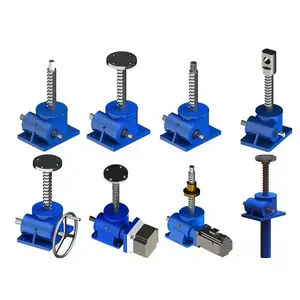
Typically, screw jacks come in various sizes and lifting capacities, which can range from a few kilograms to several tons. The lifting capacity of a screw jack is primarily determined by the lead of the screw, the diameter of the screw, and the material properties of the screw. High capacity screw jacks are often used in industries such as construction, manufacturing, and transportation, where they perform tasks such as lifting heavy equipment, moving machinery, and adjusting large structural components.
The Power of Mechanical Advantage
The strength of a screw jack lies in the concept of mechanical advantage. This refers to the ratio of the force produced by a machine to the force applied to it. In the context of a screw jack, the mechanical advantage is obtained by dividing the circumference of the screw by the lead of the screw. The higher the mechanical advantage, the more load the screw jack can lift with a given amount of effort.
The Versatility of Screw Jacks in Industrial Settings
Screw jacks are highly versatile and adaptable tools in industrial settings. They can be used in a variety of applications, such as positioning and moving heavy machinery, lifting and lowering large structures, and adjusting the height of workstations and assembly lines. They can also be used in tandem, connected by gears or shafts, to perform synchronized lifting or positioning tasks.
Practical Applications of Screw Jacks
In the construction industry, screw jacks are often used to lift and position heavy structural components, such as beams and girders. In the manufacturing sector, they are used to adjust the height of machinery and equipment, to lift heavy loads, and to perform precise positioning tasks. In the transportation industry, screw jacks are used to lift vehicles for inspection and repair, to move heavy loads, and to adjust the height of loading docks and platforms.
The Limitations of Screw Jacks
Despite their many advantages and applications, screw jacks also have certain limitations. They are not suitable for high-speed operations, as the heat generated by the friction between the screw and nut can cause the screw jack to overheat and fail. They also require regular maintenance, such as lubrication, to prevent wear and tear on the screw and nut. Furthermore, while screw jacks can lift heavy loads, their lifting speed is relatively slow compared to other types of lifting equipment.
Conclusion
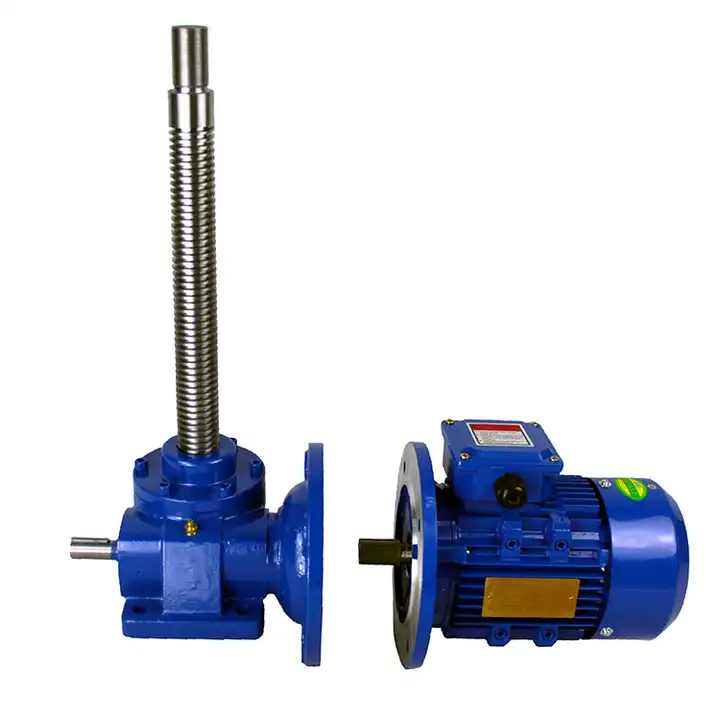
To answer the initial question, yes, a screw jack can indeed be used for heavy-duty lifting in industrial settings. However, it’s essential to consider the specific requirements of the task at hand, including the weight of the load, the speed of the operation, and the need for precise positioning. By understanding the capabilities and limitations of screw jacks, industrial specialists can make informed decisions about when and how to use these versatile and powerful devices.