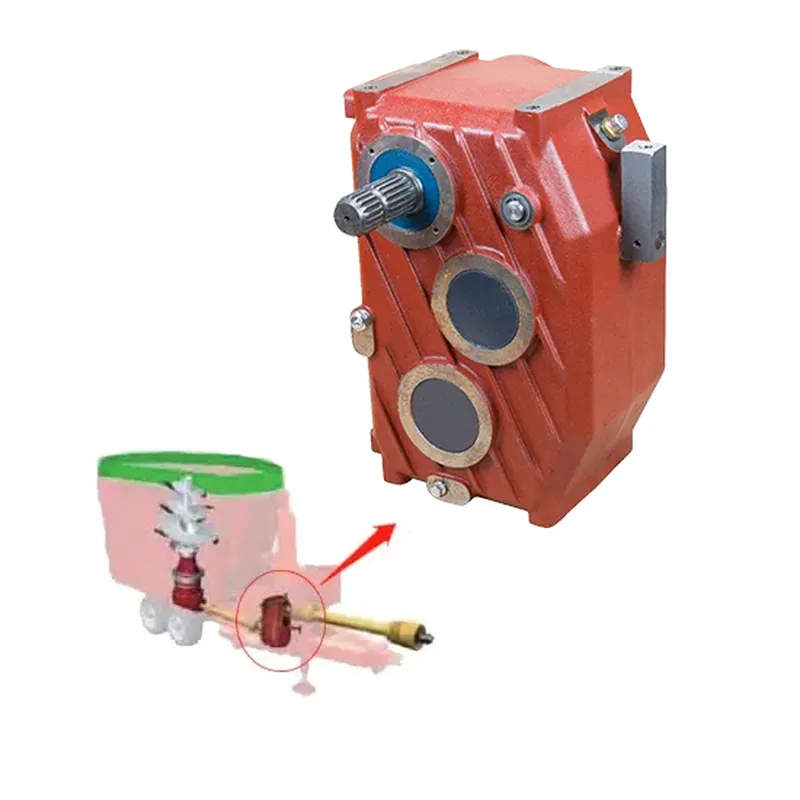
Working Principle of Horizontal Feed Mixer Gearbox

A horizontal feed mixer gearbox is an essential component in agricultural machinery used for mixing animal feed efficiently. This gearbox is typically driven by a tractor’s power take-off (PTO) system and plays a crucial role in ensuring uniform blending of feed ingredients. Let’s explore the working principle of a horizontal feed mixer gearbox in detail.
1. PTO Connection:
The process begins when the tractor’s PTO is activated. The PTO shaft transfers the mechanical power generated by the tractor’s engine to the gearbox, establishing a direct mechanical linkage.
2. Power Transmission:
The rotary motion of the tractor’s engine is transmitted to the gearbox via the PTO shaft. Gears within the gearbox reduce the rotational speed while increasing torque for effective mixing.
3. Speed Adjustment:
Gears inside the gearbox adjust the speed of rotation to suit the mixing requirements. The configuration of these gears is critical to withstand high stress and varying loads.
4. Torque Conversion:
As the gearbox reduces input speed, it increases torque crucial for mixing dense feed materials. This ensures the mixer operates under substantial loads without straining the tractor’s engine.
5. Power Output:
Modified power with lower speed and higher torque is transmitted to the mixing mechanism via the gearbox’s output shaft. This drives the mixing elements responsible for blending feed materials.
6. Operation Control:
The gearbox offers flexibility in operation through selectable gear ratios or variable speed setups. This allows operators to adjust mixing speed based on feed type and consistency requirements.