Why Does Manual Transmission Input Shaft Have Splines?
Manual transmission input shafts are equipped with splines for a number of reasons:
- Transmission of Torque: Splines allow for the efficient transfer of torque from the engine to the transmission.
- Alignment: They help in aligning the gears and shafts in the transmission.
- Reduced Slippage: Splines provide an anti-slip mechanism, ensuring secure engagement between the shaft and the gear.
- Versatility: They allow for variations in axial movement and radial rotation.
- Durability: Splines are robust and provide a long service life.
Our High-quality Spline Shafts
We manufacture superior spline shafts with the following features:
- High Strength: Our spline shafts are made of high-strength steel for enhanced durability.
- High Precision: They are finely machined for high-precision operation.
- Customization: We provide customization services to suit specific requirements.
- Corrosion Resistant: Our spline shafts undergo surface treatment for corrosion resistance.
- Quality Assured: All our products are quality-checked to ensure they meet international standards.

Different Types of Spline Shafts and Their Features
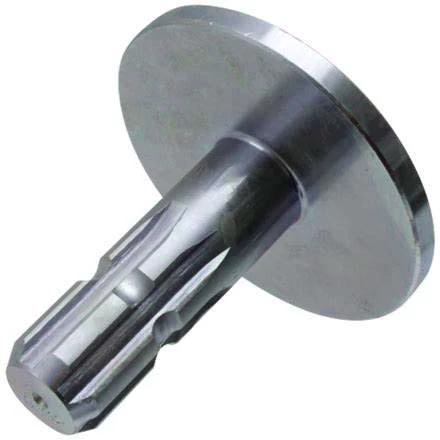
Parallel Key Shaft
A parallel key shaft has parallel splines for transmitting torque and is commonly used in automobile transmissions.
Spline Shaft with Involute Spline
This type of shaft has involute splines that provide better contact and distribution of load.
Internal Spline Shaft
An internal spline shaft has splines on the inner surface and is used in power transmission systems.

Non-circular Spline Shaft
A non-circular spline shaft is used in special applications where the transmitted torque varies with the angle of rotation.
Selecting the Right Spline Shaft
Choosing the right spline shaft involves considering the following parameters:
- Shaft Diameter: Bigger diameter provides more strength but requires more space.
- Spline Type: The type of spline determines the load distribution and torque transmission.
- Number and Size of Splines: More and bigger splines provide greater strength, but may increase manufacturing complexity and cost.
- Shaft Length: The length affects the alignment and space requirement.
- Material: The material should be chosen based on the load and environmental conditions.
- Surface Treatment: Surface treatments like chrome plating or nitriding can enhance corrosion resistance and durability.
Manufacturing Process of Spline Shafts
The manufacturing process of spline shafts involves the following steps:
- Material Preparation
- Cutting
- Rough Machining
- Spline Cutting
- Finish Machining
- Heat Treatment
- Surface Treatment
- Inspection and Calibration
- Packaging and Delivery
Other Products We Offer
In addition to spline shafts, we also offer a range of gears and gearboxes including worm gear, helical gear, spur gear, bevel gear, gear rack, worm gearbox, planetary gearbox, and helical gearbox.
About Our Company
We are a leading manufacturer of precision mechanical components. We possess advanced production and inspection equipment including CNC Gear grinding machine, gear measuring machine, cnc gear shaper, machine center, CMMS, and Torque test system. We are certified by international quality management standards and offer professional customization services and excellent after-sales service.
Choose us for your mechanical component needs and experience the difference of quality, precision, and service.