What’s the process for stress relieving spline shafts after machining?
Introduction
Stress relieving spline shafts after machining is a crucial step in ensuring the optimal performance and longevity of these components. In this article, we will explore the process of stress relieving spline shafts and its importance in the manufacturing industry.
1. Understanding spline shafts
Spline shafts are mechanical devices used to transmit torque between two rotating shafts. They consist of a series of ridges or teeth, known as splines, which mesh with corresponding grooves in a mating component. Spline shafts are widely used in various industries, including automotive, aerospace, and manufacturing.
2. The need for stress relieving
After the machining process, spline shafts can exhibit residual stresses due to the heat and mechanical forces involved. These residual stresses can lead to premature failure, reduced fatigue strength, and dimensional instability. Therefore, stress relieving is essential to eliminate or minimize these residual stresses and improve the overall quality and performance of spline shafts.
3. The stress relieving process
To effectively relieve the residual stresses in spline shafts, a controlled heat treatment process is employed. The following steps outline the typical stress relieving process:
3.1 Preheating
The first step involves preheating the shafts to a specific temperature. This temperature is typically below the critical point to avoid any significant changes in material properties. Preheating helps in achieving uniform heating and prepares the shafts for the next stage.
3.2 Heating
After preheating, the spline shafts are heated to a predetermined temperature range. This temperature is carefully chosen based on the material properties and the desired stress relieving effect. Heating is typically done in a controlled atmosphere to prevent oxidation or decarburization of the shafts.
3.3 Soaking
Once the shafts reach the desired temperature, they are kept at that temperature for a specific duration. This soaking period allows the internal stresses to redistribute and reach a state of equilibrium. The duration of soaking depends on factors such as shaft size, material composition, and the initial level of residual stresses.
3.4 Cooling
After the soaking period, the spline shafts are slowly cooled down. This controlled cooling process is crucial to prevent the formation of new residual stresses. It is often done in a controlled atmosphere or by using specific cooling mediums to ensure uniform cooling and minimize the risk of distortion or warping.
4. Benefits of stress relieving spline shafts
The stress relieving process offers several benefits for spline shafts:
4.1 Improved dimensional stability
By eliminating residual stresses, stress relieving helps to maintain the dimensional stability of spline shafts. This is particularly important for precise applications where tight tolerances need to be maintained.
4.2 Increased fatigue strength
Residual stresses can significantly reduce the fatigue strength of spline shafts, leading to premature failure. Stress relieving enhances the fatigue strength by minimizing these residual stresses, thereby increasing the overall durability of the shafts.
4.3 Reduced risk of distortion
During the machining process, spline shafts can undergo distortion due to the release of residual stresses. Stress relieving minimizes the risk of distortion, ensuring that the shafts retain their intended shape and functionality.
Conclusion
In summary, stress relieving is a vital process for ensuring the optimal performance and reliability of spline shafts. By following the prescribed steps of preheating, heating, soaking, and cooling, manufacturers can effectively eliminate or minimize residual stresses, improving dimensional stability, fatigue strength, and reducing the risk of distortion. Implementing stress relieving techniques is essential for producing high-quality spline shafts that meet the stringent requirements of various industries.

Our company specializes in the production and sales of various types of gears and spline shafts. With years of experience in the industry, we have established ourselves as a leading provider in the market. Here are five key advantages that set our company apart:
1. Superior Quality:
At our company, we prioritize quality above all else. Our gears and spline shafts undergo rigorous testing to ensure they meet the highest industry standards. We use state-of-the-art technology and precision machining techniques to deliver products that are durable and reliable.
2. Extensive Product Range:
We offer a wide range of gears and spline shafts to cater to diverse customer needs. Whether you require standard sizes or custom specifications, our extensive product catalog has got you covered. Our team of experts is also available to provide guidance and assistance in selecting the right product for your specific application.
3. Competitive Pricing:
Despite our commitment to quality, we strive to offer competitive pricing to our customers. Our efficient manufacturing processes and strategic sourcing enable us to keep costs down without compromising on the quality of our products. We believe in providing value for money to our clients.
4. Timely Delivery:
We understand the importance of timely delivery in today’s fast-paced business environment. With our streamlined production processes and efficient supply chain management, we ensure that your orders are delivered promptly. We value your time and strive to exceed your expectations.
5. Customer Satisfaction:
Our customers are at the heart of everything we do. We take pride in building long-term relationships based on trust and mutual success. Our dedicated customer support team is always ready to assist you with any queries or concerns you may have. Your satisfaction is our ultimate goal.
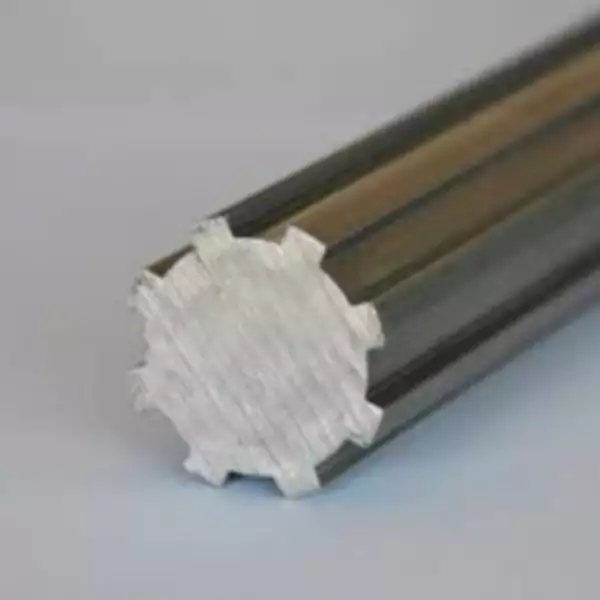
Spline Shaft Working Principle and Functionality
A spline shaft is a crucial component in various mechanical systems. It consists of ridges or teeth that allow for the transmission of torque and rotational motion between two interconnected mechanical parts. Spline shafts are commonly used in applications where precise positioning, high torque transmission, and smooth power delivery are essential.
Spline Shaft Design and Selection Guide
Designing and selecting the right spline shaft is crucial for ensuring optimal performance and reliability. Factors such as load requirements, torque transmission, shaft size, material selection, and environmental conditions need to be considered. Our team of experts can assist you in choosing the most suitable spline shaft for your specific application, taking into account all relevant design and selection parameters.
Spline Shaft Manufacturing and Machining Techniques
The manufacturing and machining of spline shafts require specialized techniques and equipment. Our advanced manufacturing facilities, coupled with the expertise of our technicians, enable us to produce spline shafts with the utmost precision and accuracy. We employ various machining processes such as hobbing, broaching, and grinding to achieve the desired specifications and surface finish.
Spline Shaft Applications and Industry Practices
Spline shafts find applications across a wide range of industries, including automotive, aerospace, machinery, and more. From power transmission systems to steering mechanisms, spline shafts play a crucial role in ensuring smooth and efficient operation. Our products have been widely adopted in various industry practices, and we have a proven track record of meeting the demanding requirements of different sectors.
With our expertise, superior quality products, and customer-centric approach, we are confident in our ability to provide you with the best solutions for your spline shaft needs. Partner with us today and experience the difference.
Author: Miya