What is the role of face width in determining the load-carrying capacity of spiral bevel gears?
Introduction
In the realm of mechanical engineering, understanding the factors that influence the load-carrying capacity of spiral bevel gears is crucial for the design and performance optimization of various machinery. One such factor that plays a vital role in determining the load-carrying capacity is the face width of the gears. The face width, also referred to as the gear teeth width, is the dimension measured along the perpendicular to the gear axis. This article explores the significance of face width in relation to the load-carrying capacity of spiral bevel gears, shedding light on its impact and relevance in gear design and functionality.
1. Effect of Face Width on Surface Contact Area
The face width of spiral bevel gears directly influences the surface contact area between mating gears. A wider face width results in a larger contact area, thereby enabling a more distributed load transfer. This increased surface contact area allows for enhanced load-carrying capacity and improved gear performance.
1.1. Increase in Load Distribution
A wider face width promotes a greater distribution of the transmitted load across the gear teeth. This reduces the contact stress and minimizes the risk of localized wear and failure. Additionally, the load distribution is advantageous in scenarios where the load is not evenly distributed along the gear teeth, ensuring a more balanced load transfer.
1.2. Enhanced Lubrication and Cooling
The increased surface contact area resulting from a wider face width facilitates improved lubrication and cooling of the gear teeth. Ample lubrication prevents excessive friction, reducing wear and heat generation during gear operation. Efficient cooling further aids in dissipating heat, ensuring optimal gear functionality and longevity.
2. Influence on Tooth Strength and Bending Fatigue Resistance
The face width of spiral bevel gears significantly impacts tooth strength and resistance against bending fatigue failure. A wider face width contributes to the overall robustness and load-carrying capability of the gears.
2.1. Higher Tooth Strength
A wider face width provides more space for the gear teeth to distribute the load and withstand external forces. This increased tooth strength helps prevent tooth breakage or deformation under heavy loads, ensuring the gears can operate reliably in demanding applications.
2.2. Improved Bending Fatigue Resistance
Bending fatigue is a common failure mode in gears, characterized by cracks and fractures due to cyclic loading. The face width plays a crucial role in mitigating bending fatigue by reducing stress concentration and facilitating uniform load distribution along the gear teeth. A wider face width thus enhances the bending fatigue resistance, allowing the gears to endure prolonged operational cycles without failure.
3. Optimal Face Width Selection
While a wider face width offers numerous advantages, it is essential to strike a balance in gear design to meet specific application requirements. Overly wide face widths may lead to increased gear size, weight, and cost, which might not be feasible or necessary in all scenarios. Designers must consider factors such as torque, speed, and load distribution when selecting the optimal face width for spiral bevel gears.
Conclusion
In conclusion, the face width of spiral bevel gears plays a pivotal role in determining their load-carrying capacity and overall performance. A wider face width enables increased surface contact area, improved load distribution, enhanced tooth strength, and superior bending fatigue resistance. By understanding the significance of face width and its impact on gear functionality, engineers can optimize gear designs to meet specific application requirements, ensuring reliable and efficient gear operation.
About Ever-Power
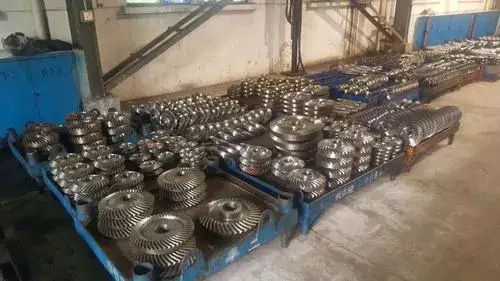
Ever-Power is a leading manufacturer specializing in the production of gears. We pride ourselves on delivering high-quality, precision-engineered gears to meet the diverse needs of our customers. With state-of-the-art facilities and a team of skilled professionals, we ensure the highest standards in gear manufacturing.
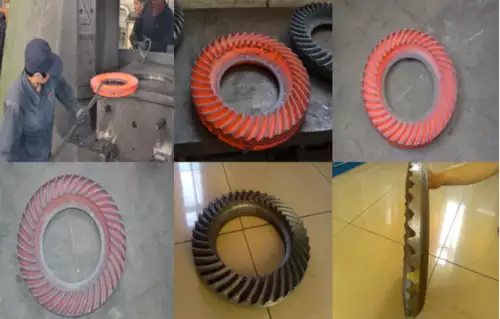
Our gear manufacturing process involves the following steps:
- Raw Material Preparation: We begin by preparing the raw materials through forging and heat treatment processes.
- Rough Machining: The gears undergo processes such as turning, drilling, and boring for initial shaping.
- Forming Process: Teeth are formed through methods like gear rolling, gear hobbing, and gear shaving.
- Semi-Precision Machining: This stage involves operations like chamfering, keyway cutting, and deburring to ensure smooth edges and eliminate any imperfections.
- Heat Treatment: The gears undergo heat treatment processes like carburizing, nitriding, quenching, and tempering to enhance their hardness and durability.
- Precision Machining: Gears are finely finished through processes like gear grinding and honing to achieve the desired dimensions and surface quality.
- Inspection and Quality Assurance: We conduct thorough inspections to ensure the gears meet strict quality standards, including gear testing and surface treatments.
At Ever-Power, we take pride in our expertise, commitment to quality, and customer satisfaction. Our advantages include:
- Advanced manufacturing facilities and cutting-edge technology
- Highly skilled and experienced team of engineers and technicians
- Strict quality control measures throughout the manufacturing process
- Customization options to meet specific customer requirements
- Competitive pricing and on-time delivery
- Excellent customer service and support
Partner with Ever-Power for all your gear needs, and experience the difference in quality and reliability.
Author: Miya