What is the effect of spline shaft surface roughness on friction and wear?
Introduction
In this article, we will explore the intriguing relationship between spline shaft surface roughness and its impact on friction and wear. This topic plays a crucial role in engineering and manufacturing industries, where understanding the effects of surface roughness can lead to improved performance and longevity of spline shafts.
1. The Basics of Spline Shafts
Spline shafts are vital components in various mechanical systems, transmitting torque and rotational motion between different parts. They consist of ridges, called splines, that fit into corresponding grooves, allowing for the efficient transfer of power.
2. Defining Surface Roughness
Surface roughness refers to the irregularities present on the surface of a spline shaft. It is measured in terms of Ra, which represents the arithmetic average of the deviations from the mean line. The roughness can vary significantly, ranging from extremely smooth to rough textures.
3. Friction and Wear: The Relationship
The surface roughness of a spline shaft has a direct impact on friction and wear. This relationship can be explained by examining the following key points:
3.1. Contact Area
The roughness of the spline shaft affects the actual contact area between the mating parts. A rougher surface increases the contact area, leading to higher friction and wear due to enhanced interlocking between the surfaces.
3.2. Lubrication Efficiency
The presence of surface irregularities can affect the effectiveness of lubrication. Smoother surfaces allow for better lubricant film formation, reducing direct contact and minimizing frictional losses. Conversely, rough surfaces hinder lubrication efficiency, resulting in increased friction and wear.
3.3. Surface Fatigue
The roughness of a spline shaft contributes to surface fatigue, which is the gradual deterioration of the material due to repeated loading. High surface roughness can create stress concentration points, accelerating fatigue and leading to premature wear.
4. Surface Roughness and Performance
The effect of spline shaft surface roughness on performance can be summarized as follows:
4.1. Enhanced Frictional Resistance
Spline shafts with rough surfaces experience increased frictional resistance, potentially reducing the overall efficiency of the system.
4.2. Increased Wear Rate
Rough surfaces on spline shafts promote accelerated wear, shortening the lifespan of the component and potentially leading to expensive repairs or replacements.
4.3. Potential for Seizure
Excessive surface roughness increases the likelihood of seizure, where the spline shaft becomes stuck due to excessive friction and wear.
4.4. Performance Optimization
To optimize spline shaft performance, manufacturers and engineers should carefully control the surface roughness, aiming for an ideal balance between smoothness and roughness to minimize friction and wear.

Conclusion
The effect of spline shaft surface roughness on friction and wear is a topic of great significance in the engineering and manufacturing fields. Understanding the relationship between surface roughness, friction, and wear allows for the creation of more efficient and durable spline shafts. By optimizing the surface roughness, manufacturers can improve performance, reduce maintenance costs, and enhance the overall lifespan of their mechanical systems.
We are a leading company specializing in the production and sale of various types of gear and spline shafts. With years of experience and expertise in the industry, we have several advantages:
- High-quality materials: We only use top-grade materials for our gears and spline shafts, ensuring durability and reliability.
- Precision manufacturing: Our advanced manufacturing techniques guarantee precise and accurate spline shafts, minimizing friction and wear.
- Wide range of products: We offer a diverse selection of spline shafts, catering to various applications and industries.
- Customization options: We provide tailor-made solutions to meet specific customer requirements, offering flexibility and versatility.
- Competitive pricing: Despite our superior quality, our products are competitively priced, providing excellent value for our customers.
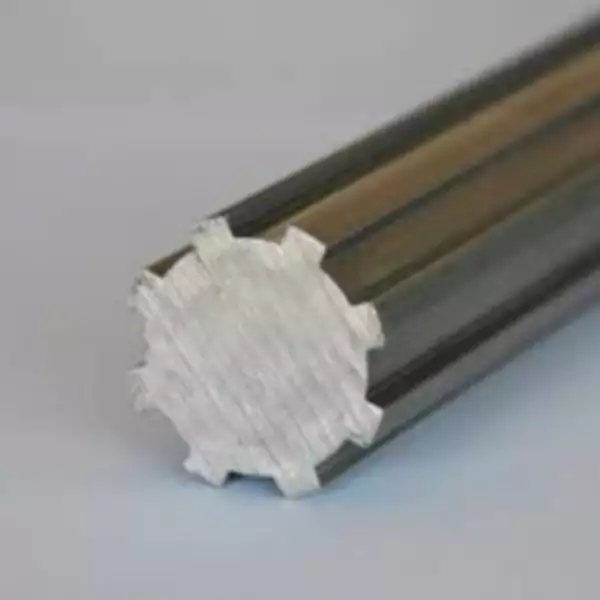
Spline Shaft Working Principle and Function
The spline shaft is a mechanical component with a series of ridges or teeth on its surface. It is designed to transmit torque and rotation between two or more parts while allowing for slight misalignment. By meshing with corresponding grooves or splines in other components, the spline shaft enables efficient power transmission and ensures a secure connection.
Spline Shaft Design and Selection Guidelines
When designing and selecting a spline shaft, several factors should be considered:
- Load capacity: The shaft must be able to withstand the expected loads without deformation or failure.
- Fit and clearance: Proper fit and clearance between the spline shaft and mating components are crucial for efficient operation and longevity.
- Material selection: The choice of material should consider factors such as strength, corrosion resistance, and compatibility with the mating parts.
- Tolerance and surface finish: Precise tolerances and appropriate surface roughness are essential for smooth rotation, minimal friction, and wear.
- Environmental conditions: The operating environment, including temperature, humidity, and contamination levels, should be taken into account for optimal performance and durability.
Spline Shaft Manufacturing and Machining Techniques
Manufacturing and machining spline shafts require specialized techniques:
- CNC machining: Computer numerical control (CNC) machines are used to achieve precise dimensions and accurate spline profiles.
- Heat treatment: Heat treatment processes, such as induction hardening, are employed to enhance the hardness and strength of the spline shafts.
- Surface finishing: Processes like grinding and polishing are applied to achieve the desired surface roughness and improve the performance of the spline shaft.
- Quality control: Rigorous quality control measures are implemented throughout the manufacturing process to ensure the spline shafts meet the required specifications and standards.
Spline Shaft Applications and Industry Practices
Spline shafts find applications in various industries, including:
- Automotive: Spline shafts are used in transmissions, steering systems, and drivetrain components.
- Machinery: They are employed in rotary equipment, such as pumps, compressors, and turbines.
- Aerospace: Spline shafts play a critical role in aircraft engines and landing gear systems.
- Construction: They are utilized in heavy machinery, such as cranes and excavators, for efficient power transmission.
- Industrial equipment: Spline shafts are found in a wide range of industrial machinery, including printing presses, textile machines, and packaging equipment.
If you are looking for high-quality and reliable spline shafts, we are the perfect partner for your needs. With our exceptional products, expertise, and customer-oriented approach, we guarantee satisfaction and long-term collaboration. Contact us today to discuss your requirements and explore how we can support your business.
Author: Miya