What is the Difference Between a Mechanical and Hydraulic Screw Jack?
Understanding the operational differences between mechanical and hydraulic screw jacks is essential whether you are an engineer, a technician, or anyone who frequently deals with heavy lifting tasks. Not only do these two categories of screw jacks differ in their operating principles, but they also have specific uses, advantages, and limitations. In this article, we will delve into the intricacies of mechanical and hydraulic screw jacks and highlight the key differences that set them apart.
Mechanical Screw Jacks: An Overview
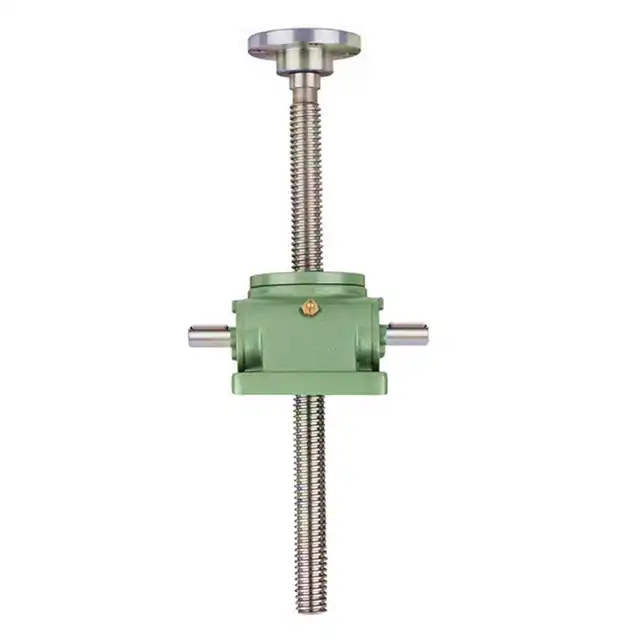
Mechanical screw jacks are simple devices that utilize manual operation to lift heavy loads. They operate based on the principle of translating rotational motion into linear motion. This is achieved by turning a screw thread, which in turn moves the load. Mechanical screw jacks are generally used for applications that require precise, linear motion or positioning. They are widely used in various industrial applications such as in the construction of buildings, bridges, and workshops.
Advantages of Mechanical Screw Jacks
One of the main advantages of mechanical screw jacks is their simplicity. They don’t require any external power source to operate, which makes them particularly useful in remote locations or areas with limited access to electricity. Furthermore, they are known for their precision and accuracy, which is especially important in applications that require exact positioning. Mechanical screw jacks are also highly durable and can handle extreme loads, making them ideal for heavy-duty applications.
Limitations of Mechanical Screw Jacks
Despite their advantages, mechanical screw jacks do have some limitations. The most significant limitation is their speed. Because they are manually operated, mechanical screw jacks are slower than their hydraulic counterparts. Additionally, they require more physical effort to operate, which can be tiring for the user, especially when lifting heavy loads over a long period.
Hydraulic Screw Jacks: An Overview
Unlike mechanical screw jacks, hydraulic screw jacks utilize the power of pressurized fluid to create motion. In a hydraulic screw jack, hydraulic fluid is forced into a cylinder, which pushes a piston that moves the load. This type of screw jack is commonly used in applications where large loads need to be lifted quickly and efficiently, such as in automotive repair shops, factories, and heavy machinery industries.
Advantages of Hydraulic Screw Jacks
Hydraulic screw jacks are known for their power and speed. They can lift heavy loads more quickly and with less effort than mechanical screw jacks. This is because the pressurized fluid does most of the work, reducing the need for manual labor. Furthermore, hydraulic screw jacks are capable of lifting extremely heavy loads, making them ideal for applications that require heavy lifting.
Limitations of Hydraulic Screw Jacks
While hydraulic screw jacks are powerful and efficient, they do have some drawbacks. They require a continuous supply of hydraulic fluid to operate, which can be costly and may not be feasible in remote locations. Additionally, they may not be as precise as mechanical screw jacks, making them less suitable for applications that require exact positioning.
Comparison of Mechanical and Hydraulic Screw Jacks
In summary, both mechanical and hydraulic screw jacks have their unique advantages and limitations. Mechanical screw jacks are known for their precision and simplicity, while hydraulic screw jacks are valued for their speed and power. The choice between the two depends largely on the specific requirements of the application.
It’s crucial to understand these differences when deciding on the right type of screw jack for your needs. By considering factors like load capacity, speed, precision, and operational costs, you can choose the screw jack that best fits your application.
Now that we’ve explored the differences between mechanical and hydraulic screw jacks, you should have a clearer understanding of which type may be best suited for your specific needs. Whether it’s the manual precision of a mechanical screw jack or the powerful efficiency of a hydraulic one, the choice ultimately depends on what your project requires.