What is Screw Jack?
A screw jack is a mechanical device designed to provide a linear force output from a rotational input. It accomplishes this through the use of a lead screw, also known as a power screw. The screw jack is a simple machine that has been in use for centuries, and it continues to play an essential role in various industrial applications today.
Understanding the Mechanism of a Screw Jack
A screw jack operates based on the basic principle of the inclined plane. The lead screw of the jack is essentially a long, inclined plane wrapped around a cylinder. When rotated, this screw moves the load attached to it either upwards or downwards, depending on the direction of rotation. This simple yet effective mechanism allows for the transformation of small rotational force into a much larger linear force, which is essential in lifting heavy objects or loads.
The Components of a Screw Jack
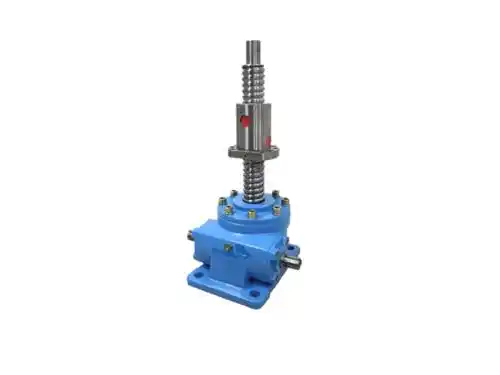
The main components of a screw jack include the screw shaft, the nut, and the housing. The screw shaft is the long, threaded rod that does the actual lifting. The nut travels along the threads of the screw shaft when the shaft is rotated, thereby moving the load. The housing is the outer casing that protects the internal components and provides stability to the assembly.
Types of Screw Jacks
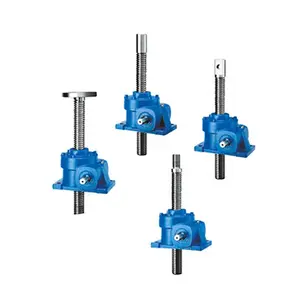
There are two main types of screw jacks – ball screw jacks and machine screw jacks. Ball screw jacks are more efficient and provide faster lifting speeds, but they are also more expensive. Machine screw jacks, on the other hand, are more commonly used due to their affordability and ruggedness, but they are slower and less efficient.
Applications of Screw Jacks
Screw jacks are widely used in a variety of industries for different applications. They are commonly found in automotive and industrial equipment for lifting, pulling, pushing, and adjusting operations. Other applications include their use in construction equipment, theatrical stages, and even in heavy-duty applications such as nuclear power plants.
Advantages and Disadvantages of Screw Jacks
Screw jacks have several advantages, including their mechanical simplicity, reliability, high load capacity, and low cost. However, they also have some disadvantages, such as their relatively slow speed, the need for regular maintenance, and their inefficiency when compared to other forms of linear actuators.
Choosing the Right Screw Jack
When choosing a screw jack for a specific application, several factors need to be considered. These include the load capacity, the speed of operation, the travel distance, and the environment in which the jack will be used. It is also important to consider the power source for the jack, which can be manual, electric, or hydraulic.
The Future of Screw Jacks
Despite being a centuries-old technology, screw jacks continue to evolve and find new applications in modern industries. Innovations in materials and design have led to the development of more efficient, durable, and compact screw jacks that can meet the demands of today’s industrial applications.
Conclusion
In conclusion, a screw jack is a simple yet powerful mechanical device that uses the principle of the inclined plane to convert rotational force into linear force. With their high load capacity and mechanical simplicity, screw jacks continue to be an essential tool in many industrial applications. Whether you’re lifting a car or adjusting the height of a theatrical stage, the humble screw jack is a device that you can rely on.