What is Mechanical Screw Jack?
A mechanical screw jack is a robust and versatile engineering device that utilizes a screw mechanism to create substantial lifting, pushing, or pulling force. Despite its simplicity in appearance, a screw jack is a powerful tool that plays a significant role in various industries, from construction to machinery, for lifting heavy loads or applying high forces.
The Fundamentals of a Mechanical Screw Jack
The principle behind the mechanical screw jack is the conversion of rotational motion into linear motion. This is achieved through a simple machine—a lead screw. The rotational force (torque) is applied to the screw’s head, which in turn moves the nut vertically along the thread, producing linear motion. The distance moved by the nut is proportional to the rotations of the screw. This mechanical advantage allows the screw jack to lift, push, or pull heavy loads.
Key Components of a Mechanical Screw Jack
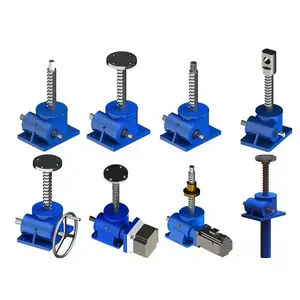
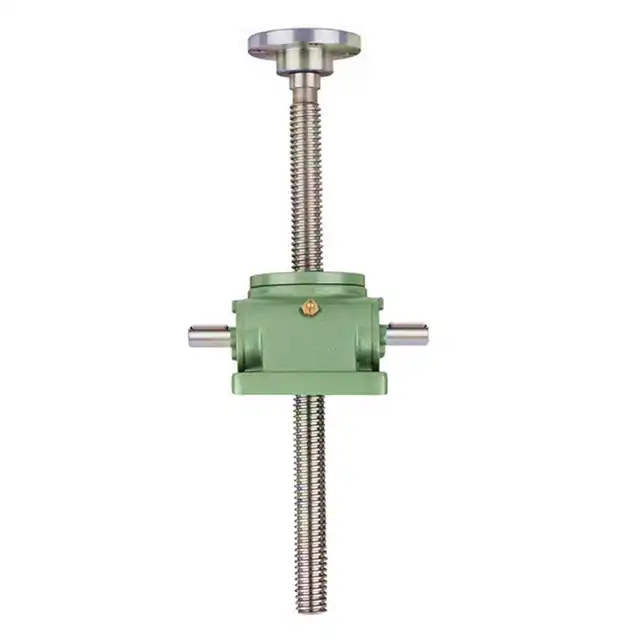
A typical mechanical screw jack is composed of several key elements. These include the screw, the nut, the gear housing, the input shaft, and the hand wheel or motor. The screw, typically made of high-strength steel, is the central part that bears the load. The nut moves along the thread of the screw when force is applied. The gear housing protects the internal components and often contains lubricants to ensure smooth operation. The input shaft is where the power source is connected, either manually via the hand wheel or by a motor in powered versions.
Types of Mechanical Screw Jacks
There are two main types of mechanical screw jacks – machine screw jacks and ball screw jacks. Machine screw jacks are the more traditional type and are known for their self-locking feature, which prevents the load from moving without the application of power. On the other hand, ball screw jacks, while requiring a brake or external locking device to hold the load, offer higher efficiency and speed, making them suitable for rapid, high-cycle operations.
Applications of Mechanical Screw Jacks
Mechanical screw jacks are widely used across various industries due to their versatility and reliability. In construction, they are used to lift heavy structures during building or bridge construction. In the manufacturing sector, they are used for positioning and adjusting heavy machinery. They also find applications in the automotive industry for lifting cars during maintenance or repair work. Other uses include stage and scenery lifting in theatres, solar tracking in renewable energy systems, and adjusting sluice gates in dams.
Maintenance of Mechanical Screw Jacks
Regular maintenance is crucial for the longevity and efficiency of mechanical screw jacks. This includes periodic lubrication to reduce friction, inspection for wear and tear, and regular cleaning to prevent the accumulation of dust and debris. It is always recommended to follow the manufacturer’s guidelines for maintenance to ensure optimal performance and safety.
Choosing the Right Mechanical Screw Jack
Choosing the right mechanical screw jack involves consideration of several factors. These include the load capacity required, the speed of operation, the duty cycle, the type of power source available, and environmental factors such as temperature and moisture levels. It’s important to choose a screw jack that is rated for the required load capacity to prevent failure or damage. Similarly, the speed of operation and duty cycle should match the application requirements to ensure efficiency and longevity.
Conclusion
In conclusion, a mechanical screw jack is an invaluable tool that combines simplicity, versatility, and power. Its ability to convert rotational motion into linear motion allows it to perform a wide range of heavy-duty tasks across various industries. With proper selection and maintenance, a mechanical screw jack can provide reliable and efficient service for many years.