What is the Law of Screw Jack?
The law of screw jack is an essential principle in the engineering world, particularly in the area of mechanics. This law explains the principle behind the operation of a screw jack, a commonly used device for lifting heavy loads. It is a classic representation of the mechanical advantage obtained through simple machines.
Understanding the Law of Screw Jack
The law of screw jack is fundamentally based on the principles of simple mechanics. It is a rule that explains the efficiency and operation of a screw jack. A screw jack, being a simple machine, operates on the principle of transforming small force into a large force with the assistance of its mechanical advantage.
Principles of Screw Jack
A screw jack is designed around three core principles: force, distance, and friction. The force is the amount of energy exerted, the distance is the length the force is applied over, and friction is the resistance encountered during this action. Together, these principles establish the law of screw jack.
Role of Mechanical Advantage in Screw Jack
The concept of mechanical advantage is at the heart of the law of screw jack. This principle states that using a machine makes a task easier because it either changes the magnitude or the direction of the force applied. In the case of a screw jack, the mechanical advantage is achieved by changing the magnitude of the force.
Calculating the Mechanical Advantage
The mechanical advantage of a screw jack can be calculated using the formula: Mechanical Advantage = Load/ Effort. The load is the weight of the object you are lifting, and the effort is the force you apply to lift it. This equation demonstrates that a small effort can lift a heavy load, given the right mechanical advantage.
The Application of Screw Jack
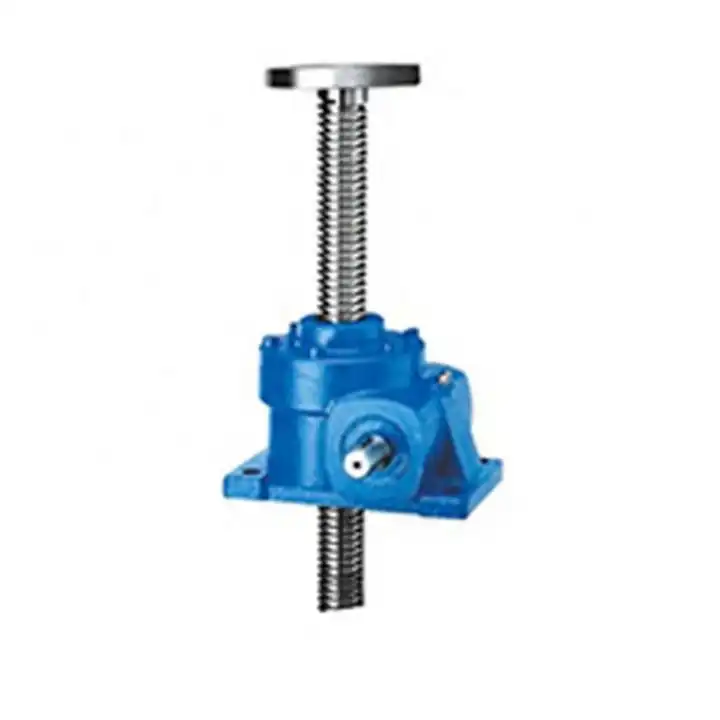
Screw jacks are widely used in various industries due to their high mechanical advantage and efficiency. They are commonly found in automotive repair shops for lifting vehicles, in construction sites for raising heavy loads, and in many other applications where heavy lifting is required.
Types of Screw Jacks
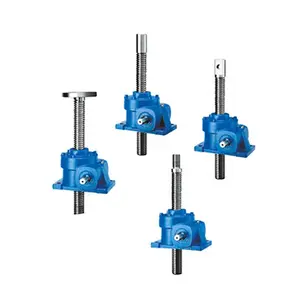
There are two main types of screw jacks: manual and electric. Manual screw jacks are operated by hand, using a lever or crank. Electric screw jacks, on the other hand, are powered by an electric motor. Despite their differences, both types operate on the same principles and laws.
Efficiency and Limitations of Screw Jack
While the law of screw jack allows us to lift heavy loads with minimal effort, it is not without its limitations. The efficiency of a screw jack is greatly affected by friction, which is always present between the screw and the nut. Moreover, screw jacks are not suitable for high-speed operations due to their design.
The Future of Screw Jacks
Despite these limitations, the future of screw jacks looks promising. With advancements in material science and manufacturing techniques, there is potential for screw jacks to become even more efficient and versatile in the future.
Conclusion
The law of screw jack is a fundamental principle in mechanical engineering. It explains the working of a screw jack and how it uses mechanical advantage to transform a small force into a large one. Despite its limitations, the screw jack remains an invaluable tool in numerous industries, testament to the enduring relevance of the law of screw jack.