What is a Gear Rack?
A gear rack is a long, straight bar with gear teeth cut into one side, which meshes with a gear or pinion to convert rotary motion into linear motion or vice versa. Gear racks for the machine tool industry are essential components that provide a linear motion mechanism widely used in various applications such as CNC machines, milling machines, lathes, and other precision equipment.

Advantages and Features of Gear Racks
Precise and Accurate Motion
Gear racks offer precise linear motion with high positional accuracy, making them suitable for applications that require precise positioning and repeatability.
High Load Capacity
Gear racks are designed to handle heavy loads and can withstand significant forces without compromising performance, making them ideal for applications that require high load capacity.
Smooth and Silent Operation
Gear racks are designed to minimize backlash, ensuring smooth and silent operation. This is crucial in applications where noise reduction and smooth motion are essential.
Efficiency
Gear racks provide high mechanical efficiency by eliminating power losses associated with other motion transmission mechanisms, such as belts or chains.
Long Service Life
Gear racks are manufactured using high-quality materials and undergo precise machining processes, resulting in a long service life and minimal wear and tear.
Versatility
Gear racks can be customized to fit specific machine tool applications, allowing for flexibility in design and integration.
Easy Maintenance
Gear racks are relatively easy to maintain, requiring regular lubrication and periodic inspection to ensure optimal performance.
Cost-Effective
Gear racks offer a cost-effective solution for achieving linear motion in machine tools compared to alternative systems, making them popular in the industry.
Working Principle of Gear Racks
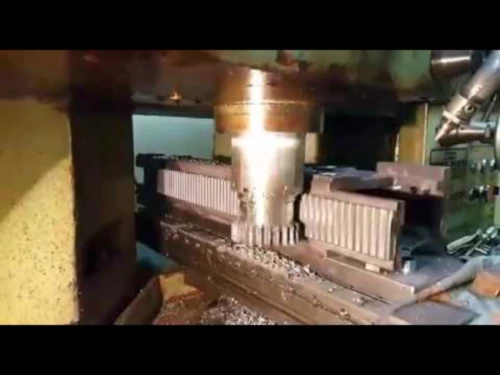
When a rotating gear or pinion meshes with the gear rack, the rotary motion of the gear is converted into linear motion along the length of the rack. This allows for precise linear movement of machine tool components. Conversely, when a linear force is applied to the gear rack, it causes the mating gear or pinion to rotate. This converts the linear input motion into rotary motion, which can be utilized for various machine tool operations.
The gear teeth on the rack and mating gear or pinion are designed to mesh tightly, minimizing backlash and ensuring smooth and precise motion transfer. The gear rack’s teeth are typically cut using specialized machining processes to ensure accurate tooth profiles and high positional accuracy.

Applications of Gear Racks
Gear racks are extensively used in various applications such as:
- CNC Machines: for precise linear positioning of the cutting tools, allowing for accurate machining operations.
- Milling Machines: to provide linear motion along the workpiece, enabling the cutting tool to remove material with precision.
- Lathes: to facilitate the movement of the cutting tool along the workpiece, enabling shaping and turning operations.
- Drilling Machines: to control the vertical motion of the drilling head, allowing for accurate hole drilling.
- Grinding Machines: to achieve precise linear motion of the grinding wheel, enabling accurate material removal.

How to Select Gear Racks?
When selecting gear racks, the following factors should be considered:
- Load Capacity: Determine the maximum load the gear rack will need to support in the specific machine tool application.
- Pitch and Module: Select the gear rack with the appropriate pitch and module to match the mating gear or pinion.
- Length and Dimensions: Consider the required length of the gear rack based on the linear travel distance needed in the machine tool application.
- Precision and Accuracy: Assess the level of precision and accuracy required for the specific application.
- Material and Surface Treatment: Evaluate the material of the gear rack based on factors such as strength, durability, and resistance to wear.
Common Problems and Solutions during Use
During use, the following problems may occur:
- Wear and Tear
- Insufficient Lubrication
- Misalignment
- Contamination
- Overloading
- Improper Tooth Engagement
Regular inspection and maintenance are essential to monitor the condition of the gear rack and address any issues promptly.

Installation and Maintenance
During installation and maintenance, the following procedures should be followed:
- Preparation
- Mounting
- Alignment
- Lubrication
- Testing
For maintenance, routine inspections, lubrication, cleaning, load capacity monitoring, misalignment correction, and replacement should be conducted as necessary.
About EVER POWER
EVER POWER is a professional manufacturer of racks in China. Its products are mainly sold to hundreds of fixed suppliers such as domestic steel rolling mills, shipyards, precision machine tool factories, automation machinery factories, and various distribution companies, and exported to Western Europe, the Middle East, and Southeast Asia and other countries and regions.
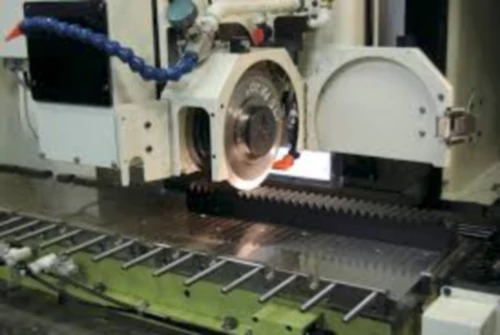
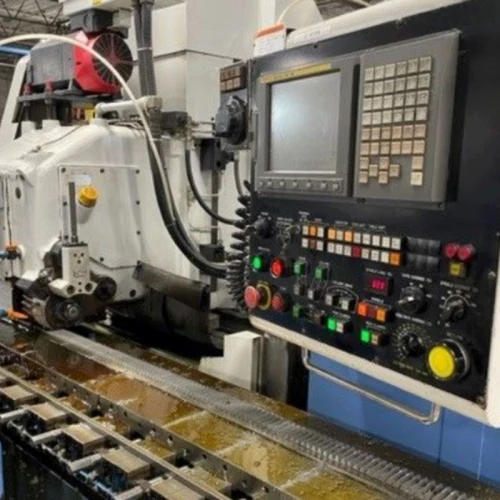
The company has more than 100 professional rack production equipment and testing equipment, including rack milling machines and rack grinding machines imported from Germany for high-end customers who demand high-precision racks. EVER POWER has considerable competitiveness in the same industry.
With excellent products, affordable prices, and good service attitude, EVER POWER’s products are popular worldwide. The company adheres to the principles of quality first, timely delivery, and credit first and treats every business partner sincerely. EVER POWER welcomes friends from the business community to cooperate and create brilliance together.
Besides, EVER POWER also offers other rack products such as Gear Rack For Door Opener, gear rack for elevator, rack and pinion steering, metric gear rack, etc. Customers are welcome to inquire about customized products.


