What are the differences between ball screw jacks and machine screw jacks?
Understanding the nuances and distinctions between ball screw jacks and machine screw jacks is crucial in selecting the right equipment for your specific application. These two types of screw jacks, while similar in function, have different operational characteristics, efficiency levels, and are suited to various applications.
Understanding Ball Screw Jacks
Ball screw jacks are a type of linear actuator that utilizes a ball screw system to create linear motion. The main characteristic of a ball screw jack is its high efficiency and load capacity. This is due to the rolling ball bearings that reduce friction substantially, allowing for smooth operation even under substantial loads.
One of the main benefits of ball screw jacks is their superior speed capabilities. They can operate at higher speeds compared to other types of screw jacks without overheating. This makes them an excellent choice for applications that require fast and frequent movements.
Another advantage of ball screw jacks is their precision. They are capable of delivering precise positioning and repeatability, making them ideal for applications that require exact movements.
Diving into Machine Screw Jacks
Machine screw jacks, on the other hand, operate using a lead screw system. They are typically designed for slower operational speeds and lower frequency of use compared to ball screw jacks, but they can carry heavy loads with ease. Due to their design, machine screw jacks have a high mechanical advantage, making them highly effective for lifting heavy weights.
A significant benefit of machine screw jacks is their self-locking feature. This means that once the jack is stopped, it will stay in position without the need for any external braking mechanism. This makes them highly safe and reliable in applications where maintaining the position is critical.
Machine screw jacks are also known for their robustness and durability. They are built to withstand harsh conditions, making them suitable for heavy-duty applications and environments with high levels of contamination.
Comparing Ball Screw Jacks and Machine Screw Jacks
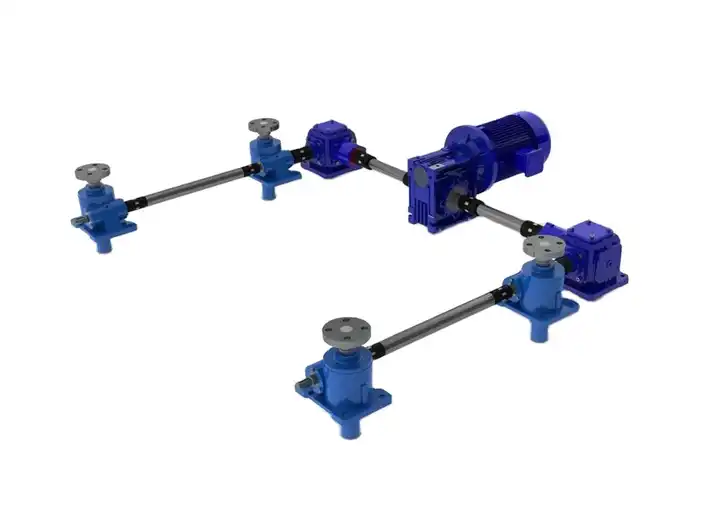
When comparing these two types of jacks, it’s essential to understand their strengths and limitations. Ball screw jacks are more efficient and faster, making them suitable for high-speed, high-frequency applications. They also offer precision positioning, making them ideal for tasks that require exactness.
However, ball screw jacks can be more expensive due to their complex design and the need for regular lubrication to maintain their efficiency. They may also be less suitable for applications that involve high static loads as they do not have a self-locking feature like machine screw jacks.
Machine screw jacks, on the other hand, are robust, reliable, and can comfortably handle heavy loads. They are designed for slower speeds and are less suitable for high-frequency operations. One of their key advantages is the self-locking feature, which enhances safety and reliability in applications where maintaining the position is essential.
In conclusion, the choice between a ball screw jack and a machine screw jack largely depends on the specific requirements of your application. Factors such as the required speed, load capacity, precision, and the working environment should all be considered to make the best decision.
Conclusion
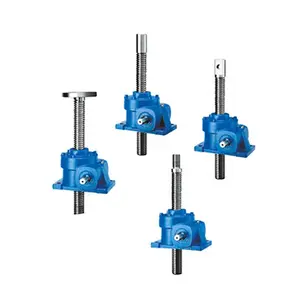
Both ball screw jacks and machine screw jacks have their unique strengths and are suited to different applications. Understanding these differences is crucial in selecting the right jack for your specific needs. Remember, the choice will largely depend on the speed, load capacity, and precision requirements of your application, along with the working conditions and the frequency of use.