What are the advantages of using forged spiral bevel gears over cast ones?
Introduction
In the manufacturing industry, the choice between forged spiral bevel gears and cast ones is a crucial decision. This article aims to explore the advantages of using forged spiral bevel gears over cast ones, highlighting the reasons why manufacturers should opt for the former. Let’s delve into the distinctive benefits that forged spiral bevel gears bring to various applications.
Durability and Strength
One of the foremost advantages of using forged spiral bevel gears is their exceptional durability and strength. Through the forging process, these gears are subjected to intense pressure and heat, which results in a denser and more robust structure. This enhanced strength allows the gears to withstand heavy loads and high-speed applications, ensuring reliable and long-lasting performance.
Improved Precision
Forged spiral bevel gears offer superior precision compared to their cast counterparts. The forging process allows for tighter tolerances, ensuring better gear meshing and reduced backlash. This increased precision translates into smoother operation, enhanced efficiency, and minimized noise levels, making them ideal for applications that require high accuracy and smooth motion.
Enhanced Wear Resistance
Forged spiral bevel gears possess excellent wear resistance due to their refined microstructure and optimized grain flow. During the forging process, the internal grain structure is aligned, resulting in increased hardness and resistance to wear. This characteristic enables the gears to withstand demanding operating conditions, including high temperatures, heavy loads, and abrasive environments, without compromising their performance.
Superior Fatigue Strength
Another advantage of using forged spiral bevel gears is their superior fatigue strength. The forging process creates a refined and aligned grain structure that enhances the gears’ ability to withstand cyclic loading and impacts. This exceptional fatigue strength ensures reliable operation over extended periods, reducing the risk of unexpected gear failures and minimizing downtime.
Optimized Gear Geometry
Forged spiral bevel gears offer optimized gear geometry, contributing to improved efficiency and performance. The forging process allows for precise shaping of the gear teeth, ensuring accurate tooth profiles, ideal contact patterns, and minimized power loss. These optimized gear characteristics result in higher torque transmission, reduced friction, and improved overall gear system efficiency.
Integral Structural Integrity
Unlike cast gears, forged spiral bevel gears possess integral structural integrity. The forging process eliminates the presence of defects such as gas porosity, shrinkage, or inclusions, ensuring a homogenous and defect-free gear structure. This integral structural integrity enhances the gears’ reliability and eliminates the risk of premature failure, making them suitable for critical applications where safety is paramount.
Conclusion
In conclusion, the advantages of using forged spiral bevel gears over cast ones are undeniable. Their durability, precision, wear resistance, fatigue strength, optimized gear geometry, and integral structural integrity set them apart as the superior choice for various applications. By opting for forged spiral bevel gears, manufacturers can ensure reliable performance, extended gear life, and improved overall efficiency. It is clear that the use of forged spiral bevel gears is a wise decision for manufacturers seeking high-quality and long-lasting gear solutions.
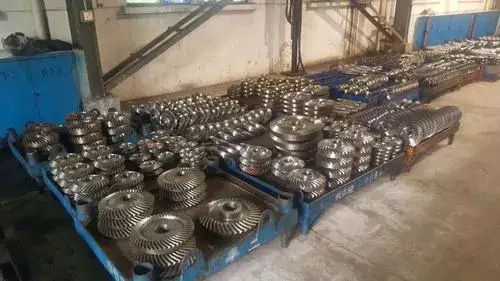
Factory Introduction
We are a professional gear manufacturing factory dedicated to providing high-quality gears for various industries. With extensive expertise and advanced technology, we pride ourselves on delivering superior gear products tailored to our customers’ specific needs.
Our gear manufacturing process involves several essential steps:
1. Raw Material Preparation: We start by carefully selecting the raw material and undergoing processes such as forging and heat treatment to ensure optimum material properties.
2. Rough Machining: Through precision machining techniques like turning, drilling, and boring, we shape the gear blanks to their initial form.
3. Forming Process: The gears undergo processes such as gear hobbing, gear shaping, and gear shaving to achieve the desired tooth profile and dimensions.
4. Semi-Precision Machining: We perform operations such as chamfering, keyway cutting, and deburring to prepare the gears for the next stage.
5. Heat Treatment: The gears undergo heat treatment processes like carburizing, nitriding, or quenching and tempering to enhance their hardness and mechanical properties.
6. Precision Machining: Through gear grinding and honing processes, we achieve the final gear tooth profile, surface finish, and dimensional accuracy.
7. Inspection and Acceptance: We conduct rigorous gear testing and inspection procedures to ensure the gears meet the required quality standards. Surface treatments may also be applied to enhance their performance.
By adhering to these meticulous steps, we guarantee the production of high-quality gears that meet the most stringent requirements of our customers.
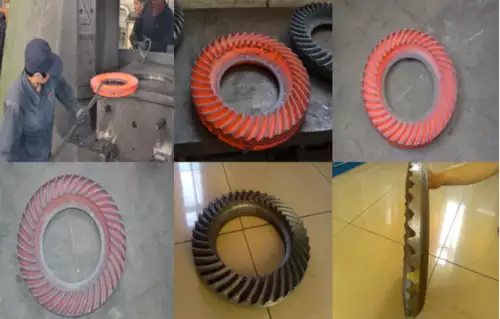
As a gear manufacturing factory, we offer several advantages that set us apart from the competition:
– Extensive industry experience and technical expertise
– State-of-the-art manufacturing facilities and equipment
– Strict quality control measures at every stage of production
– Customization options to meet specific customer requirements
– Timely delivery and excellent customer service
By choosing our factory as your gear supplier, you can expect superior products, reliable performance, and a collaborative partnership that aims to meet your gear-related needs effectively.
Author: Miya