What are Screw Jacks?
Screw jacks, also commonly referred to as jackscrews, are a type of mechanical device primarily used in the area of lifting heavy loads or applying great forces. The main function of a screw jack is to convert rotational motion into linear motion. This simple but powerful device has a range of applications across different industries due to its reliable and efficient operation.
The Functioning Principle of Screw Jacks
The operational principle of a screw jack is based on the fundamental physics concept of a simple machine, the screw. Essentially, when a force is applied in a circular motion to the screw, it is translated into a linear motion. This transformation of motion is what enables the screw jack to lift heavy weights or apply large forces. The efficiency of a screw jack is determined by the thread pitch of the screw and the friction between the screw and the nut.
Components of a Screw Jack
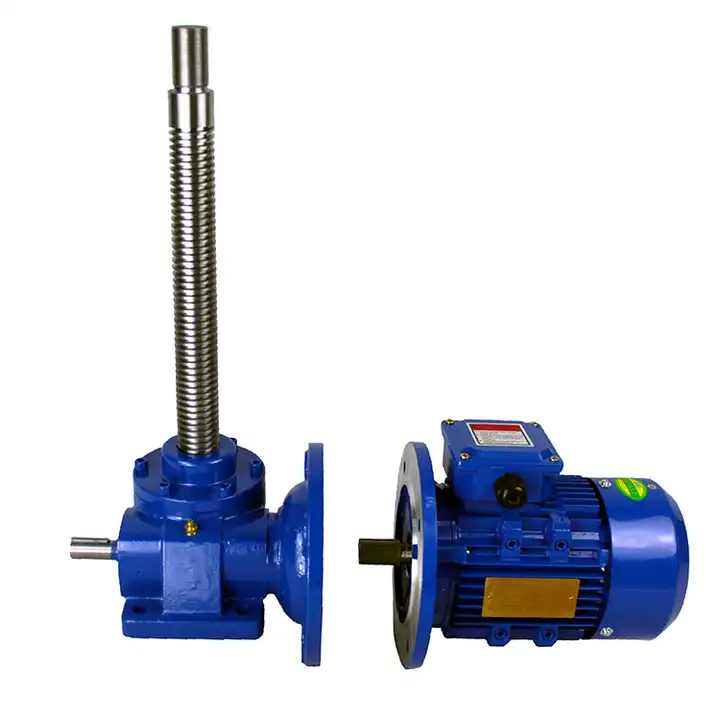
A typical screw jack comprises four main components: the screw, the nut, the gear housing, and the hand wheel or motor. The screw is the primary part that moves up and down as the jack operates. The nut is fitted onto the screw and moves along its thread as the screw turns. The gear housing encloses the gear mechanism that drives the screw, and the hand wheel or motor is the component that provides the rotational force to the screw.
Types of Screw Jacks
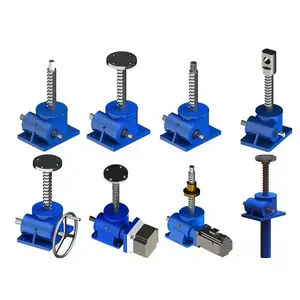
Screw jacks come in two main types: Machine Screw Jacks and Ball Screw Jacks. Machine Screw Jacks are designed for applications where the load must be accurately positioned and held for a considerable time. They are typically more durable and require less maintenance, making them ideal for heavy-duty operations. On the other hand, Ball Screw Jacks are designed for applications that require high speed and efficiency. They provide faster and smoother operation but may require more frequent maintenance due to the presence of ball bearings in their design.
Applications of Screw Jacks
Screw jacks find a wide range of applications in various industries due to their versatility and efficiency. They are commonly used in construction for lifting heavy materials, in manufacturing for positioning equipment, and in automotive for lifting vehicles for maintenance and repair. They are also used in theatre stages and concert platforms for adjusting the height and angle, in power plants for opening and closing large valves, and in many other applications where precise positioning and lifting of heavy loads are required.
Benefits of Using Screw Jacks
The use of screw jacks offers numerous benefits. They are simple in design and easy to operate, making them highly reliable. They offer precise positioning and lifting of heavy loads with minimal effort, enhancing safety and efficiency in various operations. They are also highly durable and require minimal maintenance, ensuring long-term performance and cost-effectiveness.
How to Choose the Right Screw Jack
To choose the right screw jack for your application, you need to consider several factors. These include the weight of the load to be lifted, the lift height, the speed of operation, the duty cycle, the environment in which the jack will be used, and the power source. It is also important to consider the safety features, durability, and maintenance requirements of the jack.
In conclusion, screw jacks are an essential tool in a variety of industries. Their ability to convert rotational motion into linear motion, their simplicity in design and ease of operation, and their durability and efficiency make them a reliable and cost-effective solution for lifting and positioning heavy loads.