Understanding Flail Mower Gearbox Seals
The Flail Mower Gearbox Seals are crucial parts of a flail mower gearbox that play a significant role in the overall performance and longevity of the system. They are designed to prevent the ingress of dirt, debris, and moisture into the gearbox, while also retaining the lubricant inside. These seals are made from durable materials like rubber or synthetic polymers that can withstand exposure to environmental elements and operational wear.
Advantages of Flail Mower Gearbox Seals

Flail Mower Gearbox Seals offer several benefits:
- Prevent Contamination: They prevent the intrusion of dust, dirt, and moisture, which can cause damage to the internal components of the gearbox.
- Retain Lubricant: These seals ensure the lubricant stays within the gearbox, maintaining the smooth operation of the gears and bearings.
- Enhance Gearbox Lifespan: By preventing contamination and maintaining proper lubrication, these seals help extend the lifespan of the gearbox.
- Boost Efficiency: They contribute to the overall efficiency of the flail mower by ensuring the optimal functioning of the gearbox.
- Reduce Maintenance Needs: With these seals in place, the frequency and extent of maintenance required for the gearbox can be significantly reduced.
- Custom Production: At EVER-POWER, we can produce high-quality flail mower gearbox seals tailored to specific requirements.

Applications of Flail Mower Gearbox Seals
Flail Mower Gearbox Seals find their application in various areas:
- Agriculture: They are integral to flail mowers used in agricultural activities, such as mowing grass, chopping straw, and shredding crops.
- Landscaping: These seals are used in flail mowers for landscaping tasks like maintaining lawns, clearing brush, and managing vegetation on roadsides.
- Forestry: In forestry, flail mowers with these seals are used for clearing undergrowth and managing vegetation.
- Horticulture: They are used in horticultural flail mowers for maintaining orchards, vineyards, and similar environments.
- Parks and Recreation: These seals are used in flail mowers for maintaining parks, sports fields, golf courses, and similar recreational areas.
- Construction: In construction, flail mowers with these seals are used for clearing land and managing vegetation on construction sites.


Working Principle of the Flail Mower Gearbox
The working principle of a flail mower gearbox is centered around transmitting power from the tractor to the flail mower’s cutting mechanism in an efficient and controlled manner. The gearbox is a critical component in this process, as it adjusts the power received from the tractor’s PTO to the optimal speed and torque required for the flail mower to operate effectively. Here’s a closer look at how it works:
- Power Input from the Tractor: The process begins with the tractor’s PTO providing rotational energy to the flail mower gearbox. This PTO is a standardized shaft that delivers power from the tractor engine to the flail mower.
- Speed Reduction and Torque Amplification: Inside the gearbox, this input rotational energy, which is typically high in speed but low in torque, encounters a series of gears or a gear train. These gears are designed to reduce the speed of the input rotation significantly. This reduction process, in turn, increases the torque, which is the rotational force necessary for the cutting mechanism to effectively engage with and cut through vegetation. This conversion is crucial because effective mowing requires a considerable amount of force to cut through grass, brush, and other materials, rather than merely high rotational speed.
- Transmission of Adjusted Power: After the gearbox has modified the power to the optimal speed and torque, it transmits this power to the flail mower’s cutting mechanism. This mechanism typically consists of a rotating drum or rotor to which flails (flexible blades or chains) are attached. As the drum rotates, it swings the flails outward through centrifugal force. The design of these flails allows them to flex or retract when they strike hard objects, minimizing damage to both the mower and the obstacle.
- Cutting Action: The flails strike the ground vegetation with sufficient force to cut it cleanly. The effectiveness of the cut depends on the speed and torque at which the flails are moving, which is directly influenced by the gearbox’s initial conversion of power.
- Safety Mechanisms: Safety features may include shear pins or slip clutches that prevent damage to the gearbox and the tractor by breaking or disengaging if the mower hits an obstruction that stops the flails suddenly.

Structural Components of the Flail Mower Gearbox
The flail mower gearbox is a complex component that plays a crucial role in the operation of a flail mower, converting the power from the tractor into the mechanical action needed to drive the mower’s cutting mechanism. Here’s a breakdown of the key structural components that typically make up a flail mower gearbox:
- Housing: Usually made of cast iron or aluminum, the housing provides structural support, protecting the internal components from debris and the elements. It’s designed to withstand the vibrational forces and shock loads that occur during mowing.
- Input Shaft: The input shaft is directly connected to the tractor’s PTO via a PTO shaft. This shaft transfers the rotational energy from the tractor to the gearbox. It typically features a specific spline configuration to match the PTO shaft, ensuring a secure connection.
- Gears: The gearbox contains several gears, including spur gears, helical gears, or bevel gears, depending on the design and requirements of the mower. These gears are responsible for converting the high-speed, low-torque input from the tractor into low-speed, high-torque output necessary for driving the flails.
- Bearings: Bearings support the shafts and gears while allowing them to rotate smoothly, reducing friction and wear. Common types include ball bearings and tapered roller bearings, chosen for their ability to handle radial and axial loads.
- Output Shaft: The output shaft is connected to the mower’s cutting mechanism. Its rotation, at adjusted speed and torque, drives the flails. It may have a specific design or attachment to fit the flail rotor or drum.
- Seals: Seals prevent the ingress of dirt, debris, and moisture into the gearbox, while also keeping the lubricant inside. Made from materials like rubber or synthetic polymers that can withstand exposure to environmental elements and operational wear.
Maintenance of the Flail Mower Gearbox
Proper maintenance of a flail mower gearbox is crucial for ensuring the longevity and optimal performance of the equipment. Regularly scheduled maintenance can prevent breakdowns, extend the life of the gearbox, and ensure it runs efficiently. Here are key maintenance tasks and best practices for taking care of a flail mower gearbox:
- Check and Maintain Oil Levels: Check the gearbox oil level at the beginning of your mowing season and after every 50 hours of operation. Change the oil at least once a year or as recommended by the manufacturer. Early changes may be necessary if the oil becomes contaminated or if the mower operates under heavy load or extreme conditions.
- Inspect and Replace Seals: Regularly inspect the gearbox for oil leaks, which can be a sign of damaged seals. Replace any worn or damaged seals promptly to prevent contaminants from entering the gearbox and oil from leaking out, which can lead to overheating and increased wear.
- Check and Tighten Fasteners: Regularly check all bolts, nuts, and other fasteners on the gearbox and the entire flail mower for looseness. Vibration during operation can cause fasteners to loosen over time, leading to misalignment or other mechanical issues.
- Inspect Gears and Bearings: Periodically inspect the gears and bearings for signs of wear or damage, especially if you notice unusual noises or vibrations during operation. Replace any components that are worn or damaged to prevent further damage and ensure smooth operation.
- Keep the Gearbox Clean: After each use, clean the exterior of the gearbox to remove dirt, debris, and any plant material that may have accumulated. This helps prevent overheating and allows for easier inspection for leaks or damage.
- Lubricate External Moving Parts: Some gearboxes may have external components that require regular lubrication, such as the PTO shaft connection. Apply grease as recommended by the manufacturer to ensure smooth operation and prevent corrosion.
Understanding the Agricultural PTO Shaft for Flail Mower Gearbox
Choosing the right PTO shaft for your flail mower gearbox is essential for ensuring efficient power transmission and safe operation. The PTO shaft connects your tractor to the flail mower, allowing the tractor’s engine to power the mower’s cutting mechanism. Here are key factors to consider when selecting a PTO shaft:
- Compatibility with Tractor and Mower: Know the PTO speed of your tractor (usually 540 or 1000 RPM) and ensure the PTO shaft is rated for that speed. Match the spline configuration (the number of splines or grooves on the shaft ends) of the PTO shaft with your tractor’s PTO output and the flail mower’s input. The most common configurations are 6-splines for 540 RPM and 21-splines for 1000 RPM setups.
- Length and Extendibility: The length of the PTO shaft must be appropriate for the distance between the tractor’s PTO and the flail mower’s input shaft when connected. Incorrect length can lead to operational issues or damage. Consider a telescoping PTO shaft that can adjust in length to accommodate different distances and operational movements, ensuring the shaft is neither too stretched nor too compressed.
- Safety Features: Ensure the PTO shaft comes with safety guards to protect operators from rotating parts. Some PTO shafts include a shear pin or a slip clutch as a safety feature to prevent damage to the tractor or mower if the mower hits an obstruction. The shear pin will break under excessive load, while a slip clutch will slip, absorbing the shock without breaking.
- Torque Capacity: The PTO shaft should be capable of handling the torque generated by your tractor and required by your flail mower. Exceeding the shaft’s torque capacity can result in failure and potential injury.
- Durability and Maintenance: Choose a PTO shaft made from high-quality materials to ensure durability and longevity. Look for a shaft that is easy to maintain, with greasable joints and replaceable parts.

Why Choose EVER-POWER’s Flail Mower Gearbox?
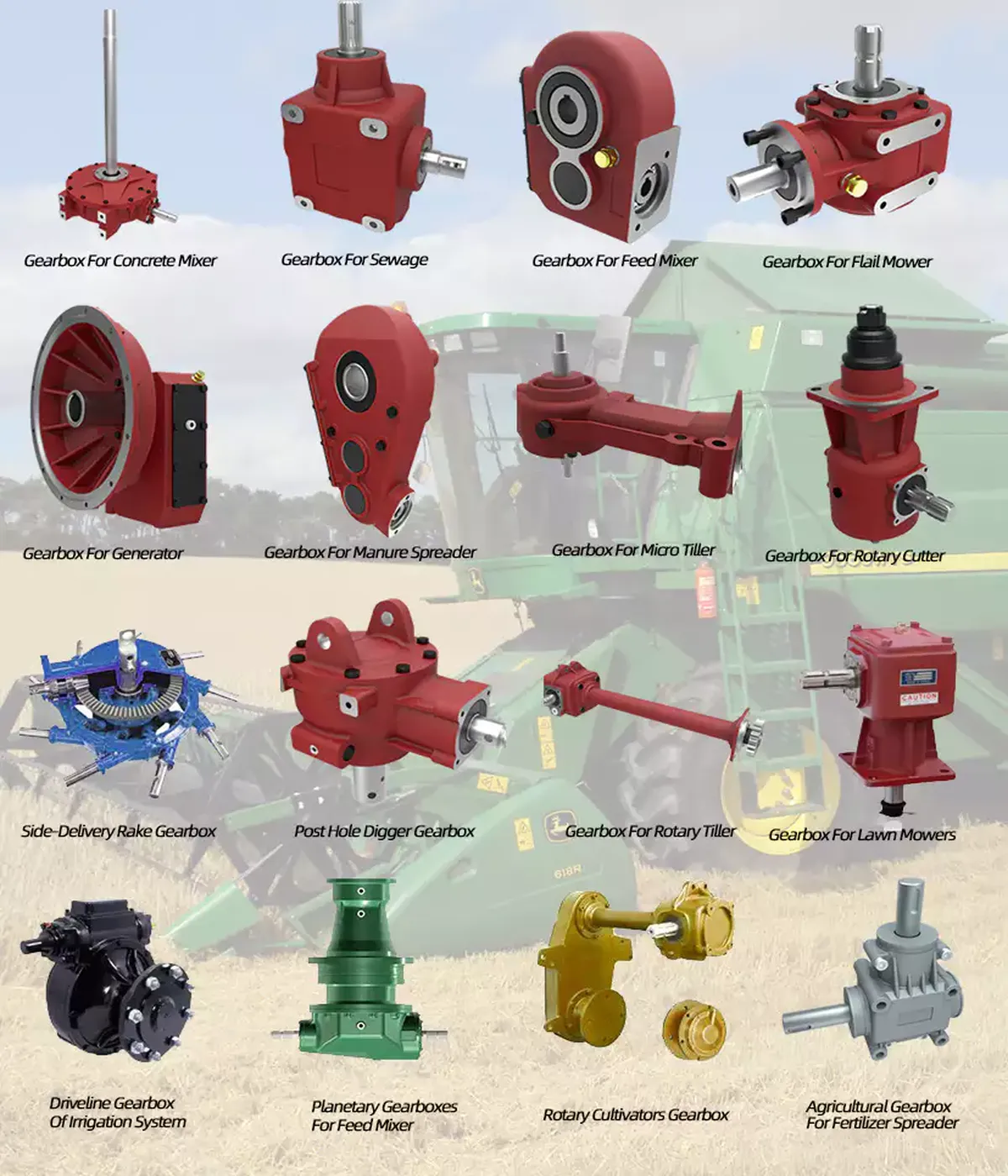
EVER-POWER is a prominent manufacturer of high-performance agricultural gearboxes for a variety of applications. Our technical staff can reconfigure an existing design or assist you in designing a custom agricultural PTO gearbox if a standard or existing design does not fit your application. Shaft rotation, speed ratio, design type, load nature, mounting position, and the application’s environment are all considerations when choosing an agricultural gearbox. We can offer many types of agricultural gearboxes and PTO shafts, such as rotary cutter gearboxes, rotary tiller gearboxes, feed mixer gearboxes, lawn mower gearboxes, fertilizer spreader gearboxes, flail mower gearboxes, post hole digger gearboxes, corn headers gearboxes, fertilizer mixer gearboxes, round baler gearboxes, square baler gearboxes, irrigation reels gearboxes, manure spreader gearboxes, fertilizer seeder gearboxes, rotary rake gearboxes, gearbox for hay tedders, etc. If you want to buy agricultural gearboxes, please get in touch with us.
At EVER-POWER, we pride ourselves on our professionalism, international certifications, customized services, advanced production facilities, and dedicated after-sales services. We are committed to providing our customers with reliable and efficient solutions that meet their specific needs. With our extensive experience and expertise, we can assure you of the quality and performance of our products.
Author: Yjx