Introduction to Tractor PTO Driven Square Baler for Crop Residue Management
Tractor PTO Driven Square Baler for Crop Residue Management refers to a specialized agricultural machinery used for baling crop residues such as hay, straw, or cotton. This equipment is essential for efficiently managing crop residues on farms, ensuring proper storage and transportation for further processing or disposal.

Advantages of Tractor PTO Driven Square Baler
1. Increases Efficiency: The baler helps farmers save time and labor by quickly baling crop residues into compact and manageable bales.
2. Improved Storage: Square bales are easier to stack and store compared to loose crop residues, optimizing storage space on farms.
3. Cost-Effective: Investing in a baler can lead to cost savings in labor and storage expenses, making it a valuable asset for farmers.
4. Quality Control: The baler ensures uniform bale sizes and shapes, maintaining the quality of crop residues for feeding livestock or other uses.
5. Environmentally Friendly: Properly baled crop residues reduce waste and environmental impact, promoting sustainable farming practices.
6. Versatile Use: The baler can handle different types of crop residues, making it a versatile tool for various farming operations.
Applications of Tractor PTO Driven Square Baler
1. Hay Baling: The baler is commonly used for baling hay, creating compact bales for livestock feed or forage.
2. Straw Baling: Crop residues like straw can be efficiently baled using the square baler, reducing waste and improving storage.
3. Cotton Baling: Cotton residues can be baled with the baler, facilitating the collection and transport of cotton for further processing.
4. Forage Baling: The baler is suitable for baling forage crops, ensuring proper storage and preservation for livestock feed.
5. Biomass Baling: Crop residues used for biomass production can be baled with the equipment, facilitating energy generation processes.
6. Residue Management: The baler helps farmers effectively manage crop residues, reducing field debris and promoting farm cleanliness.

Tractor PTO Driven Square Baler Structural Components
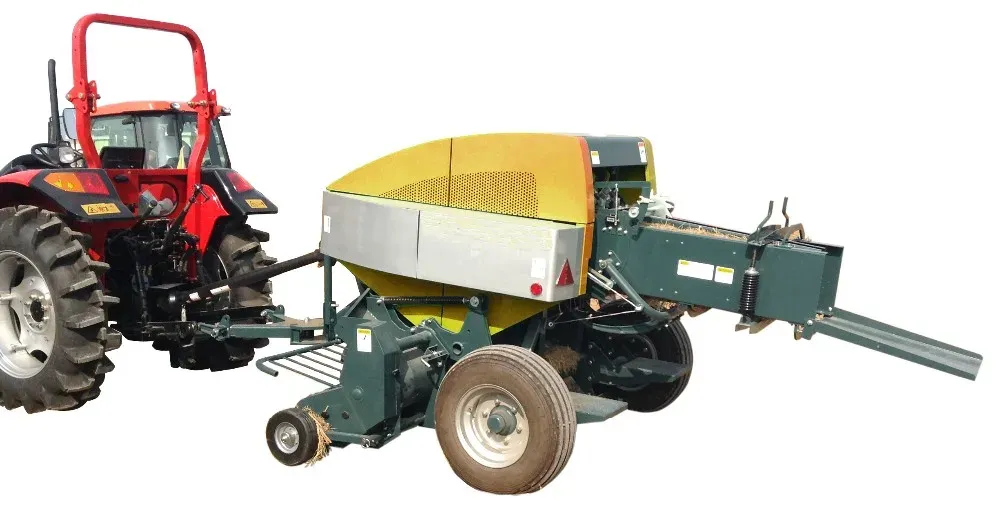
The structural components of a tractor PTO driven square baler are crucial for its operation, ensuring the efficient baling of agricultural products like hay, straw, or cotton. Here’s a breakdown of these key components:
1. PTO Shaft: The PTO shaft connects the baler to the tractor, transferring power from the tractor’s engine to the baler’s operational mechanisms.
2. Pickup Mechanism: This component gathers the crop from the ground. It includes pickup tines or teeth that rotate, picking up the crop and feeding it into the baler.
3. Feeding System: After the pickup, the feeding system moves the gathered crop into the baling chamber. In some balers, this system may include augers or a stuffer mechanism to ensure even and consistent feeding.
4. Baling Chamber: The heart of the baler, where the crop is compacted into square or rectangular bales. The chamber size can often be adjusted to produce bales of different sizes.
5. Plunger and Knotters: Within the baling chamber, a reciprocating plunger compresses the crop against the bale being formed. Knotters then tie the bale with twine or wire to maintain its shape after ejection.
6. Knotter Mechanism: A complex system that ties the bale securely with twine or wire. It includes needles to carry the twine or wire around the bale and a knotter to tie and cut the twine or wire.
7. Ejection System: Once the bale is formed and tied, the ejection system pushes it out of the baler. This can be a simple mechanical gate that opens to let the bale drop by gravity or a powered push-off mechanism.

Working Principle of Tractor PTO Driven Square Baler
The tractor PTO driven square baler works through a sequence of mechanical processes to gather, compress, and bind hay into square or rectangular bales. This process is highly efficient, turning loose hay into compact, easily manageable bales for storage and transport. Here’s a step-by-step overview of how it operates:
1. Power Transfer: The baler is attached to a tractor, from which it derives its power. The PTO shaft of the tractor transfers rotational power to the baler’s drive system, powering the baler’s mechanisms.
2. Hay Pickup: As the tractor moves the baler across the field, a pickup mechanism on the front of the baler, consisting of rotating bars or tines, lifts the cut hay from the ground and feeds it into the baler.
3. Feeding and Compression: The hay is fed into a compression chamber, where a reciprocating plunger compresses the hay into a dense, rectangular shape. This compression chamber is where the hay is formed into bales.
4. Bale Formation and Binding: Once the hay is compressed to the desired density and size, the baler wraps the bale with twine or wire to hold its shape. This is done using a knotting device that automatically ties and cuts the binding material around the bale.
5. Ejection: After the bale is securely tied, it is ejected from the rear of the baler onto the ground, ready for collection. Some balers may have a bale chute or kicker to help direct the ejected bale away from the machine.

Installation Operation of Tractor PTO Driven Square Baler
Installing a PTO (Power Take-Off) driven hay square baler to a tractor requires careful attention to detail to ensure safety and operational efficiency. Below is a step-by-step guide on how to properly attach and prepare your baler for work:
1. Prepare for Installation: Ensure your tractor is suitable for the baler, paying close attention to horsepower requirements and PTO specifications. Park both the tractor and baler on a level surface, turn off the tractor, and engage the parking brake. Ensure the PTO shaft on the tractor is easily accessible and the hitch area is clear.
2. Attach the Baler to the Tractor: Lift the baler using the tractor’s three-point hitch, aligning the hitch arms with the baler’s mounting points. Secure the arms with pins and locking devices. If the baler is a pull-type model, back the tractor up to the baler. Align the drawbar of the tractor with the hitch on the baler and insert the hitch pin, securing it with a linchpin or lock.
3. Connect the PTO Shaft: Align the tractor’s PTO shaft with the baler’s PTO input shaft. Slide the shaft onto the PTO until it locks into place. Ensure the locking pins are engaged. For safety, make sure the PTO shaft guard is in place and correctly attached.
4. Connect Hydraulic Lines (If Applicable): If your baler requires hydraulic connections for certain operations (like a hydraulic pick-up lift), connect the hydraulic hoses from the baler to the tractor’s hydraulic outlets. Make sure the connections are clean and tight to prevent leaks.
5. Perform a Safety Check: Ensure all connections (PTO, hydraulic, electrical, and hitch) are secure. Check that all safety shields and guards are in place on both the baler and the PTO shaft. Verify that the area is clear of bystanders before starting the baler.
6. Test the Installation: Start the tractor and engage the PTO at a low RPM to ensure the baler operates as expected. Listen for any unusual noises that might indicate a problem. Disengage the PTO and inspect the baler to ensure everything remains correctly connected and functional.

Why Choose EVER-POWER’s Hay Square Baler?
EVER-POWER Agricultural Machinery Co., Ltd. has been engaged in the research and development of agricultural machinery. We have accumulated more than ten years of experience in production, and mainly produce farming machinery, planting machinery, harvesting machinery and its accessories, and matching machines. Our main products are PTO shafts, agricultural gearboxes, large round baler, mini round baler, PTO wood chipper, diesel wood chipper, corn seeder, drum mowers, rotary hay rakes, flail mowers, lawn mowers, sickle bar mowers, rotary mowers, rotary tillers, land levelers, fertilizer spreaders, furrow ploughs, disc harrows, disc blades, disc ridgers, disc ploughs, potato planters, potato harvester, wheat seeder, vegetable seeder, post hole diggers, boom sprayers, agricultural subsoiler, agricultural trailers, disc mower, finger wheel rake, log splitter, front end loader, backhoe, snow blower, road sweeper, etc.
The above series of products are complete in specifications, excellent in performance, and reliable in quality. Our products are sold all over the country and are exported to many countries and regions in Europe, America, Africa, the Middle East, and Southeast Asia all year round.
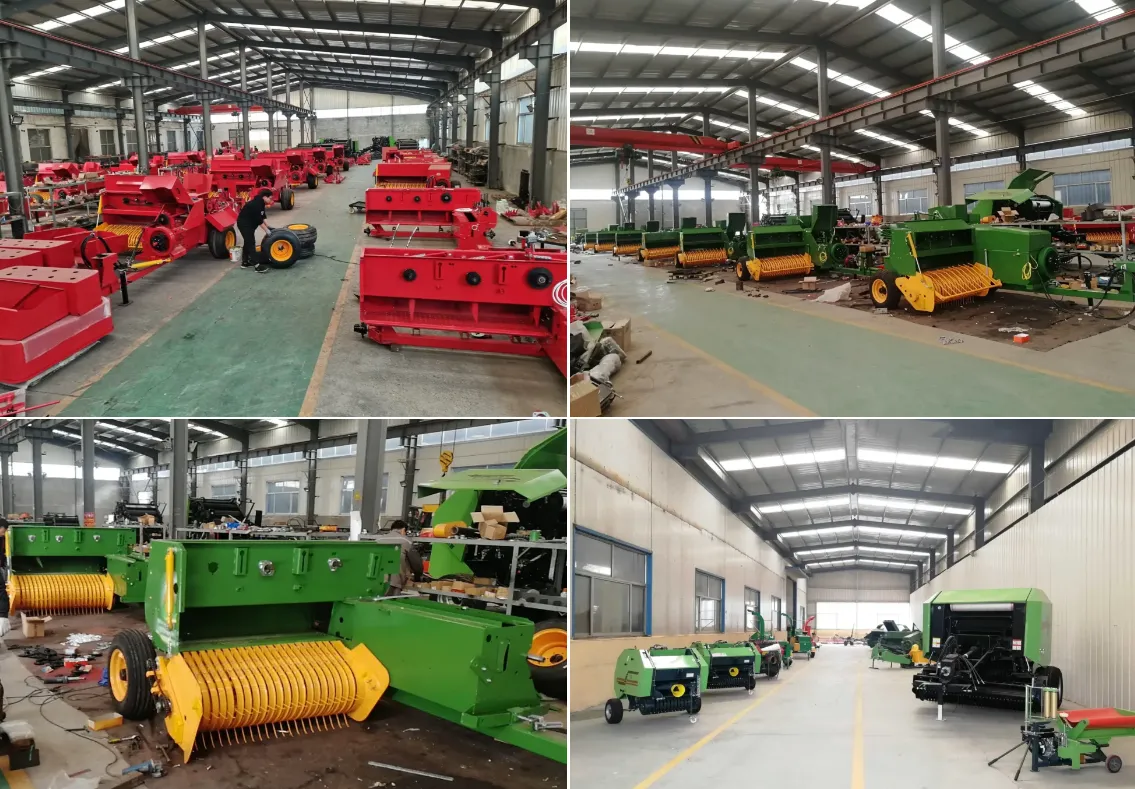
At EVER-POWER, we take pride in our professionalism and commitment to providing high-quality agricultural machinery. Our products are manufactured in state-of-the-art facilities, adhering to international quality standards and certifications. We offer customized services to meet the specific needs of our customers, ensuring optimal performance and efficiency. Our after-sales services include maintenance, repairs, and technical support, guaranteeing the longevity and reliability of our products.
Author: Yjx