The significance of spiral bevel gears in achieving smooth and precise motion control
Introduction
Spiral bevel gears play a crucial role in achieving smooth and precise motion control in various mechanical systems. These gears are designed with a unique tooth profile that allows for efficient power transmission and accurate motion transfer. In this article, we will explore the significance of spiral bevel gears and how they contribute to achieving optimal motion control in different applications.
1. Understanding the fundamentals of spiral bevel gears
Spiral bevel gears are a type of bevel gears that have helical teeth. Unlike straight bevel gears, which have straight teeth, spiral bevel gears feature curved teeth that are cut at an angle. This helical tooth design allows for smoother engagement and reduced noise during operation.
2. Advantages of spiral bevel gears
Spiral bevel gears offer several advantages over other types of gears, making them a preferred choice in motion control applications:
- Improved load distribution: The spiral tooth profile distributes the load more evenly, reducing stress concentration and enhancing the gear’s load-bearing capacity.
- Higher efficiency: The helical teeth of spiral bevel gears provide a larger contact area, resulting in improved power transmission efficiency.
- Enhanced durability: The curved tooth profile reduces the risk of tooth breakage and minimizes wear, increasing the lifespan of the gears.
- Noise reduction: The helical teeth reduce noise and vibration, ensuring quieter operation in motion control systems.
3. Applications of spiral bevel gears
Spiral bevel gears find extensive use in various industries and applications, including:
- Automotive industry: Spiral bevel gears are commonly found in differentials and transmissions, ensuring smooth and precise power transfer.
- Aerospace industry: These gears are used in aircraft landing gear systems, providing reliable and accurate motion control during landing and takeoff.
- Robotics: Spiral bevel gears play a vital role in robotic joints and manipulators, enabling precise and controlled movements.
- Industrial machinery: From printing presses to machine tools, spiral bevel gears are essential for achieving precise motion control in industrial applications.
4. Factors influencing smooth and precise motion control
Several factors come into play when it comes to achieving smooth and precise motion control with spiral bevel gears:
- Gear design: The design of the gear, including the tooth profile, pitch, and number of teeth, affects the smoothness and accuracy of motion control.
- Manufacturing precision: High-precision manufacturing processes ensure that the gears are produced with tight tolerances and minimal errors, resulting in smoother operation.
- Lubrication: Proper lubrication is essential for reducing friction and wear between gear teeth, leading to improved motion control performance.
- Alignment: Accurate alignment of the gears ensures optimal meshing and minimizes backlash, contributing to smoother and more precise motion control.
Conclusion
In conclusion, spiral bevel gears are of immense significance in achieving smooth and precise motion control in various mechanical systems. Their unique tooth profile, coupled with their numerous advantages, makes them a preferred choice for applications that require reliable and accurate motion transfer. By understanding the fundamentals and factors that influence their performance, engineers and designers can harness the full potential of spiral bevel gears in achieving optimal motion control.
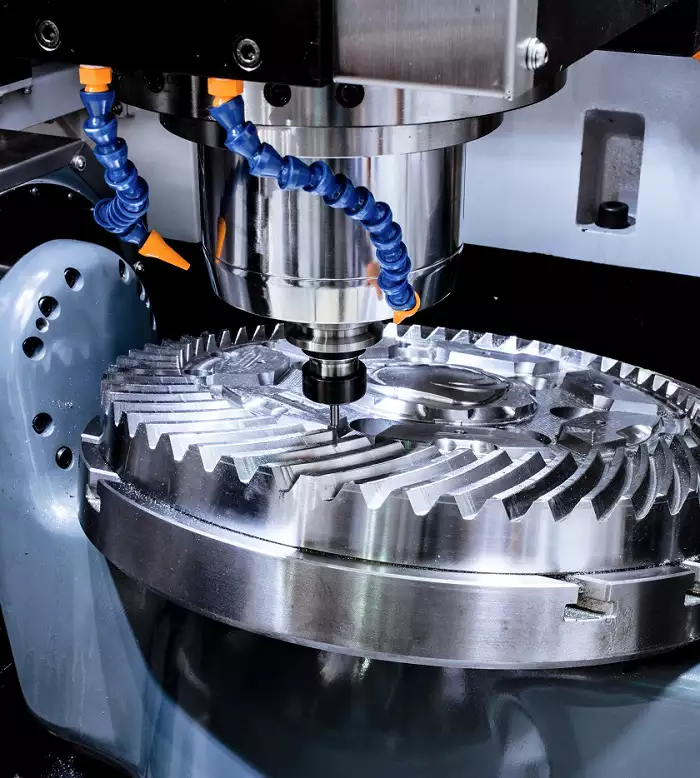
Factory Introduction
We are a professional gear manufacturing factory that specializes in producing high-quality gears for various industries. Our expertise lies in the production of spiral bevel gears, ensuring smooth and precise motion control in diverse applications.
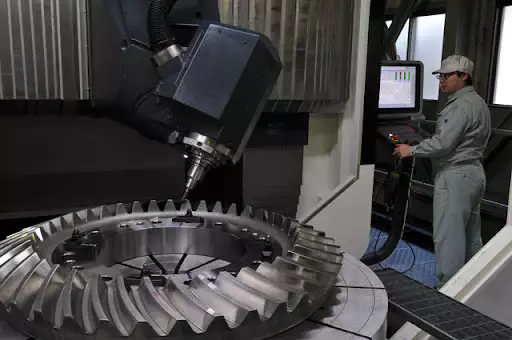
Our gear manufacturing process involves the following steps:
- Blank preparation: This includes forging and heat treatment to ensure the optimal material properties for gear production.
- Rough machining: Turning, drilling, and boring operations are performed to achieve the desired gear shape.
- Forming process: Gear teeth are either rolled, hobbed, or shaved to attain the required tooth profile.
- Semi-finishing: Chamfering, keyway machining, and deburring are carried out to improve the gear’s overall quality.
- Heat treatment: Carburizing, nitriding, or quenching and tempering processes enhance the gear’s hardness and durability.
- Finishing: Gear teeth are ground or honed to achieve the desired surface finish and dimensional accuracy.
- Inspection and acceptance: Rigorous gear testing and surface treatment ensure the highest quality standards are met.
With our advanced manufacturing techniques and stringent quality control measures, we deliver gears that meet the most demanding requirements of our customers.
Our factory’s advantages include:
- State-of-the-art manufacturing facilities
- Highly skilled and experienced workforce
- Strict adherence to quality standards
- Customization options to meet specific customer needs
- Competitive pricing and on-time delivery
- Excellent customer service and support
Partner with us for your gear requirements, and experience the difference in performance and reliability that our gears offer.
Author: Miya