Stepped Pulley: A Comprehensive Guide
A stepped pulley, also known as a cone pulley, is a mechanical device used in machinery to provide variable speed ratios. It consists of a series of pulleys of different diameters connected by a belt or chain. This allows the operator to adjust the speed of a machine by changing the pulley’s position on the shaft. Stepped pulleys are commonly used in machine tools, lathes, and milling machines, among others.
The basic design of a stepped pulley consists of a central shaft and several pulleys of varying diameters. The pulleys are mounted on the shaft and rotate at different speeds. The operator can change the speed ratio of the machine by moving the belt or chain from one pulley to another. This causes the machine’s output speed to vary, depending on the ratio of the pulleys in use.
One of the main advantages of a stepped pulley is that it allows for smooth, gradual changes in speed without the need for complex electronic controls. This makes it an ideal technology for machines that require variable speed control, such as lathes and milling machines. Additionally, stepped pulleys are relatively simple to manufacture and maintain, making them a cost-effective solution for many applications.
Another advantage of stepped pulleys is that they can be used to achieve very high speeds. By using a series of pulleys with progressively smaller diameters, it is possible to achieve speeds that would be difficult or impossible to achieve with a single pulley. This is particularly useful in applications where high speeds are necessary for cutting, grinding, or other processes.
One potential drawback of stepped pulleys is that they require manual adjustment to change speeds. This can be time-consuming and may require the machine to be shut down in order to make adjustments. However, many modern machines incorporate automated systems that allow for more rapid adjustments, which mitigates this issue.
Overall, stepped pulleys are a versatile and reliable technology that have been used in machinery for many years. They offer a cost-effective solution for achieving variable speeds and are particularly useful in applications where high speeds are necessary. While they may require some manual adjustment, advancements in automation have made them more convenient and user-friendly than ever before.
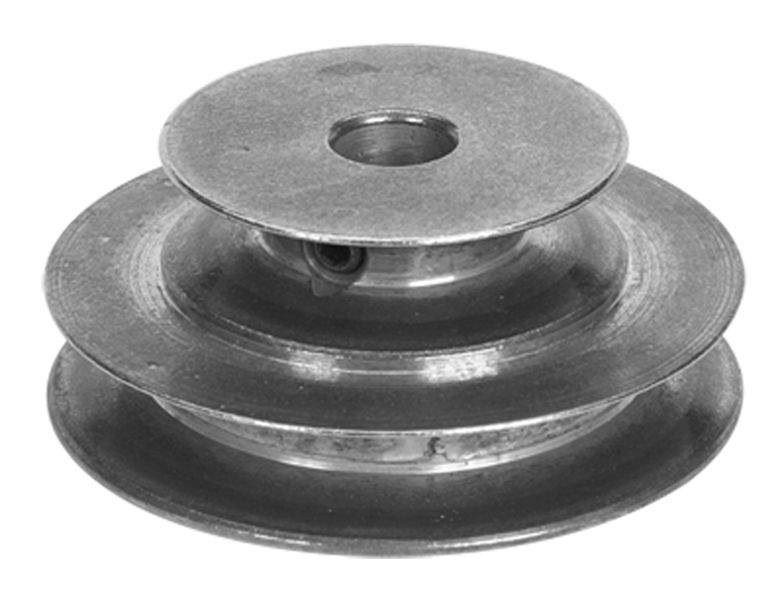
Why do we use stepped pulley?
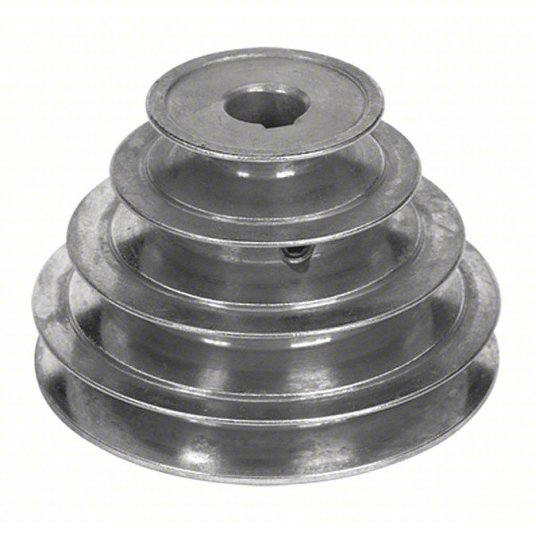
A stepped pulley is a type of pulley that has multiple grooves of different diameters. It is used in various applications, such as in automobiles, machines, and equipment. Here are some reasons why we use stepped pulleys:
- Speed Variation: One of the main reasons why we use stepped pulleys is to achieve speed variation in different machines. This can be done by changing the size of the pulley wheel. The stepper pulley is widely used in the transmission system of automobiles, where the speed of the engine needs to be adjusted according to the road conditions. The stepper pulley is also employed in machines where the speed of the output shaft needs to be varied for different applications.
- Power Transmission: Another reason why we use stepped pulleys is for power transmission. The stepped pulley can transmit power from one shaft to another without a significant change in the speed of the shaft. This is particularly useful in machines where the input and output shafts need to be rotated at different speeds.
- Tension Adjustment: Stepped pulleys are also used for tension adjustment in various machines. The tension in the belt that connects two pulleys can be adjusted by changing the size of the pulley. This is particularly useful in machines where the belts need to be kept at a specific tension for optimal performance.
- Noise Reduction: Stepped pulleys can also help in reducing noise in machines. This is because the stepped pulleys can provide smoother power transmission than regular pulleys. The smooth power transmission can help reduce vibrations and noise in the machine, resulting in a quieter operation.
- Cost-Effective: Stepped pulleys are also cost-effective compared to other power transmission systems. The cost of manufacturing and installing stepped pulleys is relatively lower than other systems like hydraulic and electric systems. Moreover, the maintenance cost of the stepper pulley is also lower than other systems.
In conclusion, stepped pulleys are used for various applications due to their versatility, efficiency, and cost-effectiveness. They offer speed variation, power transmission, tension adjustment, noise reduction, and cost-effectiveness. As a result, they are widely employed in various machines, equipment, and automobiles.
What is a stepped cone pulley used for?
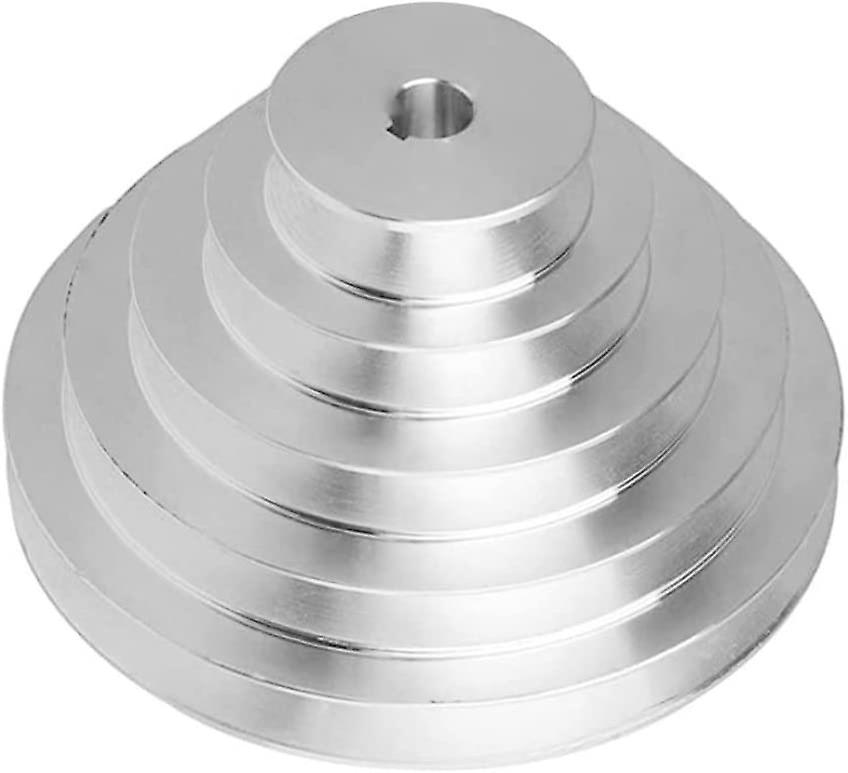
A stepped cone pulley is a type of pulley that is commonly used in different machines and tools. It is primarily designed to change the speed and torque of the output shaft by changing the diameter of the pulley that drives it. Here are some of the main uses of a stepped cone pulley:
1. To adjust the speed of a machine
One of the most common uses of a stepped cone pulley is to adjust the speed of different machines and tools. By changing the diameter of the pulley that drives the output shaft, the stepped cone pulley can effectively change the speed of the machine. This is particularly useful in machines that require different speeds for different tasks, such as lathes, drill presses, and milling machines.
2. To increase the torque of a machine
Another important use of a stepped cone pulley is to increase the torque of the output shaft. By changing the diameter of the pulley that drives the output shaft, the stepped cone pulley can effectively increase the force that the machine can produce. This is particularly useful in machines that require high amounts of torque, such as grinders, sanders, and saws.
3. To change the direction of rotation
In some machines, it may be necessary to change the direction of rotation of the output shaft. This can be achieved by using a stepped cone pulley that is designed to reverse the direction of rotation. This is particularly useful in machines that require different directions of rotation for different tasks, such as lathes and milling machines.
4. To provide multiple speed options
Another important use of a stepped cone pulley is to provide multiple speed options for a machine. By using a stepped cone pulley with multiple steps, the machine can effectively have multiple speed options that can be adjusted according to the task at hand. This is particularly useful in machines that require different speeds for different materials, such as lathes and drill presses.
5. To improve efficiency
Finally, a stepped cone pulley can be used to improve the efficiency of different machines and tools. By adjusting the speed and torque of the output shaft, the machine can effectively use less energy while still achieving the desired results. This is particularly useful in machines that require high amounts of energy, such as grinders, sanders, and saws.
In conclusion, a stepped cone pulley is a versatile tool that can be used in different machines and tools for various purposes. Whether it is to adjust the speed and torque of a machine, change the direction of rotation, provide multiple speed options, or improve efficiency, a stepped cone pulley can effectively enhance the performance of different machines and tools.
What are the three types of pulley?
A pulley is a simple machine that helps transmit forces and motion. It consists of a wheel, a groove, and a cable or rope. The three types of pulleys are the fixed pulley, the movable pulley, and the compound pulley.
Fixed Pulley
A fixed pulley is attached to a stationary object, such as a ceiling or wall. The wheel remains in place as the load moves up or down. Fixed pulleys change the direction of the force applied, but they do not increase the force. They make it easier to lift a load by allowing the user to pull down instead of lifting up. An example of a fixed pulley is a flagpole.

Movable Pulley
A movable pulley is attached to the load being lifted. As the user pulls on the rope or cable, the pulley moves with the load. Movable pulleys increase the force needed to lift a load, but they also reduce the distance the load moves. They are useful for lifting heavy loads and changing the direction of the force. Examples of movable pulleys include a crane and a sailboat.

Compound Pulley
A compound pulley consists of both fixed and movable pulleys. It combines the benefits of both types of pulleys to create greater mechanical advantage. Compound pulleys are useful for lifting extremely heavy loads with less effort. They can also change the direction of the force to make it easier to lift a load. Examples of compound pulleys include a block and tackle system and a zip line.

In conclusion, pulleys are simple machines that help us lift and move heavy loads. The three types of pulleys each have their own benefits and uses. Fixed pulleys change the direction of the force, movable pulleys increase the force needed to lift a load, and compound pulleys combine the benefits of both to create greater mechanical advantage.
How to choose or customize suitable step pulley?
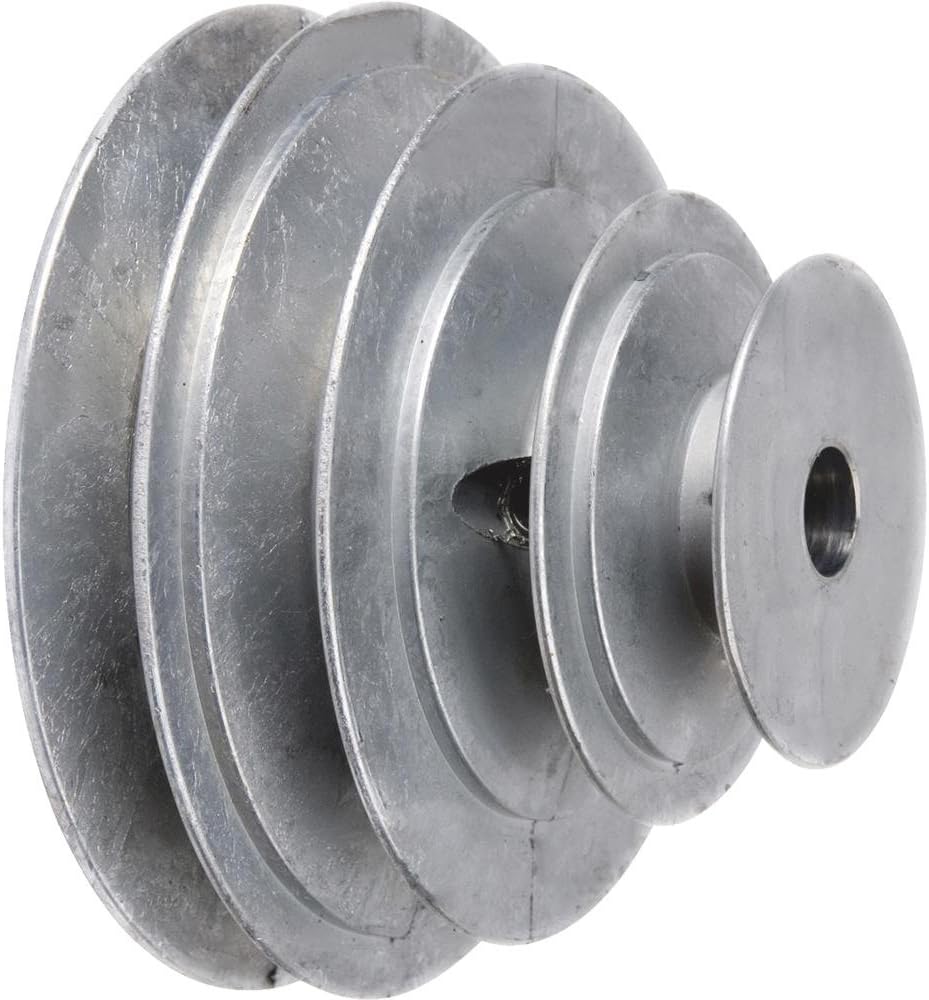
Step pulleys play a crucial role in various machines and equipment, providing speed and power transmission. When it comes to choosing or customizing a suitable step pulley, there are several important factors to consider. Let’s explore each point in detail:
1. Determine the application requirements:
Before selecting or customizing a step pulley, it is essential to understand the specific requirements of the application. Consider factors such as the load capacity, speed range, torque, and power transmission requirements. This information will help in selecting the appropriate step pulley design.
2. Calculate the speed ratios:
The speed ratio is an essential consideration when choosing or customizing a step pulley. It determines the range of speeds that can be achieved. Calculate the required speed ratios based on the desired speed ranges and the available motor speed options. This will ensure that the step pulley can provide the necessary speed variations for the application.
3. Evaluate the material and construction:
The material and construction of the step pulley are crucial for its performance and durability. Consider the specific application requirements, such as the load capacity and environmental conditions, to select the appropriate material. Common materials for step pulleys include steel, cast iron, and aluminum. Choose a material that can withstand the forces and stresses involved in the application.
4. Consider the pulley size and dimensions:
The size and dimensions of the step pulley are essential for proper functioning and compatibility with the machine or equipment. Determine the required pulley size based on the available space, shaft diameter, and belt size. Ensure that the step pulley can be easily installed and aligned with other components.
5. Evaluate customization options:
In some cases, off-the-shelf step pulleys may not meet specific requirements. Customization options allow for tailoring the step pulley design to suit unique needs. Consider factors such as the number of steps, step size, and overall design modifications. Collaboration with a reputable manufacturer or engineer can help in creating a customized step pulley solution.
6. Test and validate the design:
Once a suitable step pulley design is chosen or customized, it is crucial to test and validate its performance. Conduct rigorous testing to ensure that the step pulley operates smoothly, provides the required speed variations, and can handle the specified loads. This step is essential to ensure the reliability and efficiency of the step pulley in the intended application.
In conclusion, choosing or customizing a suitable step pulley involves considering various factors such as application requirements, speed ratios, material and construction, pulley size, and customization options. By carefully evaluating these aspects and testing the design, it is possible to ensure optimal performance and functionality in any machinery or equipment requiring a step pulley.
About Ever-Power
Ever-Power is a leading manufacturer and trader specializing in the production and distribution of step pulleys, as well as a wide range of other products such as hydraulic fittings, machined parts, and customized products. Located in Shandong Province, China, we are dedicated to providing high-quality products and exceptional services to our customers.
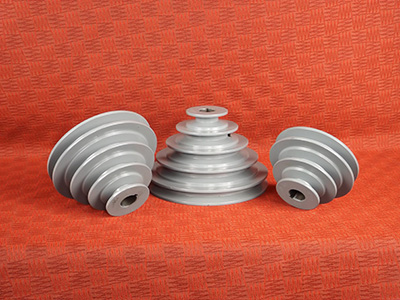
Here are five key advantages of choosing our step pulleys and working with Ever-Power:
1. Superior Quality: Our step pulleys are manufactured under strict adherence to the ISO9001 quality management system. This ensures that each pulley meets the highest standards of quality and performance.
2. Wide Range of Customization: We offer various customized options for our step pulleys to meet the specific requirements of our customers. Whether it’s the size, material, or design, we can tailor the product to suit your needs.
3. Extensive Product Line: In addition to step pulleys, we also provide a comprehensive range of hydraulic fittings, castings, valves, and hydraulic cylinders. This allows our customers to source multiple products from a single, reliable supplier.
4. Competitive Pricing: At Ever-Power, we believe in offering the best value for money to our customers. With our efficient production processes and cost-effective strategies, we are able to provide our products at the most competitive prices in the market.
5. Dedicated R&D Team: Our experienced research and development team is continuously working towards expanding our product range and improving our existing offerings. This enables us to stay at the forefront of market trends and deliver innovative solutions to our customers.
By choosing Ever-Power, you can expect high-quality step pulleys, exceptional customer service, and a reliable business partner. We are committed to establishing a strong and mutually beneficial relationship with our customers. If you are interested in any of our products or have any inquiries, please do not hesitate to contact us. We look forward to the opportunity to serve you.
Author:CX