Spline Shaft Stress Analysis
Introduction
In the field of mechanical engineering, spline shafts are widely used in various applications. Understanding the stress analysis of spline shafts is crucial for ensuring their reliable performance and longevity. In this article, we will delve into the intricacies of spline shaft stress analysis and explore its key aspects.
1. Spline Shaft Design and Geometry
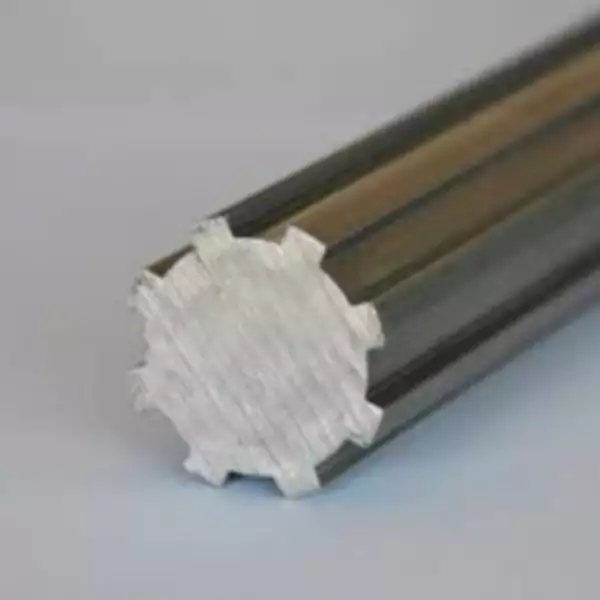
Spline shafts are mechanical components that transmit torque between two interconnected shafts. They consist of a series of equally spaced ridges, known as splines, which mate with corresponding grooves, allowing for efficient torque transfer. The design and geometry of spline shafts play a significant role in their stress analysis.
1.1 Types of Splines
There are various types of splines, including involute splines, serrated splines, and parallel key splines. Each type has its own advantages and is chosen based on specific application requirements.
1.2 Spline Shaft Dimensions
The dimensions of spline shafts, such as major diameter, pitch diameter, and minor diameter, directly impact their stress distribution and overall performance. Precise measurement and calculation of these dimensions are vital for accurate stress analysis.
2. Material Selection
The material used for spline shafts greatly influences their strength, durability, and resistance to stress. Factors such as tensile strength, yield strength, and fatigue resistance need to be considered when selecting an appropriate material for spline shafts.
2.1 Commonly Used Materials
Common materials for spline shafts include alloy steels, stainless steels, and carbon steels. Each material has its own unique properties and is chosen based on factors like load capacity, temperature range, and environmental conditions.
2.2 Material Testing and Analysis
Thorough material testing and analysis, including hardness testing and metallurgical examination, are essential for ensuring the integrity and reliability of spline shafts under different stress conditions.
3. Stress Analysis Methods
Accurately analyzing the stress distribution in spline shafts helps identify potential failure points and optimize their design. Various methods are employed for stress analysis, including analytical calculations, finite element analysis (FEA), and experimental testing.
3.1 Analytical Calculations
Analytical calculations involve using mathematical equations and formulas to determine stress concentrations, shear forces, and bending moments in spline shafts. These calculations provide valuable insights into stress patterns and aid in design optimization.
3.2 Finite Element Analysis (FEA)
FEA is a powerful numerical simulation technique that enables detailed stress analysis of complex spline shaft geometries. By dividing the shaft into finite elements, FEA accurately predicts stress distribution, deformation, and failure points under different loading conditions.
3.3 Experimental Testing
Experimental testing involves subjecting spline shafts to controlled loads and measuring the resulting stress levels using strain gauges, load cells, or other instrumentation. Experimental data validate stress analysis models and provide real-world insights for further design improvements.
4. Failure Modes and Prevention
Understanding the potential failure modes of spline shafts is crucial for preventing catastrophic failures and ensuring their long-term reliability. By identifying these failure modes, appropriate design modifications and maintenance strategies can be implemented.
4.1 Fatigue Failure
Fatigue failure is a common failure mode in spline shafts due to cyclic loading. By considering factors such as stress concentration, surface finish, and material properties, fatigue failure can be mitigated through proper design, material selection, and surface treatments.
4.2 Overload Failure
Overload failure occurs when spline shafts are subjected to loads beyond their capacity. Proper load calculations, considering factors like load distribution, safety factors, and operating conditions, help prevent overload failure and ensure safe operation.
Conclusion
Spline shaft stress analysis is a critical aspect of designing robust and reliable mechanical systems. Through careful consideration of design, material selection, stress analysis methods, and failure prevention strategies, engineers can optimize spline shaft performance and enhance overall system efficiency.

Our company specializes in the production and sale of various types of gears and spline shafts. With years of experience in the industry, we have established ourselves as a leading provider in the market. Here are five key advantages of choosing our company:
- Quality: We are committed to delivering top-notch products that meet the highest standards of quality and durability. Our gears and spline shafts are built to last, ensuring reliable performance.
- Expertise: Our team consists of skilled professionals who have a deep understanding of spline shaft stress analysis. With their expertise, we can provide accurate and reliable analysis to ensure the optimal design and performance of spline shafts.
- Customization: We understand that every project is unique. That’s why we offer customized solutions to meet our clients’ specific needs. Our skilled engineers can design and manufacture spline shafts that perfectly fit the requirements of your application.
- Timely Delivery: We value our clients’ time and strive to deliver our products within the agreed-upon timeframe. With efficient production processes and a well-organized supply chain, we ensure that your orders are delivered on time.
- Customer Satisfaction: At our company, customer satisfaction is our top priority. We pride ourselves on providing excellent customer service and support. Our dedicated team is always ready to assist you and address any concerns or inquiries you may have.
Spline Shaft Working Principles and Functions
Spline shafts play a crucial role in transmitting torque and rotation between two mating components. The splines on the shaft provide a form of interlocking connection, ensuring a solid and efficient power transmission. The shaft’s design allows it to withstand high levels of stress, making it suitable for demanding applications.
Spline Shaft Design and Selection Guidelines
When it comes to designing and selecting spline shafts, several factors need to be considered. These include the torque requirements, speed, material selection, and environmental conditions. By carefully analyzing these factors, our team of experts can assist you in choosing the right spline shaft for your application.
Spline Shaft Manufacturing and Processing Techniques
Our manufacturing process utilizes state-of-the-art techniques and machinery to produce high-quality spline shafts. We adhere to strict quality control measures to ensure that each shaft meets the required specifications. Our skilled technicians employ precision machining methods to create spline shafts with excellent dimensional accuracy and surface finish.
Spline Shaft Application Examples and Industry Practices
Spline shafts find applications in various industries, including automotive, aerospace, machinery, and more. They are commonly used in power transmission systems, such as gearboxes, pumps, and different types of machinery. Our extensive experience and knowledge allow us to provide industry-specific solutions and practices for spline shaft applications.
If you are looking for reliable spline shafts and expert support, we are here to assist you. Contact us today to discuss your requirements and how we can collaborate to achieve your goals.
Author: Miya