Spiral bevel gear inspection using advanced non-destructive testing
Introduction
In the manufacturing industry, the inspection of spiral bevel gears plays a crucial role in ensuring the quality and reliability of these components. With the advancements in non-destructive testing (NDT) techniques, the inspection process has become more efficient and accurate. This blog post will explore the various methods used in the inspection of spiral bevel gears, focusing on the application of advanced NDT techniques.
1. Visual Inspection
Visual inspection is the first step in the inspection process. It involves a thorough examination of the gear’s surface for any visible defects or abnormalities. This includes checking for cracks, chips, pitting, or any signs of wear and tear. The use of specialized magnifying tools and microscopes allows for a detailed analysis of the gear’s surface condition.
2. Magnetic Particle Inspection (MPI)
MPI is a widely used NDT technique for detecting surface and near-surface defects in spiral bevel gears. It involves magnetizing the gear and applying iron particles to the surface. Any defects or cracks will create magnetic fields, causing the iron particles to cluster and form visible indications. This method is highly effective in identifying cracks and other surface irregularities.
3. Ultrasonic Testing (UT)
UT is a non-destructive testing technique that uses high-frequency sound waves to inspect the internal structure of spiral bevel gears. A transducer emits sound waves into the gear, and the reflected waves are analyzed to detect any internal defects such as voids, inclusions, or cracks. UT provides valuable information about the gear’s integrity without causing any damage.
4. Eddy Current Testing (ECT)
ECT is a surface inspection technique that utilizes electromagnetic induction to detect flaws in spiral bevel gears. An alternating current is passed through a coil, creating an electromagnetic field. Any variations in the electromagnetic field caused by defects or material changes in the gear’s surface will induce eddy currents. These changes can be detected and analyzed to identify surface defects.
5. X-ray Inspection
X-ray inspection is a widely used technique for inspecting the internal structure of spiral bevel gears. By exposing the gear to X-rays, a radiographic image can be obtained, revealing any internal defects or discrepancies in density. This method is particularly effective in detecting voids, inclusions, or misalignments in the gear’s tooth structure.
6. Thermographic Testing
Thermographic testing utilizes thermal imaging technology to detect defects in spiral bevel gears. By analyzing the heat distribution on the gear’s surface, any irregularities, such as cracks or delaminations, can be identified. This method is especially useful for detecting defects that may not be visible to the naked eye.
7. Resonant Testing
Resonant testing involves subjecting the spiral bevel gear to mechanical vibrations and analyzing the resulting resonant frequencies. Any changes in the resonant frequencies can indicate the presence of defects or material inconsistencies. This technique is highly sensitive and can detect even small defects that may affect the gear’s performance.
8. Acoustic Emission Testing
Acoustic emission testing is a real-time monitoring technique that detects the release of stress waves generated by defects in spiral bevel gears. By installing sensors on the gear, any changes in the acoustic emissions can be detected and analyzed. This method is particularly effective in identifying defects that may develop or propagate during operation.
9. Optical Metrology
Optical metrology involves the use of optical measurement techniques to inspect the dimensional accuracy and geometry of spiral bevel gears. This includes measuring parameters such as tooth profile, pitch, runout, and surface finish. High-precision optical instruments ensure that the gears meet the required specifications.
10. Digital Radiography
Digital radiography is a modern approach to X-ray inspection, using digital imaging sensors instead of traditional photographic film. This technique provides enhanced image quality and allows for easier analysis and interpretation of the radiographic data. Digital radiography is highly efficient and helps identify internal defects in spiral bevel gears accurately.
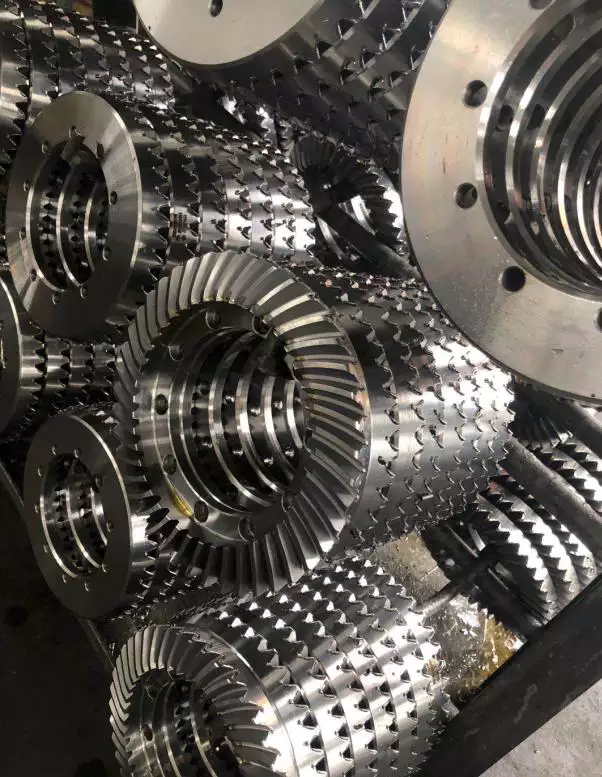
About Ever Power Gear Factory
Ever Power Gear Factory is a professional manufacturer specialized in producing high-quality gears. With years of experience in the industry, we have gained a reputation for delivering gears that meet the highest standards of precision and durability.
Our gear manufacturing process involves the following steps:
1. Raw Material Preparation: We carefully select and prepare the raw materials, including forging and heat treatment processes to ensure optimal material properties.
2. Rough Machining: Through processes such as turning, drilling, and boring, we shape the gears into their initial forms.
3. Forming Process: We utilize advanced techniques like gear rolling, hobbing, and shaving to create the gear tooth profiles with high precision.
4. Semi-Finishing: This stage involves operations like chamfering, keyway machining, and deburring to ensure smooth surfaces and eliminate any sharp edges or burrs.
5. Heat Treatment: We subject the gears to processes like carburizing, nitriding, or quenching and tempering to improve their hardness and wear resistance.
6. Finishing Machining: Grinding and honing processes are employed to achieve the desired gear tolerances and surface finish.
7. Inspection and Acceptance: Each gear undergoes thorough inspection using advanced testing methods, including gear inspection and surface treatment evaluation.
At Ever Power Gear Factory, we take pride in offering the following advantages to our customers:
– Exceptional Precision: Our gears are manufactured with meticulous attention to detail, ensuring highest levels of accuracy and precision.
– Superior Durability: We use high-quality materials and advanced heat treatment processes to enhance the wear resistance and lifespan of our gears.
– Customization Options: We offer a wide range of customization possibilities to meet our customers’ specific requirements.
– Reliable Performance: Our gears are designed and manufactured to deliver reliable performance, even under challenging operating conditions.
– Timely Delivery: We understand the importance of time and strive to deliver our products within the agreed-upon timelines.
Partner with Ever Power Gear Factory for all your gear needs and experience the excellence that comes with our finely crafted products.
Author: Miya