Metric Gear Rack for Smart Factories
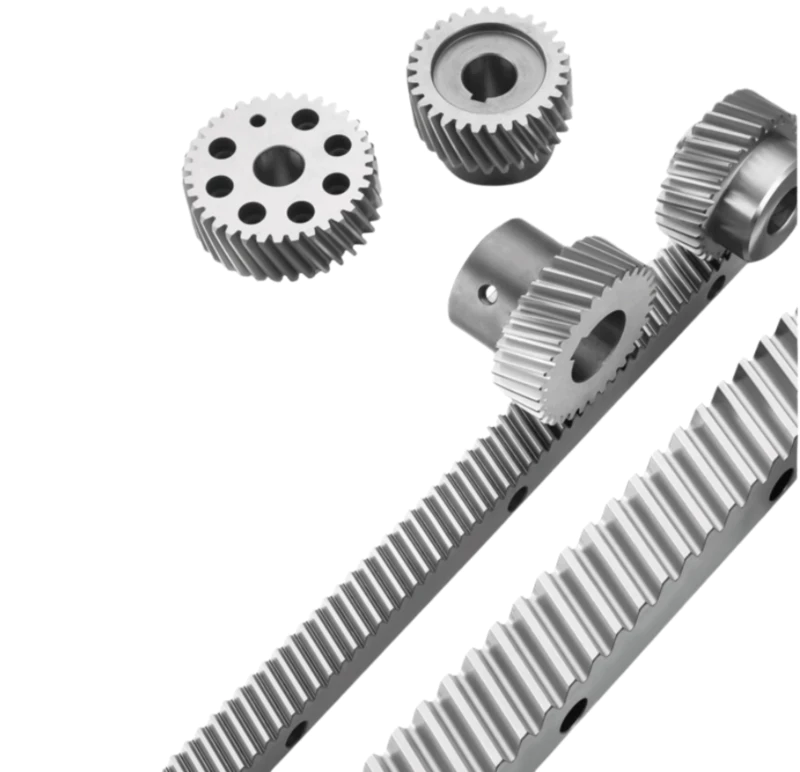
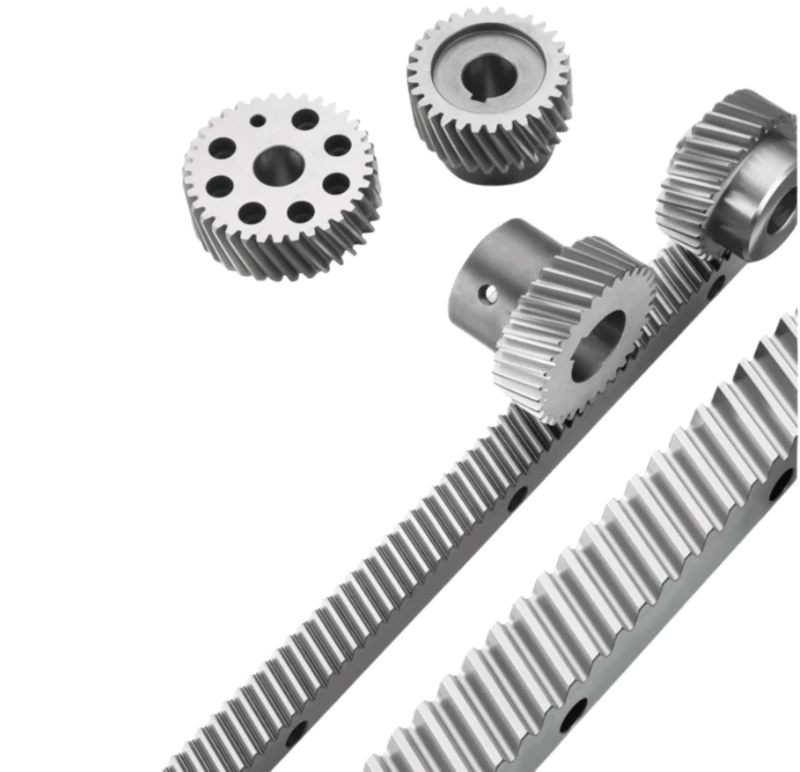
Metric gear rack is a mechanical component used in various applications to convert rotary motion into linear motion. It consists of a straight, toothed bar with a module pitch, which is the distance between teeth, specified in metric units. The primary function of Metric Gear Rack is to engage with a gear, called a pinion or rack and pinion system, to transfer rotational motion into linear motion. When the pinion rotates, its teeth mesh with the teeth of the gear rack, causing the rack to move in a straight line. This linear motion can be utilized for different purposes in machinery and mechanical systems.
Advantages of Metric Gear Rack
Precise Linear Motion
Metric gear rack provides accurate and consistent linear movement, allowing for precise positioning and control in various applications.
High Load Capacity
Gear racks are designed to withstand high loads and transmit substantial forces, making them suitable for applications requiring heavy-duty linear motion.
Efficiency
The toothed profile of the gear rack and meshing pinion minimize backlash, ensuring efficient power transmission and reducing wasted motion.
Versatility
Metric gear racks are available in different lengths and modules, providing flexibility in design and accommodating various application requirements.
Durability
Gear racks are typically made from durable materials such as steel or hardened alloys, offering excellent wear resistance and long service life.
Cost-Effective
Metric gear racks are often more cost-effective compared to other types of linear motion systems, making them a popular choice in many industries.
Applications of Metric Gear Rack
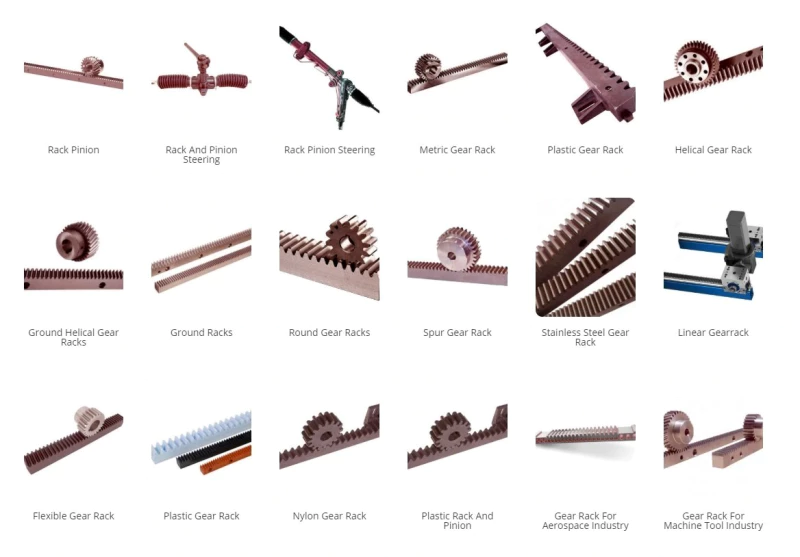
Metric gear rack is used in various industries and applications, including:
- Industrial Machinery
- Construction and Infrastructure
- Automotive Industry
- Aerospace and Defense
- Robotics and Automation
- Material Handling and Logistics
- Medical Equipment
- Renewable Energy
- Entertainment and Stage Technology
- Agricultural Machinery
How Metric Gear Rack Works
Metric gear rack works by:
- Configuration: The gear rack is a straight bar with evenly spaced teeth along its length. The teeth are designed to mesh with a mating gear, typically called a pinion.
- Engagement: The pinion gear, which is a rotary component, meshes with the teeth of the gear rack. As the pinion rotates, its teeth engage with the teeth of the gear rack, creating a positive and continuous transfer of motion.
- Linear Motion: As the pinion rotates, the interaction between its teeth and the gear rack’s teeth causes the gear rack to move linearly along its axis. The direction and distance of the linear motion depend on the rotational direction and speed of the pinion.
- Control: The linear motion of the gear rack can be precisely controlled by controlling the rotation of the pinion. By adjusting the speed and direction of the pinion’s rotation, the linear movement of the gear rack can be controlled and synchronized with other components or processes.
- Application-Specific Usage: The linear motion generated by the gear rack can be utilized for various purposes based on the specific application. It may be used for positioning, actuation, conveying, or any other requirement that calls for linear movement in machinery and mechanical systems.
Possible Problems and Solutions during Usage
Some possible problems that may arise during the usage of metric gear rack and their solutions are:
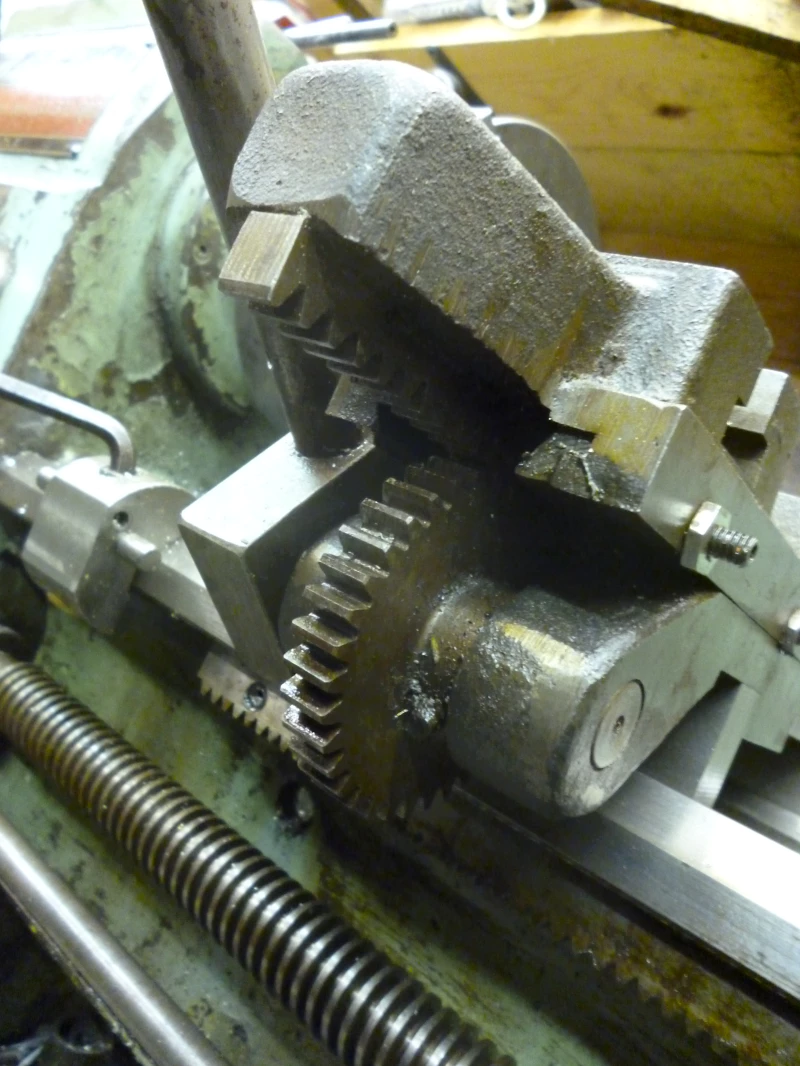
- Wear and Tear: Continuous use can lead to wear and tear of the gear rack teeth, resulting in decreased performance and accuracy. Regular inspection and maintenance can help identify signs of wear, and damaged gear racks should be replaced promptly.
- Misalignment: Improper alignment between the pinion and gear rack can cause uneven tooth engagement and increased friction. Proper alignment should be ensured during installation, and adjustments should be made if misalignment is detected.
- Backlash: Backlash refers to the slight play or clearance between the teeth of the pinion and gear rack, which can lead to inaccuracies in positioning. Minimizing backlash can be achieved by selecting high-quality gear rack components and ensuring proper meshing between the pinion and gear rack.
- Lubrication: Inadequate lubrication can result in increased friction, wear, and noise. Regular lubrication of the gear rack and pinion system using appropriate lubricants can help reduce friction and ensure smooth operation.
- Contamination: Dust, debris, or other contaminants can accumulate on the gear rack, affecting its performance and longevity. Regular cleaning and protection of the gear rack from environmental factors can help prevent contamination-related issues.
- Overloading: Subjecting the gear rack to loads beyond its recommended capacity can lead to premature failure. It is crucial to adhere to the manufacturer’s guidelines and use gear racks that can handle the intended loads.
- Maintenance and Inspection: Regular maintenance and inspection are essential to identify and address any potential issues before they escalate. This includes checking for signs of wear, misalignment, damage, and ensuring proper lubrication.
Installation and Maintenance of Metric Gear Rack
The installation and maintenance of metric gear rack should be done as follows:
Installation
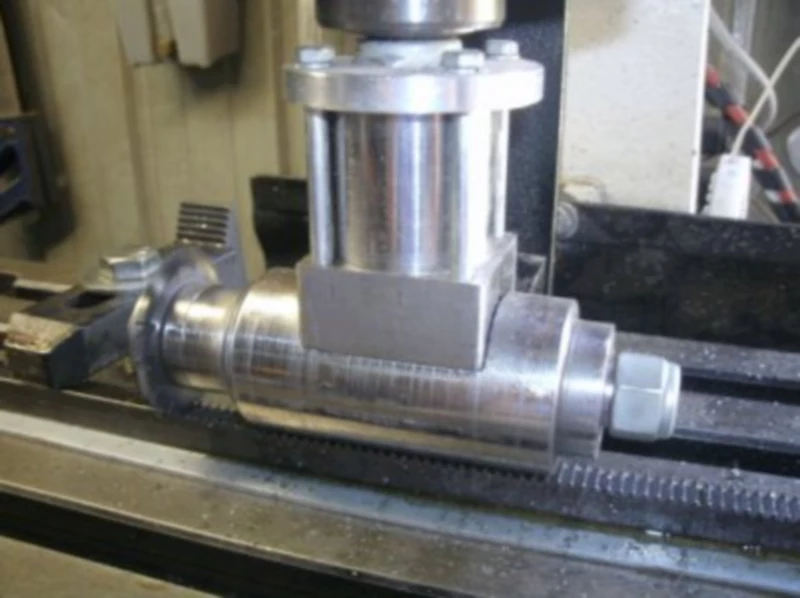
- Preparation: Ensure that the mounting surface and supporting structure are clean, flat, and free of any obstructions or debris. Verify that the gear rack and pinion are compatible in terms of size, module, and tooth profile.
- Alignment: Align the gear rack and pinion properly to ensure smooth and accurate operation. Use appropriate alignment tools, such as dial indicators or laser alignment systems, to achieve the desired alignment.
- Mounting: Securely mount the gear rack to the designated surface using suitable fasteners, ensuring that it is straight and parallel to the intended linear motion path. Pay attention to the required spacing and clearance between the gear rack and other components.
- Lubrication: Apply the recommended lubricant to the gear rack teeth and the mating pinion. Follow the manufacturer’s guidelines regarding the type and frequency of lubrication.
- Testing: After installation, perform a thorough inspection and conduct a test run to verify proper alignment, smooth operation, and accurate linear motion. Make any necessary adjustments or corrections as needed.
Maintenance
- Regular Inspection: Periodically inspect the gear rack for signs of wear, damage, or misalignment. Check for any unusual noise, vibration, or irregular motion during operation.
- Cleaning: Keep the gear rack clean and free from contaminants. Regularly remove dirt, dust, and debris that may accumulate on the teeth or in the gear rack assembly.
- Lubrication: Maintain proper lubrication by periodically applying the recommended lubricant to the gear rack teeth and pinion. Follow the manufacturer’s guidelines regarding lubricant type and frequency of application.
- Replacement: If significant wear, damage, or tooth deformation is detected during inspection, consider replacing the gear rack to ensure optimal performance and safety.
- Professional Maintenance: For complex or critical applications, it is advisable to involve qualified technicians or professionals for specialized maintenance and repairs.
About EVER POWER Company
EVER POWER is a professional manufacturer of racks in China. Its products are mainly sold to hundreds of fixed suppliers such as domestic steel rolling mills, shipyards, precision machine tool factories, automation machinery factories, and various distribution companies, and exported to Western Europe, the Middle East, and Southeast Asia and other countries and regions. The developing EVER POWER currently has hundreds of employees, including many engineers, with fixed assets of 20 million yuan and an annual output value of 50 million yuan.
The company has more than 100 professional rack production equipment and testing equipment. The one-time processing length of the rack is 3000MM, the module range is M1-M30, British CP, American DP, etc., in order to better adapt to market changes. For high-end customers who demand high-precision racks, our company specially introduces rack milling machines and rack grinding machines imported from Germany. The precision of the racks produced by this equipment can reach (JIS2 level) DIN6n25 to meet various needs of the high-end market.
The company adheres to the principles of quality first, timely delivery, and credit first, treats every business partner sincerely, and wholeheartedly welcomes friends from the business community to cooperate with us to develop together and create brilliance. EVER POWER also offers other rack products such as Gear Rack For Door Opener, gear rack for elevator, rack and pinion steering, metric gear rack, etc. Customers are welcome to inquire about customized products.


