Integration of Hollow Rotary Platforms with Robotics Arms in Automotive Assembly Lines
Introduction
Automotive assembly lines are becoming increasingly automated, with more and more tasks being performed by robotics arms. These arms rely on hollow rotary platforms to provide motion and control, making them an essential component of the assembly line. In this article, we will explore the integration of hollow rotary platforms with robotics arms in automotive assembly lines.
Overview of Hollow Rotary Platforms
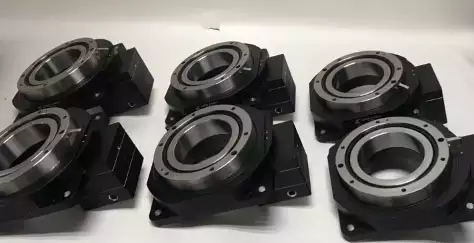
Hollow rotary platforms are devices that provide high-precision motion and control in a compact package. They consist of a rotating platform with a hollow center, which allows for the passage of cables, sensors, and other devices through the center of the platform. This makes them ideal for use in applications where space is limited and precision is critical.
Design Considerations for Hollow Rotary Platforms
When designing a hollow rotary platform, there are several key factors to consider:
| Factor | Description |
|---|---|
| Load capacity | The maximum weight that the platform can support without failing |
| Rigidity | The ability of the platform to resist deformation under load |
| Torque capacity | The maximum torque that the platform can transmit |
| Precision | The accuracy of the platform’s rotational motion |
| Speed | The maximum rotational speed that the platform can achieve |
| Control interface | The method by which the platform is controlled (e.g. servo motor, stepper motor, hydraulic, etc.) |
Integration with Robotics Arms
Robotics arms are used in automotive assembly lines to perform a variety of tasks, including welding, painting, and assembly. These arms require high-precision motion and control, which is provided by hollow rotary platforms. By integrating hollow rotary platforms with robotics arms, manufacturers can achieve greater efficiency, accuracy, and productivity.
Benefits of Integration
The integration of hollow rotary platforms with robotics arms offers several key benefits:
- Improved precision
- Increased speed
- Reduced downtime
- Greater flexibility
- Improved safety
Our Company
 We are a modern enterprise that specializes in the development, production, and sales of servo electric cylinders, servo pressure equipment, and other servo stamping equipment. Our company has a professional design team, processing team, assembly team, and sales and after-sales service team. We mainly research and develop servo cylinders, servo pressure machines, electric push rods, electric slide tables, and multi-degree-of-freedom platforms.
Design and Selection of Hollow Rotary Actuator
 When designing and selecting a hollow rotary actuator, there are several key factors to consider:
| Factor | Description |
|---|---|
| Application | The specific task that the actuator will be performing |
| Load capacity | The maximum weight that the actuator can support without failing |
| Rotational speed | The maximum rotational speed that the actuator can achieve |
| Control interface | The method by which the actuator is controlled (e.g. servo motor, stepper motor, hydraulic, etc.) |
| Environmental conditions | The temperature, humidity, and other environmental factors that the actuator will be exposed to |
Conclusion
The integration of hollow rotary platforms with robotics arms is essential for achieving greater efficiency, accuracy, and productivity in automotive assembly lines. By considering the key design and selection factors, manufacturers can ensure that they choose the right hollow rotary actuator for their specific application. Our company is committed to providing high-quality servo stamping equipment and excellent after-sales service. Contact us today to learn more about our products and services.
Author: Miya