Hypoid Gear Service Life Estimation
Introduction
In the field of mechanical engineering, the estimation of service life for hypoid gears plays a crucial role in ensuring the reliability and efficiency of various machines and systems. Hypoid gears, which are a type of spiral bevel gears, are widely used in automotive, aerospace, and industrial applications due to their unique characteristics and capabilities. This article aims to provide an in-depth understanding of hypoid gear service life estimation, exploring various factors and methodologies involved in this process.
Gear Design and Geometry
The design and geometry of hypoid gears play a significant role in determining their service life. Several key considerations include the tooth profile, tooth contact pattern, tooth surface quality, and gear material properties. The tooth profile, including the pitch, pressure angle, and helix angle, directly affects the gear’s load-carrying capacity and contact characteristics.
Furthermore, the optimization of the tooth contact pattern is crucial to distribute the load and minimize localized stress concentrations. The surface quality of the tooth flank, achieved through advanced manufacturing techniques and precision machining, also influences the gear’s performance and durability. Finally, the selection of suitable gear materials, taking into account factors such as hardness, strength, and fatigue resistance, is essential in ensuring a longer service life for hypoid gears.
Lubrication and Wear Analysis
Lubrication plays a vital role in minimizing wear and extending the service life of hypoid gears. Proper lubrication helps reduce friction, heat generation, and surface fatigue, ensuring smooth operation and preventing premature failure. The selection of the appropriate lubricant, considering factors such as viscosity, load-carrying capacity, and temperature resistance, is critical in maintaining optimal gear performance.
Wear analysis is another essential aspect of hypoid gear service life estimation. By analyzing wear patterns and wear rates, engineers can gain valuable insights into the gear’s operating conditions and identify potential areas of improvement. This information can then be used to optimize gear design, lubrication strategies, and maintenance practices, ultimately enhancing the gear’s overall service life.
Load Analysis and Fatigue Life Estimation
Accurate load analysis is crucial for estimating the fatigue life of hypoid gears. Various factors, such as the applied loads, operating speed, and gear geometry, need to be considered to assess the gear’s stress levels. The calculation of tooth stresses, including bending stress, contact stress, and surface stress, provides valuable information for evaluating the gear’s fatigue resistance.
Based on the load analysis, fatigue life estimation methods such as the ISO 6336 standard or advanced numerical simulations can be employed to predict the gear’s remaining useful life. These methodologies consider factors such as material fatigue properties, stress concentrations, and surface treatments, providing a comprehensive understanding of the gear’s expected durability.
Maintenance and Failure Analysis
Regular maintenance and failure analysis are essential for maximizing the service life of hypoid gears. Through proper inspection, lubrication replenishment, and proactive repair, potential issues can be identified and resolved before they lead to catastrophic failures. Failure analysis techniques, including visual inspection, non-destructive testing, and metallurgical analysis, help engineers understand the root causes of failure and implement preventive measures.
By continuously monitoring gear performance, conducting timely maintenance, and analyzing failures, the service life of hypoid gears can be extended, improving the overall productivity and reliability of the systems they are incorporated into.
Conclusion
In conclusion, hypoid gear service life estimation is a complex and critical process in mechanical engineering. By considering various factors such as gear design, lubrication, load analysis, and maintenance practices, engineers can optimize the service life of hypoid gears, reducing downtime, and ensuring efficient operation. Continuous research and advancements in gear materials, manufacturing techniques, and simulation technologies further contribute to enhancing the reliability and durability of hypoid gears.

Ever Power Gear Factory
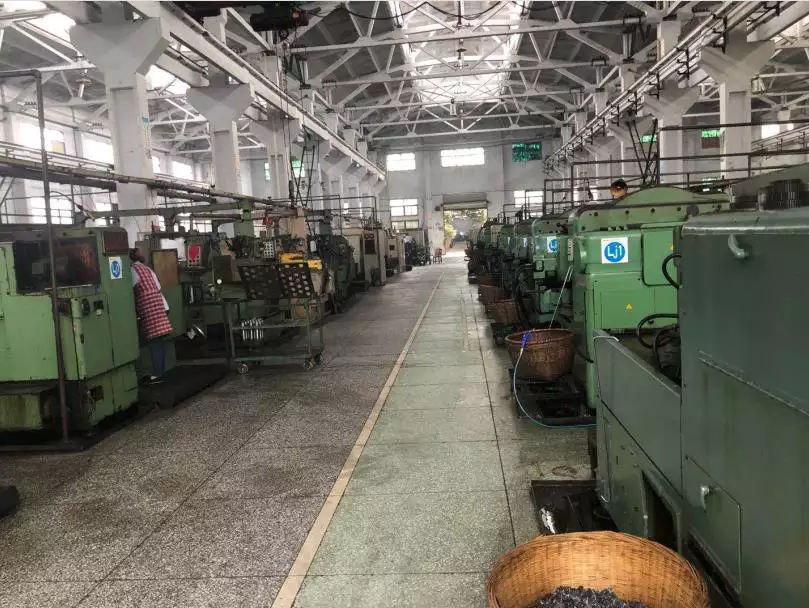
We are a professional gear manufacturing factory, specializing in the production of high-quality gears for various industries. With a state-of-the-art facility and a team of experienced engineers and technicians, we ensure superior quality and precision in every gear we produce.
Our gear manufacturing process involves the following steps:
- Blank Preparation: This includes processes like forging and heat treatment to achieve the desired material properties.
- Rough Machining: Turning, drilling, and boring are performed to shape the gear to its initial form.
- Forming Process: Gear teeth are generated through processes such as gear hobbing, gear shaping, or gear shaving.
- Semi-Finishing: Chamfering, keyway cutting, and deburring are carried out to ensure smooth transitions and remove any imperfections.
- Heat Treatment: Carburizing, nitriding, or quenching and tempering processes are applied to enhance the gear’s hardness, wear resistance, and overall strength.
- Finishing Machining: Gear teeth are ground or honed to achieve precise dimensions and surface finish.
- Inspection and Acceptance: Comprehensive gear testing and surface treatment processes are performed to ensure quality and reliability.
By following these rigorous manufacturing processes and adhering to strict quality control standards, we guarantee gears that meet or exceed customer expectations. Our factory’s commitment to continuous improvement and customer satisfaction sets us apart in the industry.
Advantages of choosing Ever Power Gear Factory:
- Advanced manufacturing technology and equipment
- Experienced engineers and technicians
- Strict quality control processes
- Customization options to meet specific requirements
- Competitive pricing and timely delivery
- Excellent customer service and support
- Wide range of gear types and sizes available
Partner with Ever Power Gear Factory for all your gear needs, and experience the difference in performance and reliability.
Author: Miya