Hypoid Gear Performance Degradation Over Time
Introduction
Hypoid gears are an essential component in many mechanical systems, providing smooth and efficient power transmission. However, over time, the performance of hypoid gears can degrade, leading to various issues and challenges. In this article, we will explore the factors that contribute to hypoid gear performance degradation over time and delve into the in-depth analysis of each aspect.
Understanding Hypoid Gear Performance Degradation
Gear Material Composition
The choice of gear material plays a crucial role in determining the performance and durability of hypoid gears. Different materials possess varying levels of strength, wear resistance, and heat dissipation properties. However, certain materials may exhibit degradation over time due to factors such as chemical reactions, oxidation, or fatigue. It is important to select materials that can withstand the operating conditions and minimize the risk of degradation.
Lubrication and Contamination
Proper lubrication is essential for maintaining the performance of hypoid gears. Inadequate lubrication or the presence of contaminants can lead to increased friction, wear, and eventual degradation. It is imperative to establish a regular maintenance schedule to ensure proper lubrication and to prevent the ingress of harmful particles that can compromise gear performance.
Surface Wear and Pitting
Surface wear and pitting are common forms of degradation that hypoid gears may experience over time. These issues result from the repeated contact and sliding between gear teeth. Factors such as load, speed, and misalignment can accelerate wear and pitting. These problems can lead to decreased gear accuracy, increased noise, and reduced overall performance.
Temperature and Heat Dissipation
The operating temperature of hypoid gears can significantly impact their performance over time. High temperatures can cause material expansion and reduce the lubrication effectiveness, leading to increased wear and accelerated degradation. Proper heat dissipation mechanisms, such as cooling systems or effective ventilation, are crucial to maintaining optimal gear performance.
Misalignment and Improper Installation
Improper gear alignment and installation can introduce excessive stress and uneven loading on hypoid gears. Over time, these misalignment issues can lead to premature wear and degradation. It is essential to ensure precise alignment and proper installation techniques to minimize the risk of performance deterioration.
Fatigue and Stress Concentration
Hypoid gears are subjected to varying levels of stress during their operation. Over time, cyclic loading and stress concentration can lead to fatigue and micro-crack formation. These cracks can propagate and result in gear failure if left unaddressed. Understanding the stress distribution and implementing appropriate design modifications can mitigate the risk of fatigue-related degradation.
Our Gear Manufacturing Process
At our professional gear factory, we follow a meticulous manufacturing process to produce high-quality gears that excel in performance and durability. Our process involves the following steps:
- Blank Preparation: Forging and Heat Treatment
- Rough Machining: Turning, Drilling, and Boring
- Forming Operations: Gear Hobbing, Gear Shaping, and Gear Shaving
- Semi-Finishing: Chamfering, Keyway Machining, and Deburring
- Heat Treatment: Carburizing, Nitriding or Quenching and Tempering
- Finishing: Gear Grinding and Honing
- Inspection and Acceptance: Gear Testing and Surface Treatment
The initial step in our gear manufacturing process is the preparation of the blank. We utilize forging techniques to shape the raw material into the desired gear form. The forged blank then undergoes heat treatment to enhance its mechanical properties, such as hardness and strength.
After the blank preparation, we proceed with rough machining operations. This includes turning, drilling, and boring to achieve the desired dimensions and geometric accuracy of the gear.
In this stage, we employ various forming operations to create the gear teeth. Gear hobbing, gear shaping, and gear shaving techniques are utilized to ensure precise tooth profiles, optimal contact patterns, and superior surface finish.
Once the gear teeth are formed, we proceed with semi-finishing operations. Chamfering, keyway machining, and deburring are performed to remove any sharp edges, create functional features, and eliminate burrs that could affect gear performance.
Heat treatment is a critical step in our manufacturing process. We utilize techniques such as carburizing, nitriding, or quenching and tempering to enhance the gear’s surface hardness, wear resistance, and overall mechanical properties.
To achieve exceptional gear accuracy and surface finish, we employ gear grinding and honing operations in the finishing stage. These processes ensure minimal tooth profile deviations and provide a superior contact pattern for optimized performance.
Quality control is an integral part of our manufacturing process. We conduct comprehensive gear testing and inspection to ensure that each gear meets the required specifications. Additionally, surface treatments, such as coatings or platings, can be applied to enhance durability and protection against wear.
About Our Factory
Our gear factory is a leading manufacturer specializing in the production of high-quality gears for various industries. With years of expertise and a commitment to excellence, we provide exceptional products and services that meet the diverse needs of our customers.
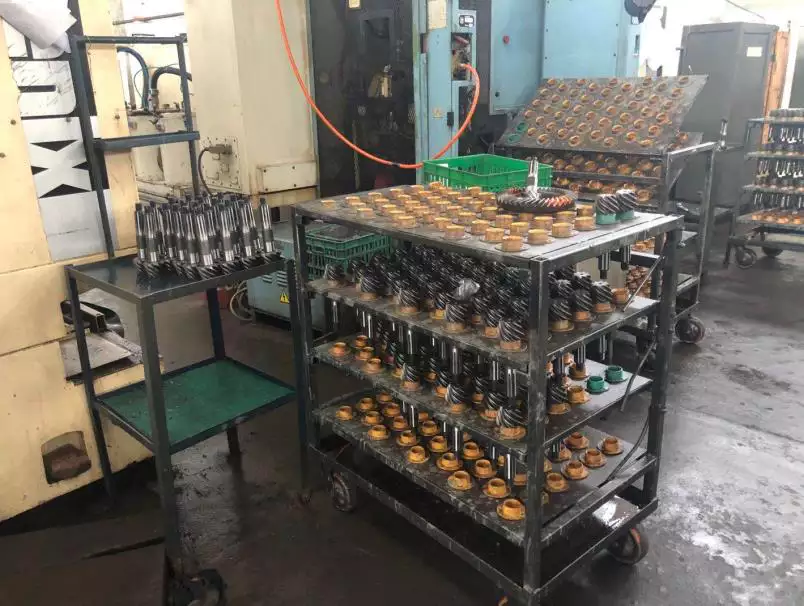
We take pride in the following advantages that set us apart:
- Advanced Technology: We utilize state-of-the-art machinery and cutting-edge technologies to ensure precision, efficiency, and superior gear quality.
- Skilled Workforce: Our team of highly skilled engineers and technicians possesses extensive knowledge and expertise in gear manufacturing, allowing us to deliver top-notch products.
- Customization: We offer tailored gear solutions to meet individual customer requirements, providing flexibility and versatility in our manufacturing process.
- Quality Assurance: We implement rigorous quality control measures at every stage of the manufacturing process to ensure that our gears meet the highest standards of performance and reliability.
- Timely Delivery: With efficient production planning and streamlined processes, we strive to deliver our products within the agreed-upon timelines, ensuring customer satisfaction.
- Competitive Pricing: We offer competitive pricing without compromising on the quality and value of our gears, providing cost-effective solutions for our customers.
Partner with us for your gear needs, and experience the excellence and reliability that our products bring to your applications.
*Author: Miya*